21:14. 21:42
36°45′N · 2°36′W
Last light gone.
Floodlights on.
Boys in green.
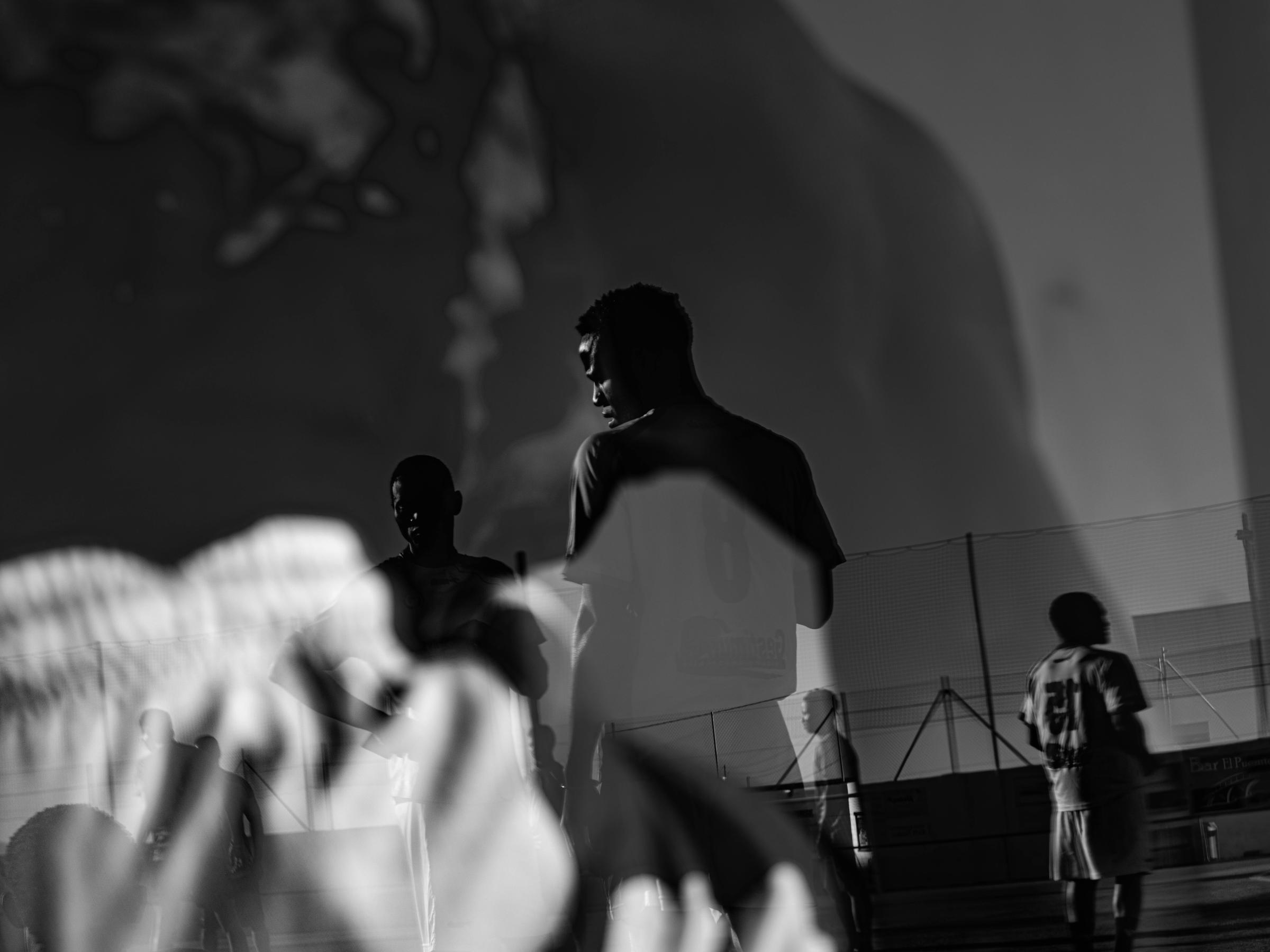
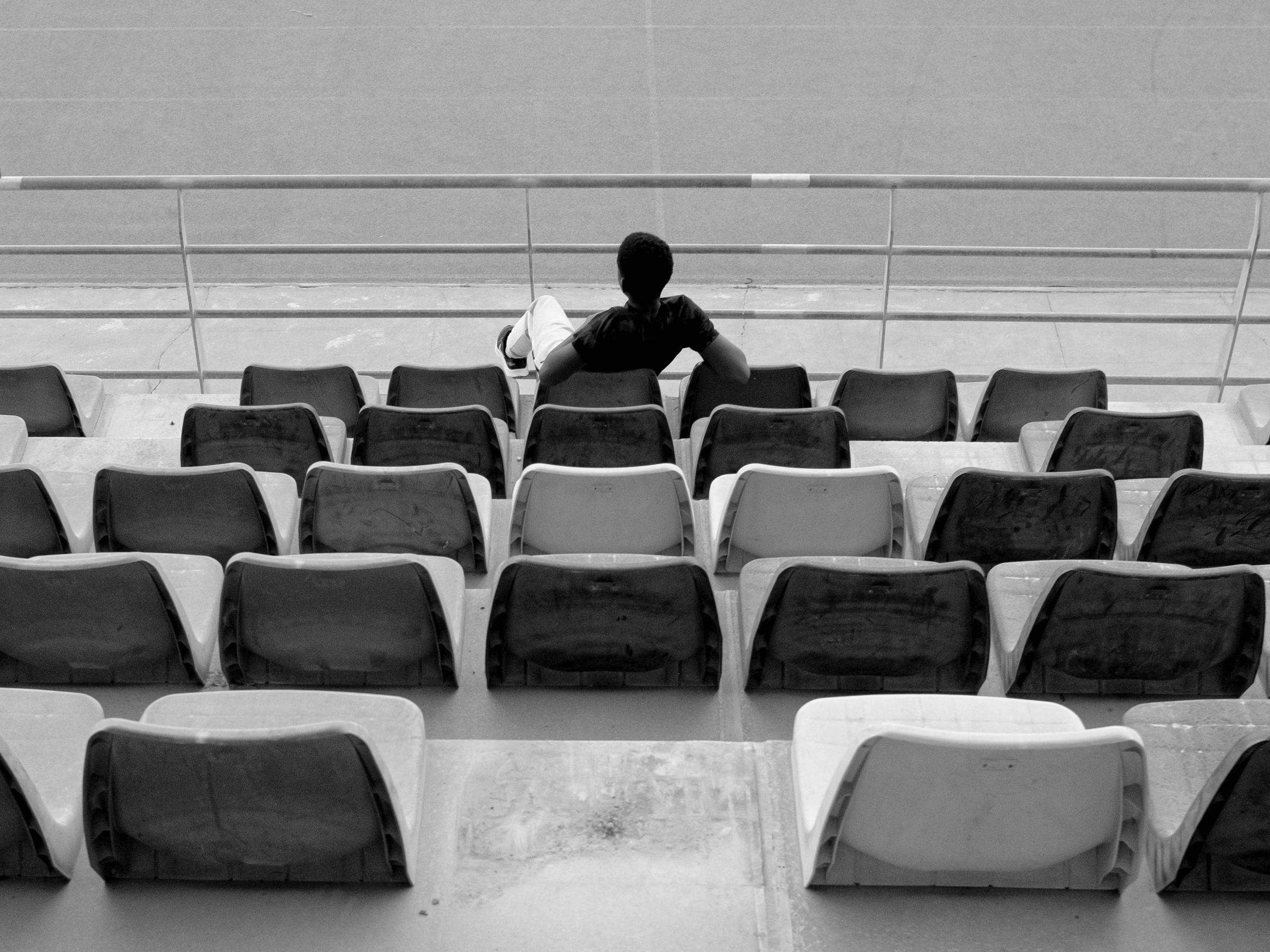
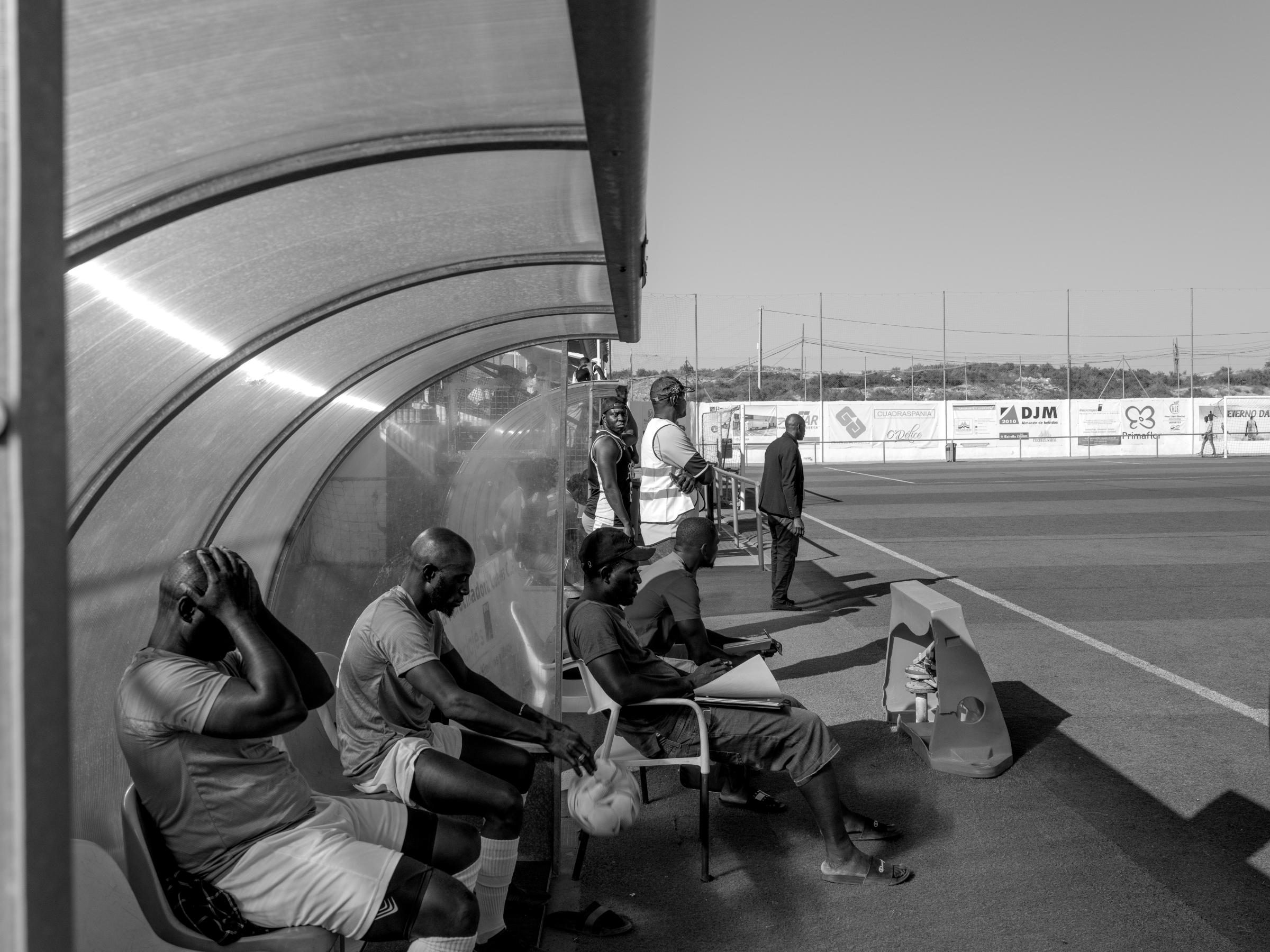
The sun sets, and Famara lies on a small mat on the asphalt. Four large spotlights illuminate the grass of the stadium of Roquetas de Mar. A blue grandstand stands to the west, and only a few people occupy its sun-bleached seats covered in dust. In the locker room, twenty boys are getting dressed in green. Famara applauds in the tunnel as his players take the field. Famara is this young Senegalese team's chairman, coach, and sometimes central defender.
Some players, recent arrivals, have yet to understand Spanish.
The young footballers speak in Wolof, their mother tongue, and represent Cuevas del Almanzora, their Andalusian home. Tonight, they face their countrymen from Roquetas, another southeastern town. Some players, particularly recent arrivals, have yet to understand Spanish despite working in Spain's fields and greenhouses.
a silver mantle
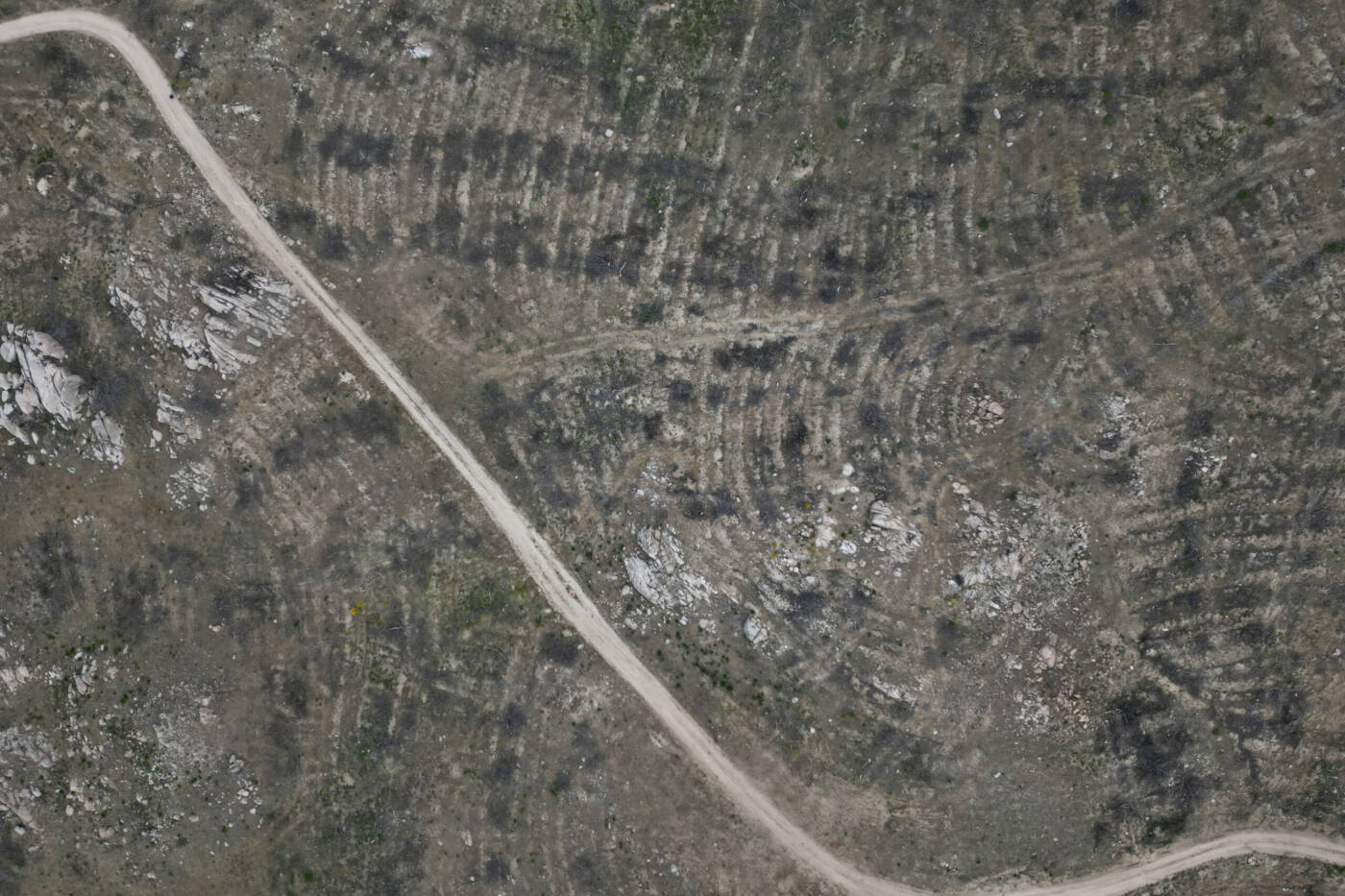
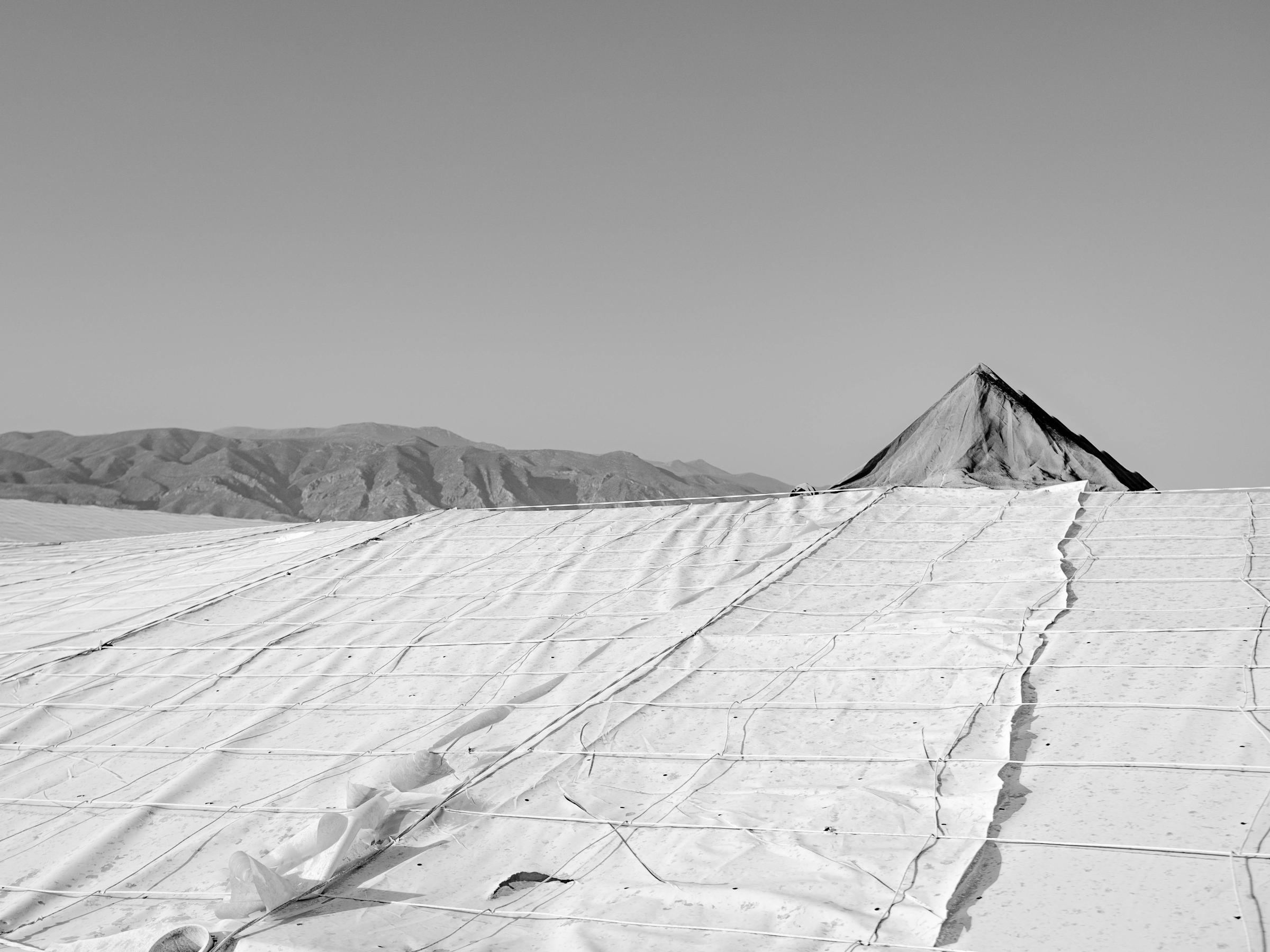
Tonight's match takes place on a different kind of field, one of synthetic turf, mirroring the ubiquitous plastic material that drapes over the province. Like a silver mantle, it covers an extension of forty thousand football fields; it is visible even from outer space. As the last daylight fades, the sun sets behind a bright horizon of greenhouses, which seems to engender a glow that illuminates this corner of Spain.
Their team won.
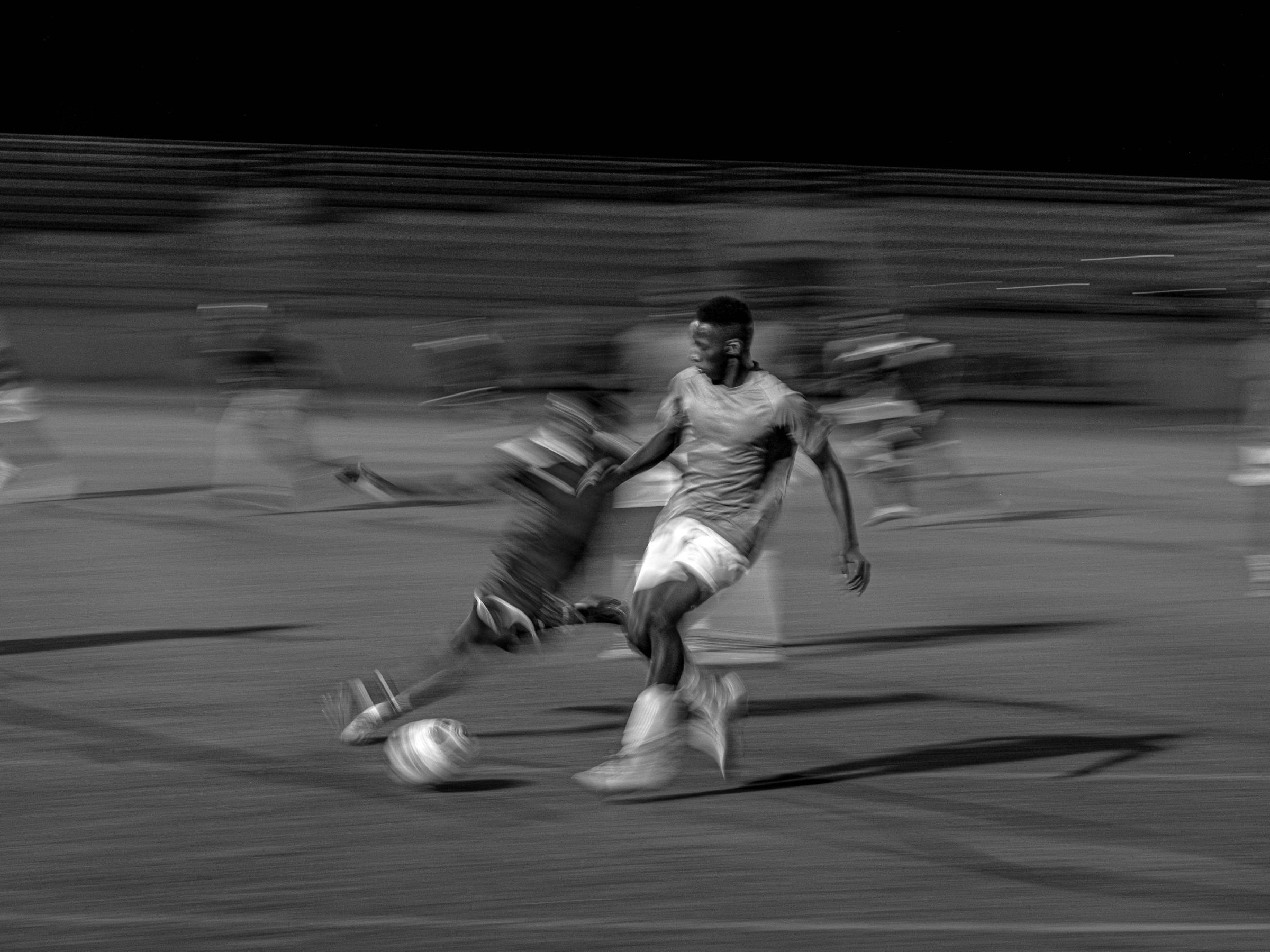
The match kicks off at a blistering pace. Players sprint and vault, cleats kicking up sprays of artificial turf. For a moment, only Famara's orders can be heard, shouting from the sidelines. The intensity of the game increases in the last minutes. A decisive header tilts the score to two-one in favor of Famara's team. The final whistle provokes a burst of contained joy; though rivals on the pitch, the players are bound by a shared journey across the Mediterranean, each risking much to reach Southeastern soil.
Conserva el agua
The farewell summons a shared laughter, taking photographs as a memento. It is ten o'clock, and there is no time for a shower. Every faucet in the changing room bears a plea for water conservation. Spain's southeast is the driest region in Europe and the nexus of the world's largest agro-industrial complex. Within this hub, seven out of ten workers are migrants, their destinies entwined with the arid landscape.
Forty thousand hectares of plastic, photographed from space.
The Sea of Plastic covers nearly the whole Campo de Dalías, west of Almería. Two views of El Ejido at the same coordinates, four decades apart. In 1986, sparse fields and bare soil. Today, an unbroken white blanket from the foothills to the sea. Pan and zoom. The maps move together.
Cuevas del Almanzora
37°18′N · 1°53′W
Wild palms.
Plastic in the trees.
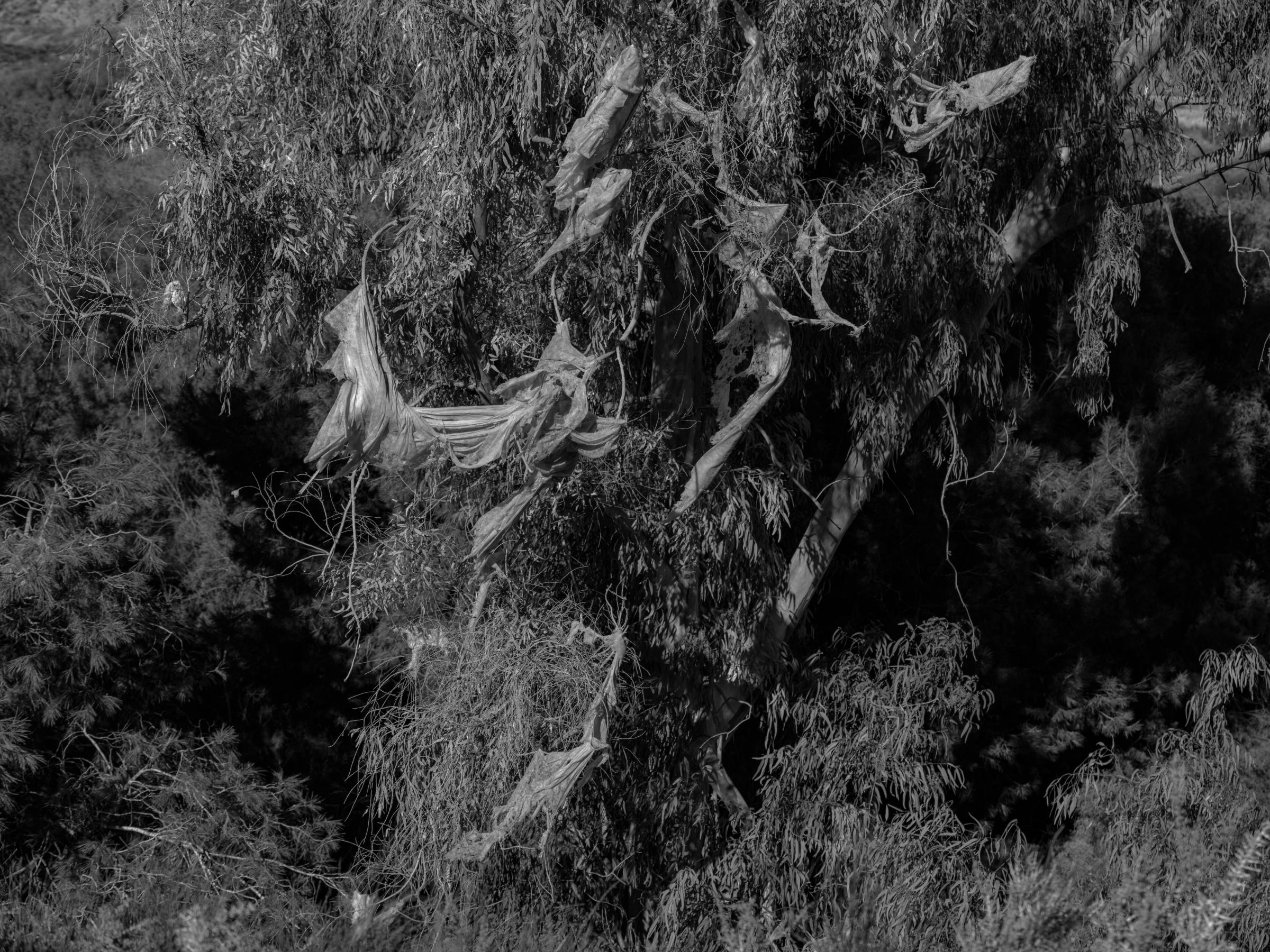
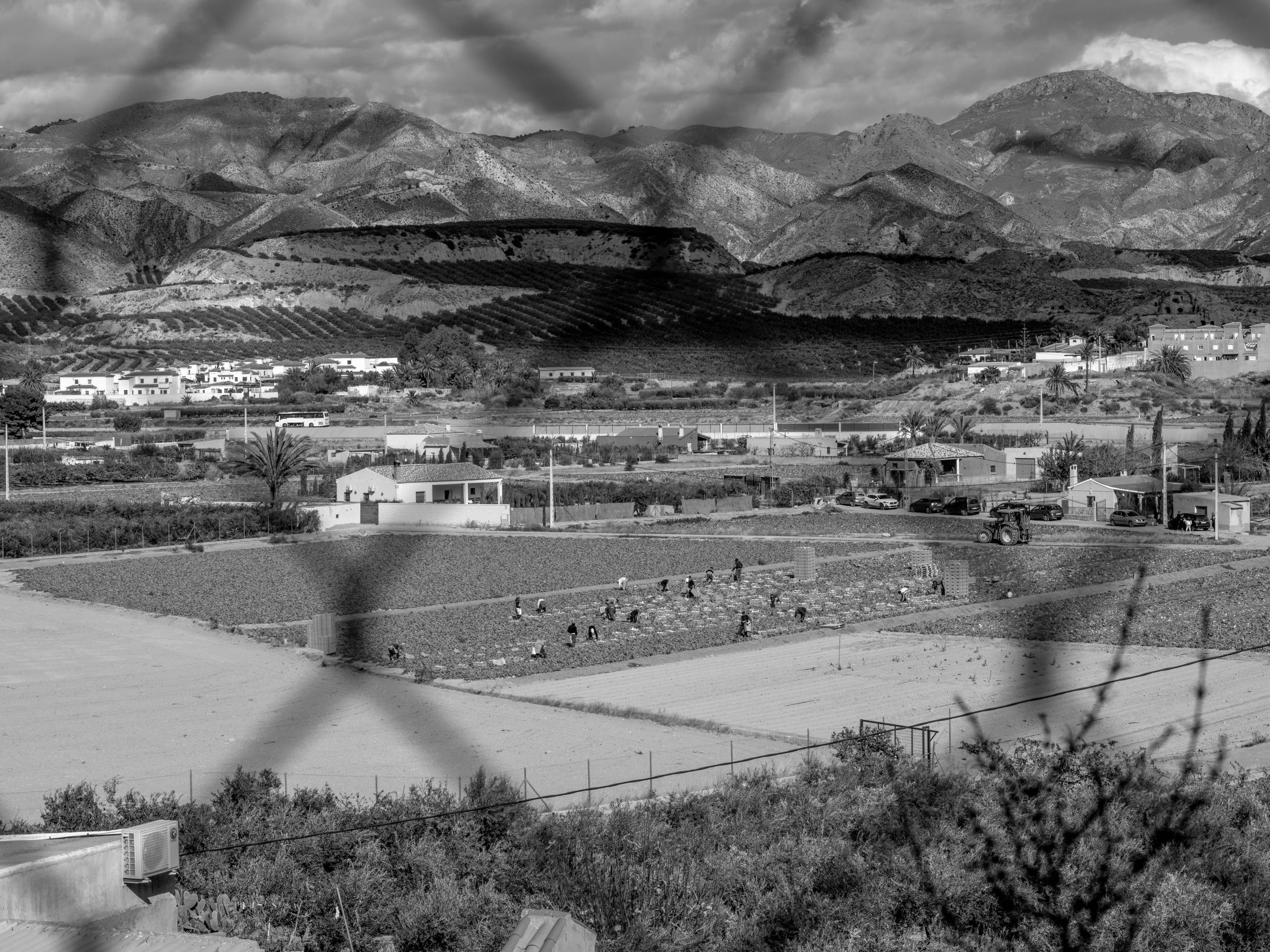
The players drive back to Cuevas del Almanzora, situated in the eastern province of Almería. At sunrise, they wake up and go to work or school. The region feels like a desert in broad daylight, a wasteland populated by wild palm trees. Recent storms have torn countless plastic sheets from greenhouses, ensnaring several trees. Patches of green disrupt the rural fringes and flood the cortijos' farmland. The hunting grounds extend through the olive groves that reach the foot of the Betic mountains, etched by the wind and the rain.
demolished in the 18th c.
1 / 3 inhabitants born abroad
Cuevas del Almanzora takes its name from its ancient caves and the nearby Almanzora River. Its people are humble, and its climate is warm, even in winter. One out of three inhabitants was born abroad, predominantly from Morocco and Senegal. Many African migrants have made their home in the historic town encircling the Church of Encarnación, where once a mosque stood until its demolition in the eighteenth century. The streets are narrow, with old, stately facades and cobblestone roads.
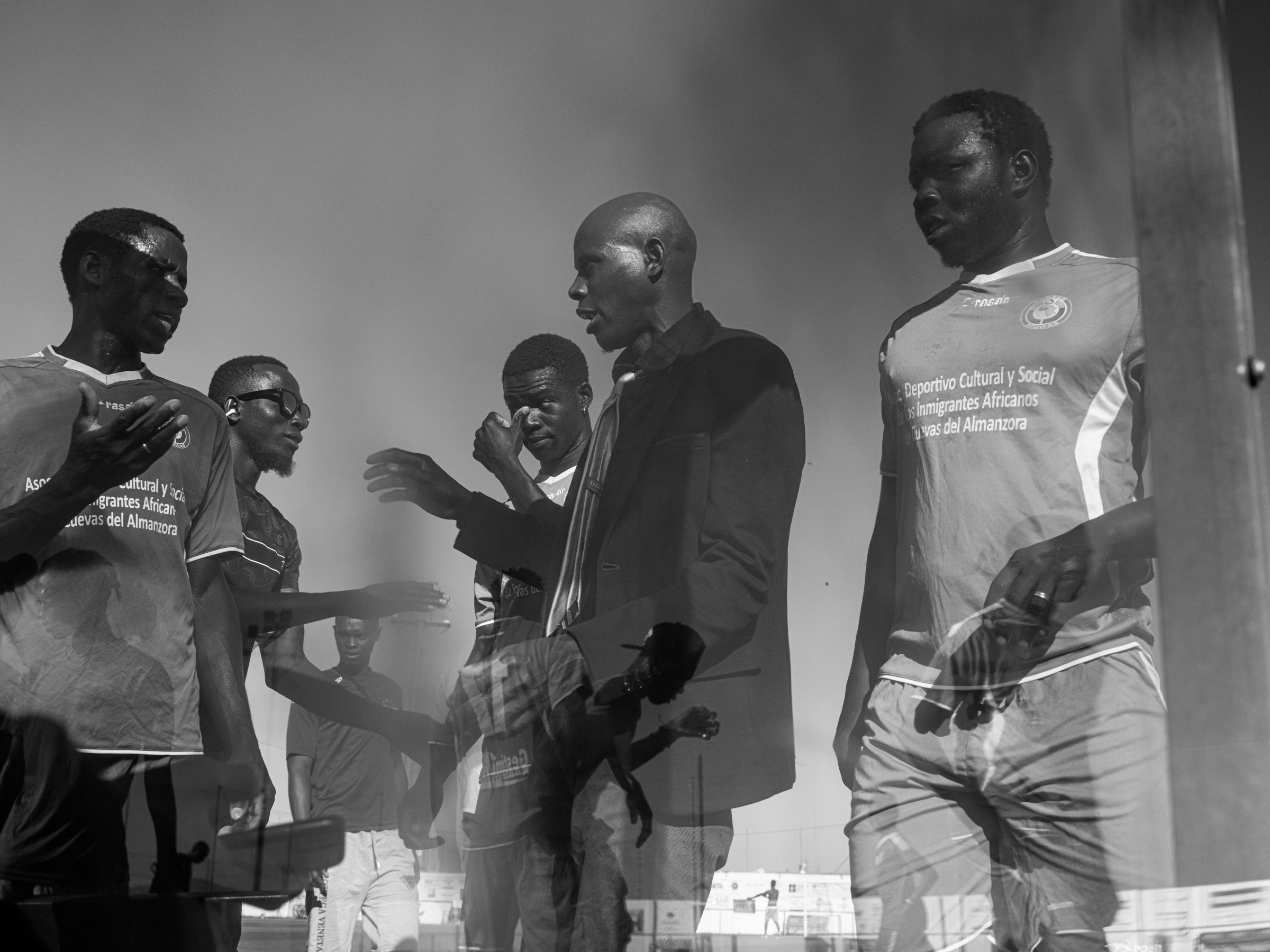
President & founder
2019 →
Although almost all of us are Senegalese, there are also people from Guinea, Gambia… that's why we printed the ECOWAS shield, which represents us all.
9 days at sea
"a small boat
and many hours"
In 2006, at just twenty years old, Famara took a leap of faith, risking his life to cross the strait separating Morocco from Spain. His journey, encapsulated in the succinct words, "a small boat and many hours," spanned nine days, starting from Casamance in southern Senegal. He fondly reminisces the fleeting time spent in Madrid, at his father-in-law's apartment, forming a deeper bond with his wife, and the hard-earned days working in the fields of the Meseta. Yet the constant surveillance in Madrid drove him to leave, and on June 13th, 2007, he moved to Cuevas del Almanzora, where it was easier to find a job as an undocumented migrant.
Hybrid car
Wife · two children · brother
Sixteen years on, Famara's life has undergone a profound transformation. Today, he shares a modern apartment and a private parking space for his hybrid car with his wife, children, and younger brother. A contrast from the early days when he shared a flat with his friend Bassir on the outskirts of town. Now, colleagues Famara and Bassir work as gardeners around Levante Almeriense, managing a standard of living that remains elusive in their native Senegal.
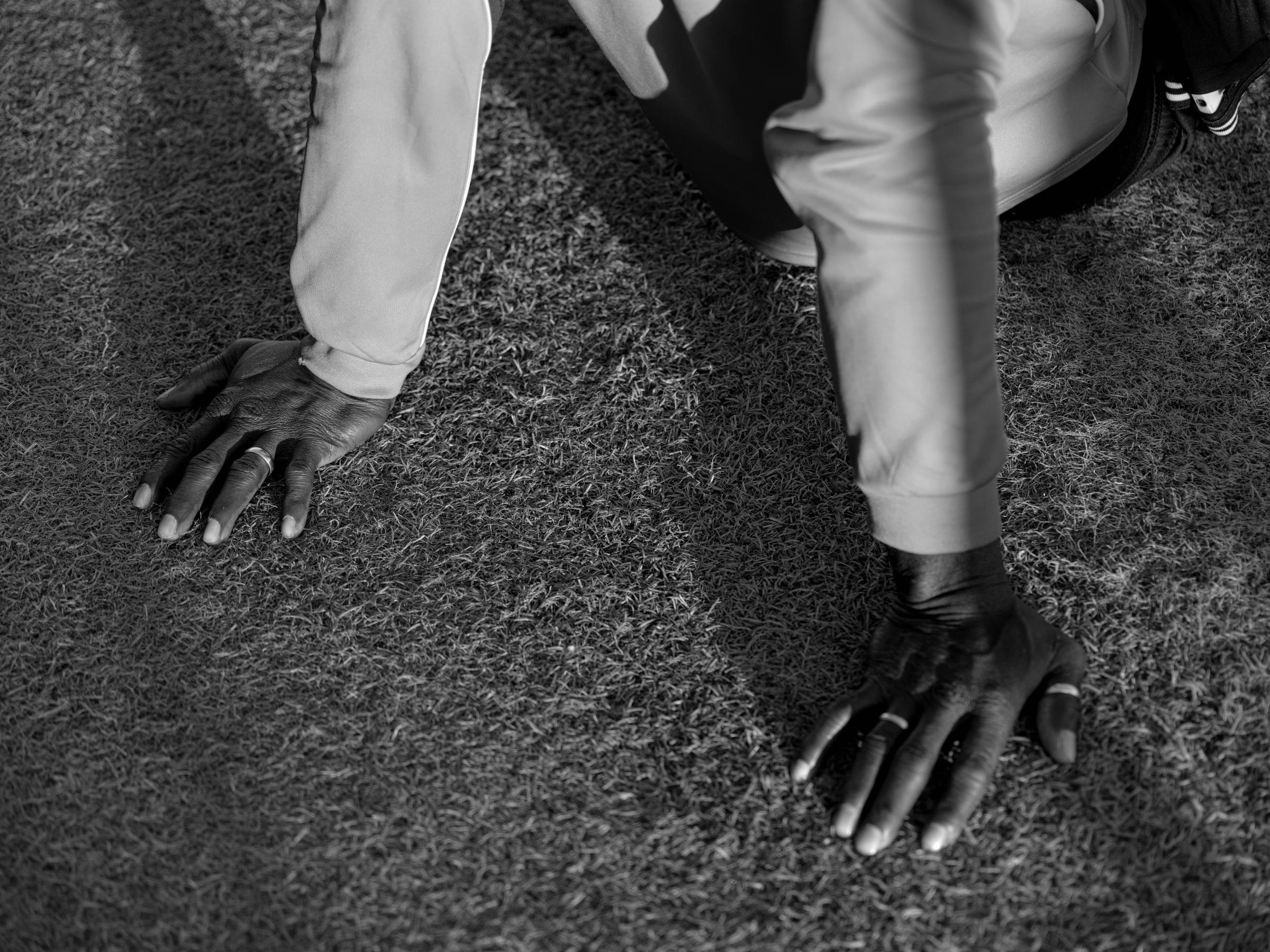
Goalposts. Old, rusted
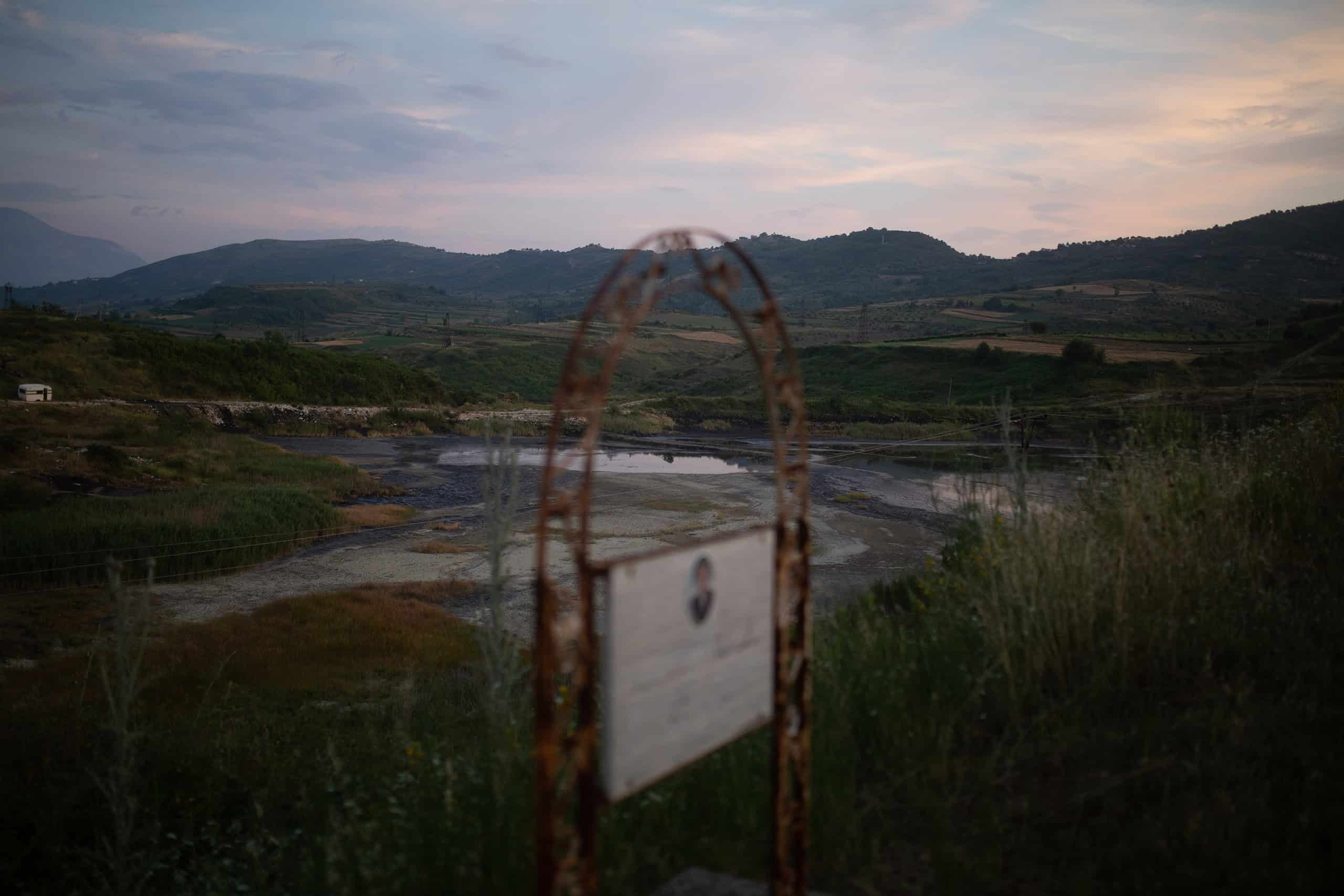
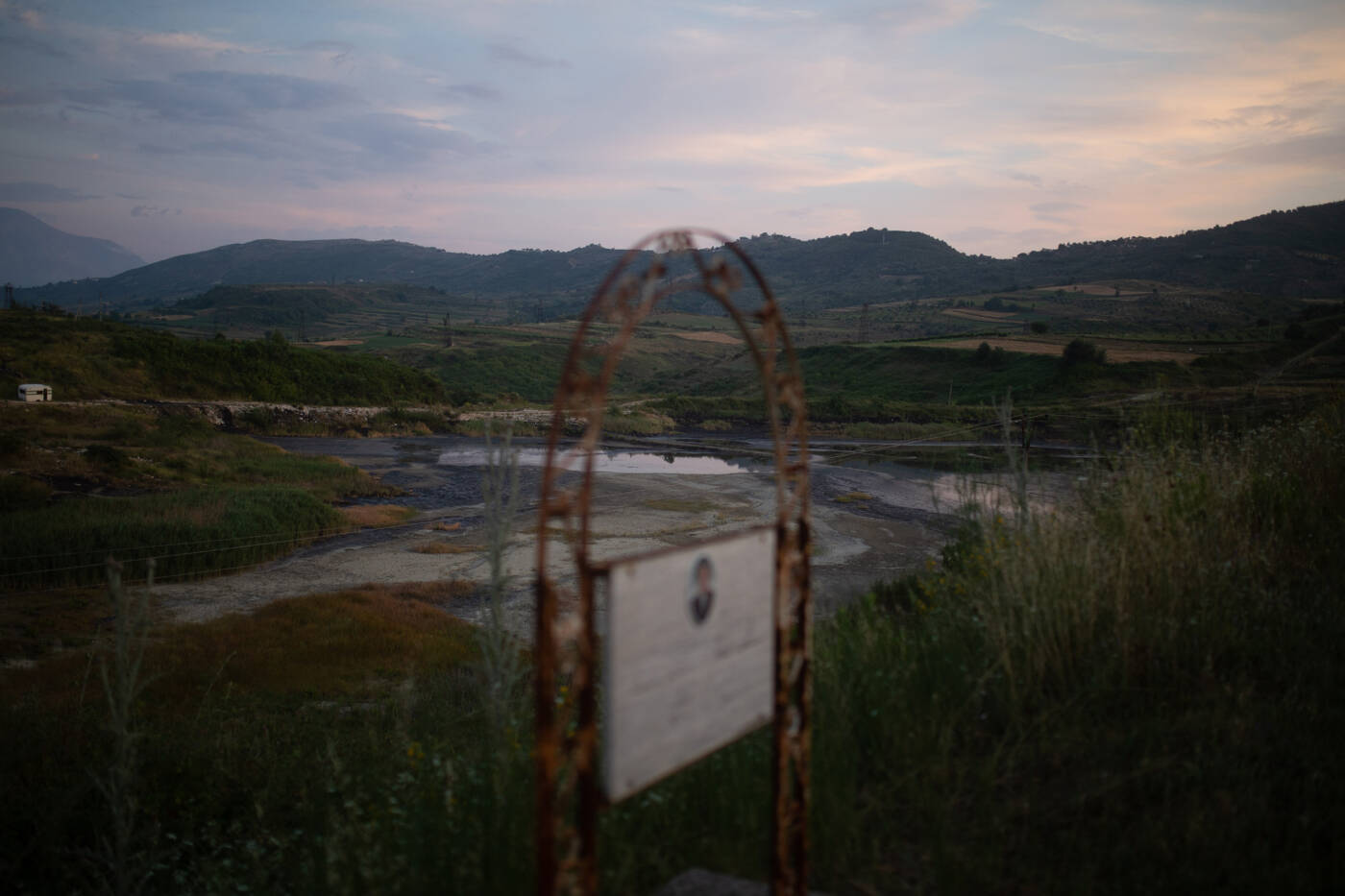
Reservoir 7 km NW
"the water
never runs"
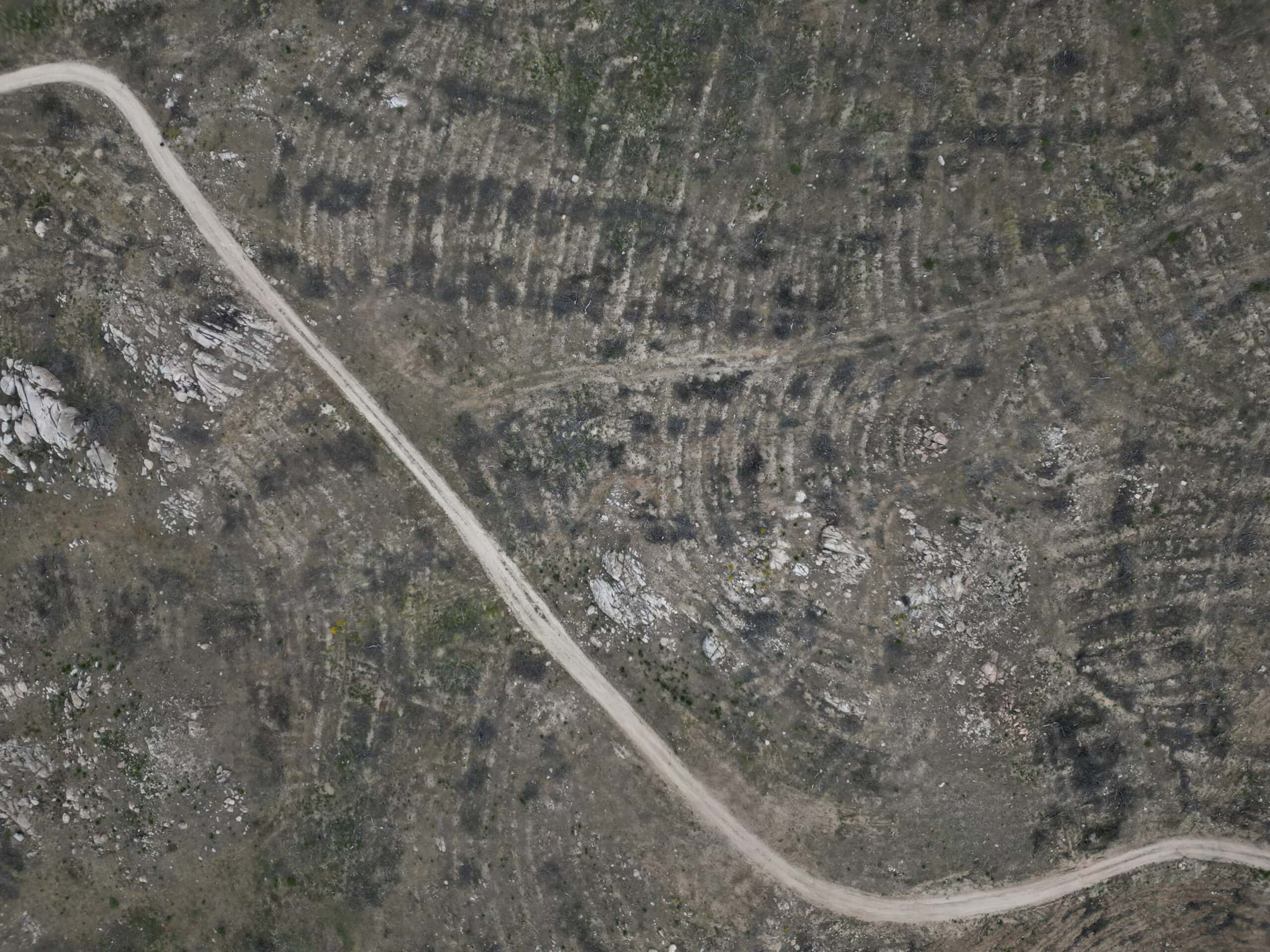
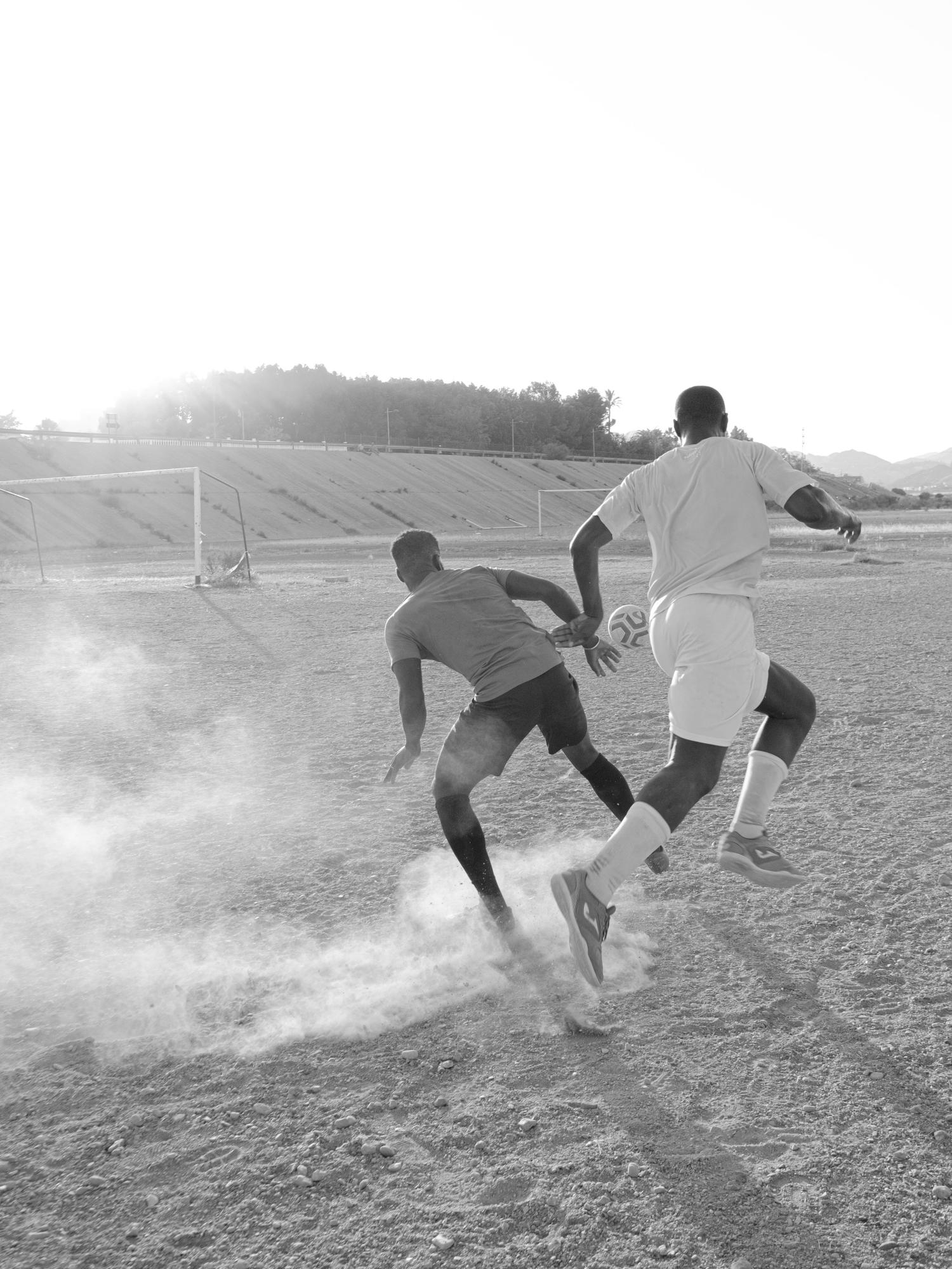
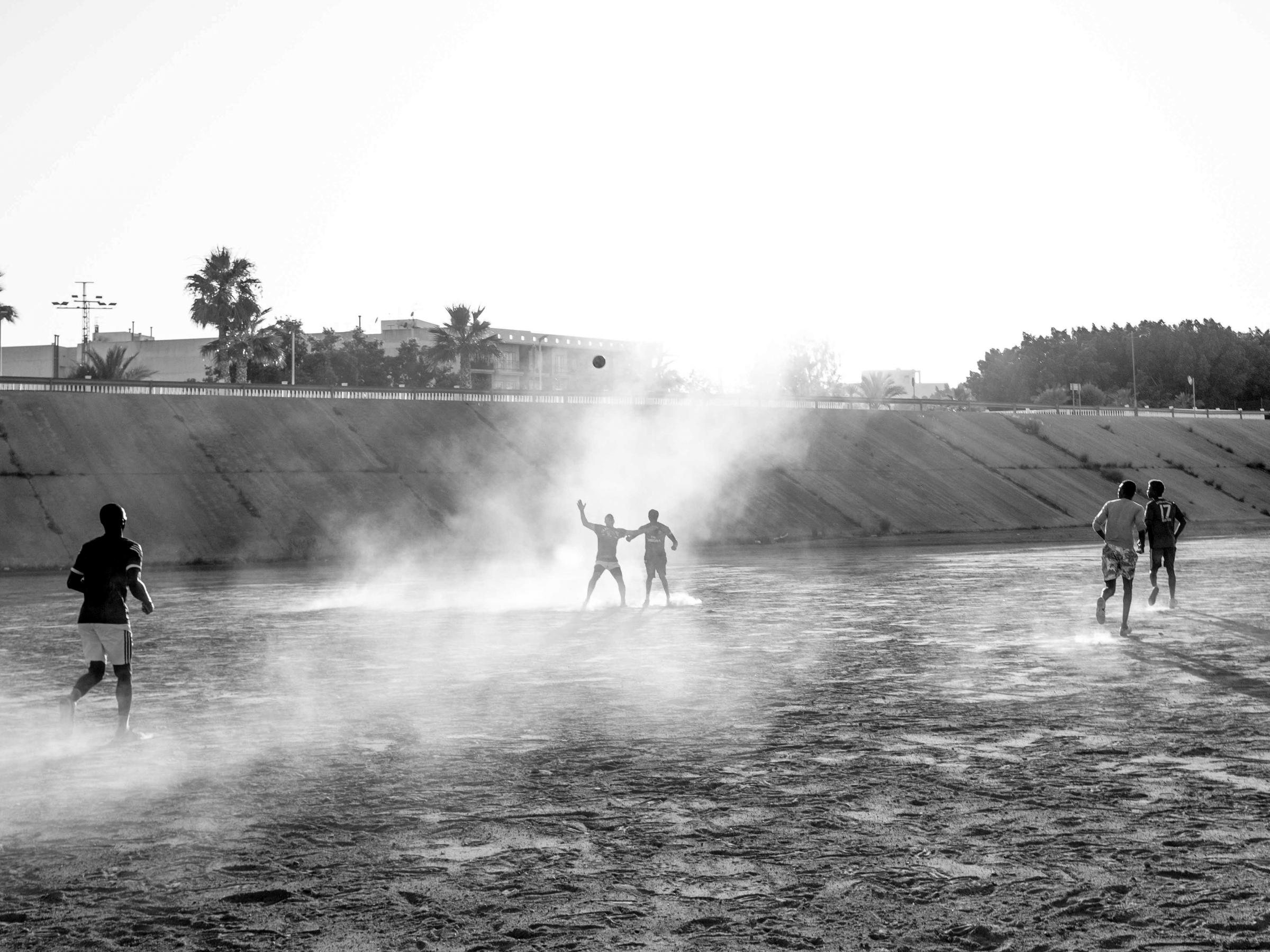
A group of thirty Senegalese boys goes down to the Almanzora. It is seven o'clock in the evening, and the players have arranged to meet in the desert riverbed, which is totally dry due to the scarcity of rainfall and, according to the locals, also due to recent agricultural practices.
Senegalese are men.
The players train many days a year, except for Mondays, rainy days, and cold winter afternoons. The whole atmosphere of the Almanzora is masculine, with the exception of a couple of little girls who play in the surroundings, waiting for their kin. In Almería, nine out of every ten Senegalese individuals are men, many striving to accumulate resources to better the conditions for their families back home.
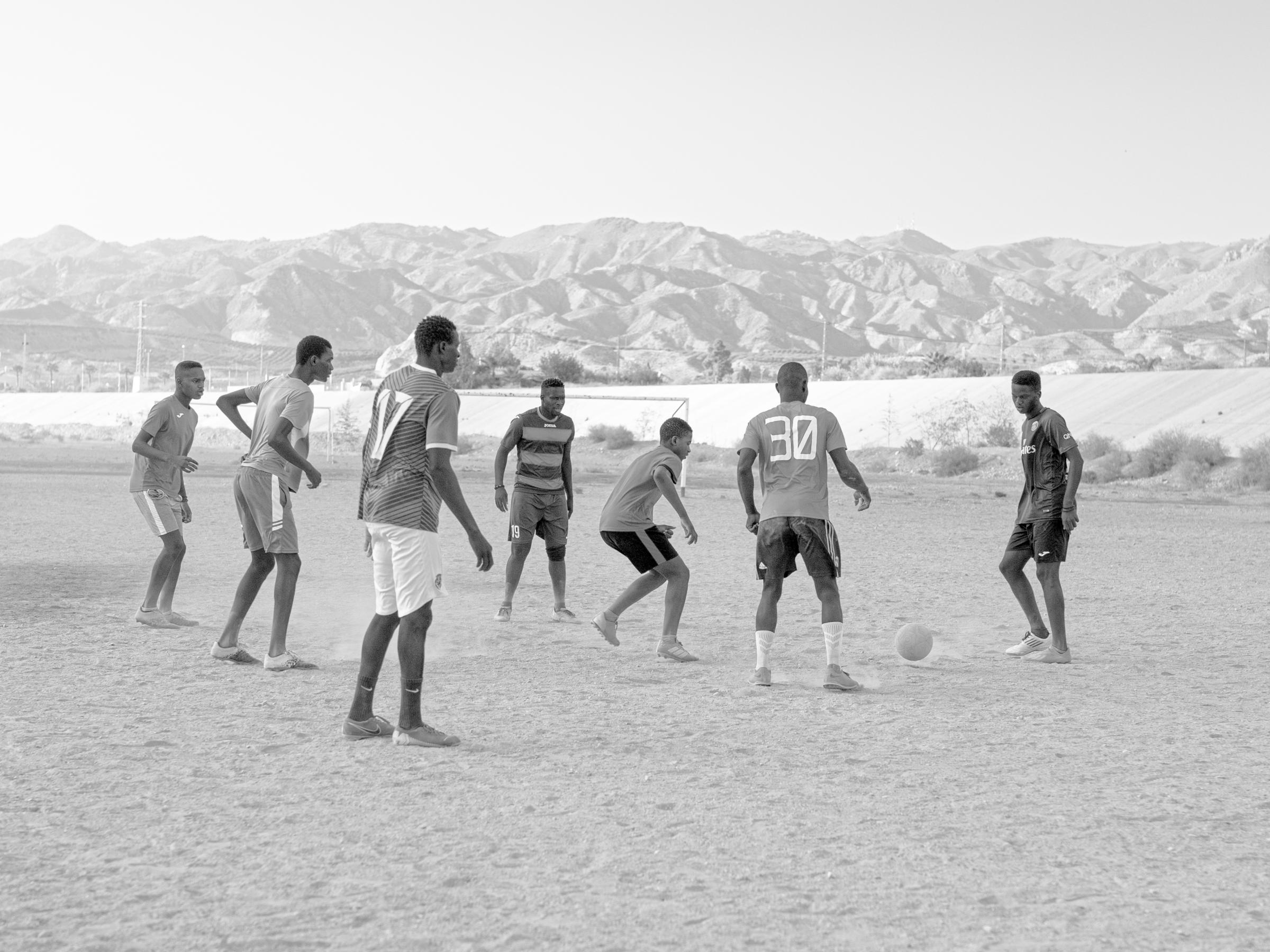
A reservoir of one hundred and sixty-one hectometres, holding fewer than ten.
The reservoir was built in 1986 for 120.000 people across ten towns of Levante Almeriense. It has been declared técnicamente muerto, technically dead, and is now sustained by water transferred from rivers hundreds of kilometres away.
Two columns, forty years.
Famara's life on the left. The reservoir, the plastic sea, the drought on the right. The same forty years.
No Senegalese players.
They are the other club from Cuevas, the players from the Almanzora river, and each embodies the ethos that Famara instilled. The town's official team, Cuevas C.F., has no Senegalese players. "No Senegalese boys are there simply because they remain unknown to them. It's a fine club filled with good-hearted people, but they don't have enough knowledge about our people," explains Famara, one of the few Senegalese who was able to federate.
League champions 2010
"the first
black player"
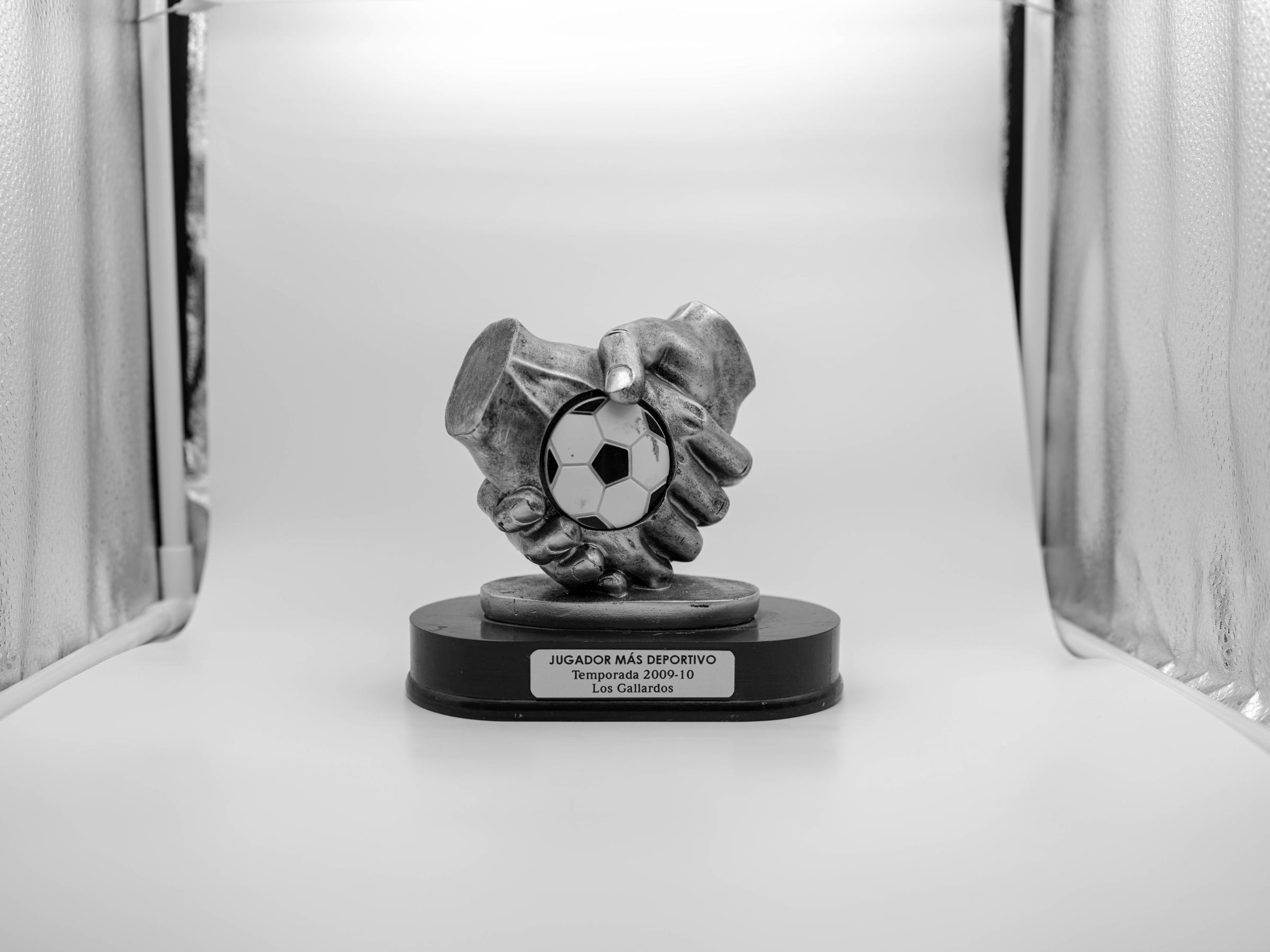
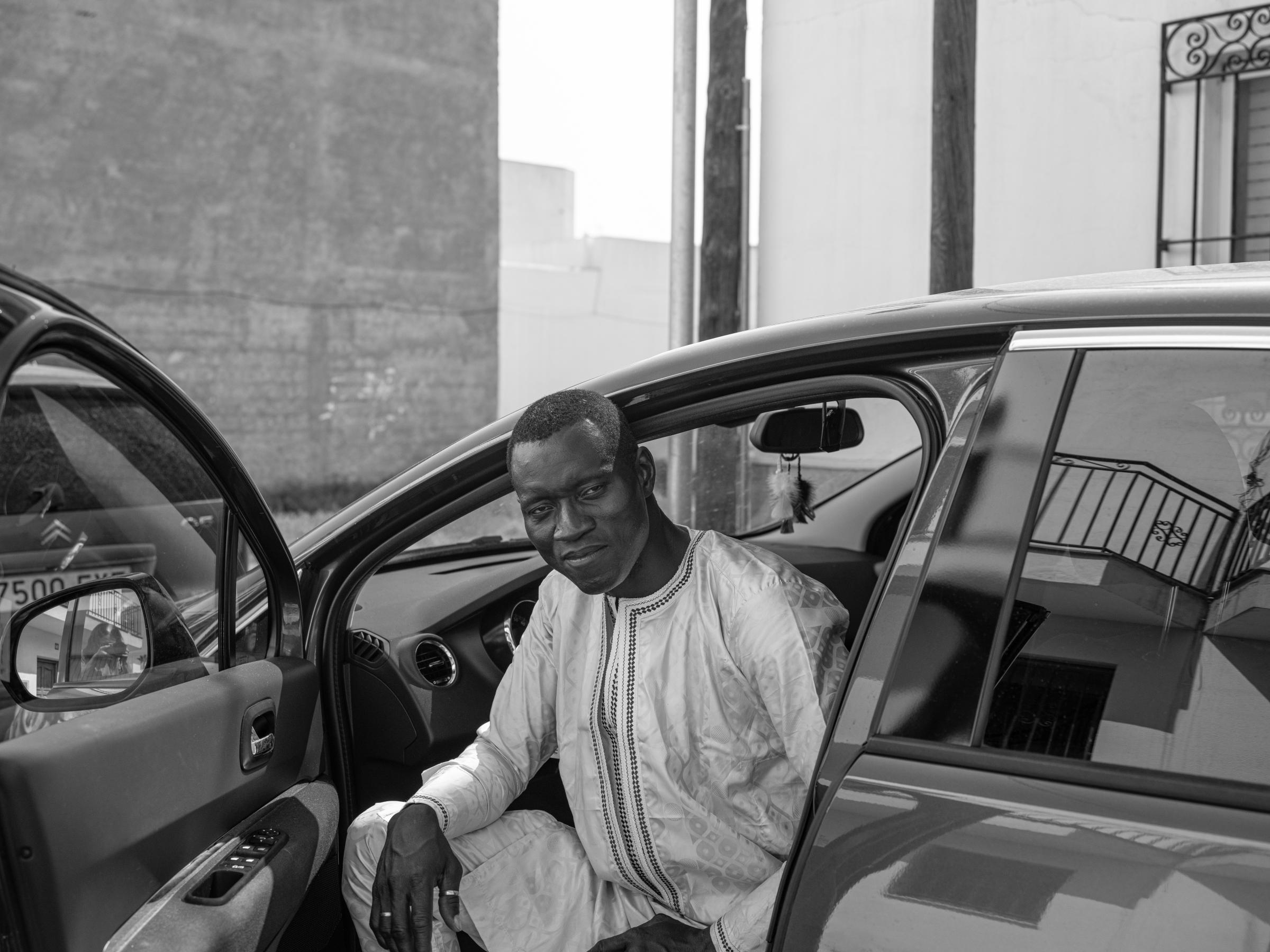
He had even enjoyed a brief stint with Cuevas C.F. in 2017, a brief but memorable period that marked the culmination of his semi-professional football journey. He made his career as a centre-back at A.D. Los Gallardos, where he spent six seasons defending the jersey of the neighbouring club. "I was the first Black player in the club's history." They clinched the league in 2010, coinciding with Famara's debut season. The trophy, now a showpiece on a shelf in his living room, holds a Senegal flag above the television.
French · Italian · Spanish
Tunisia → Sicily
300 km · 2018
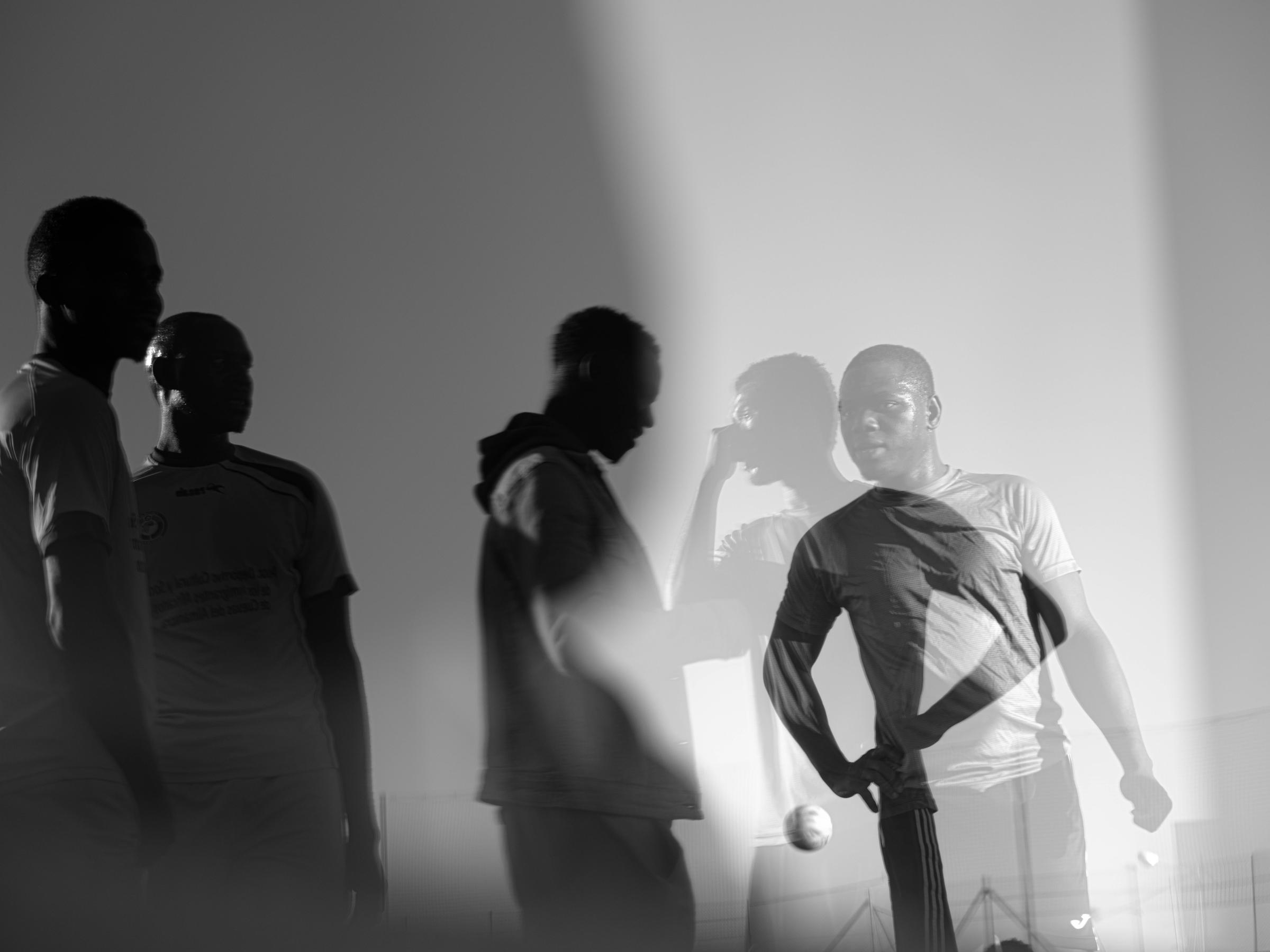
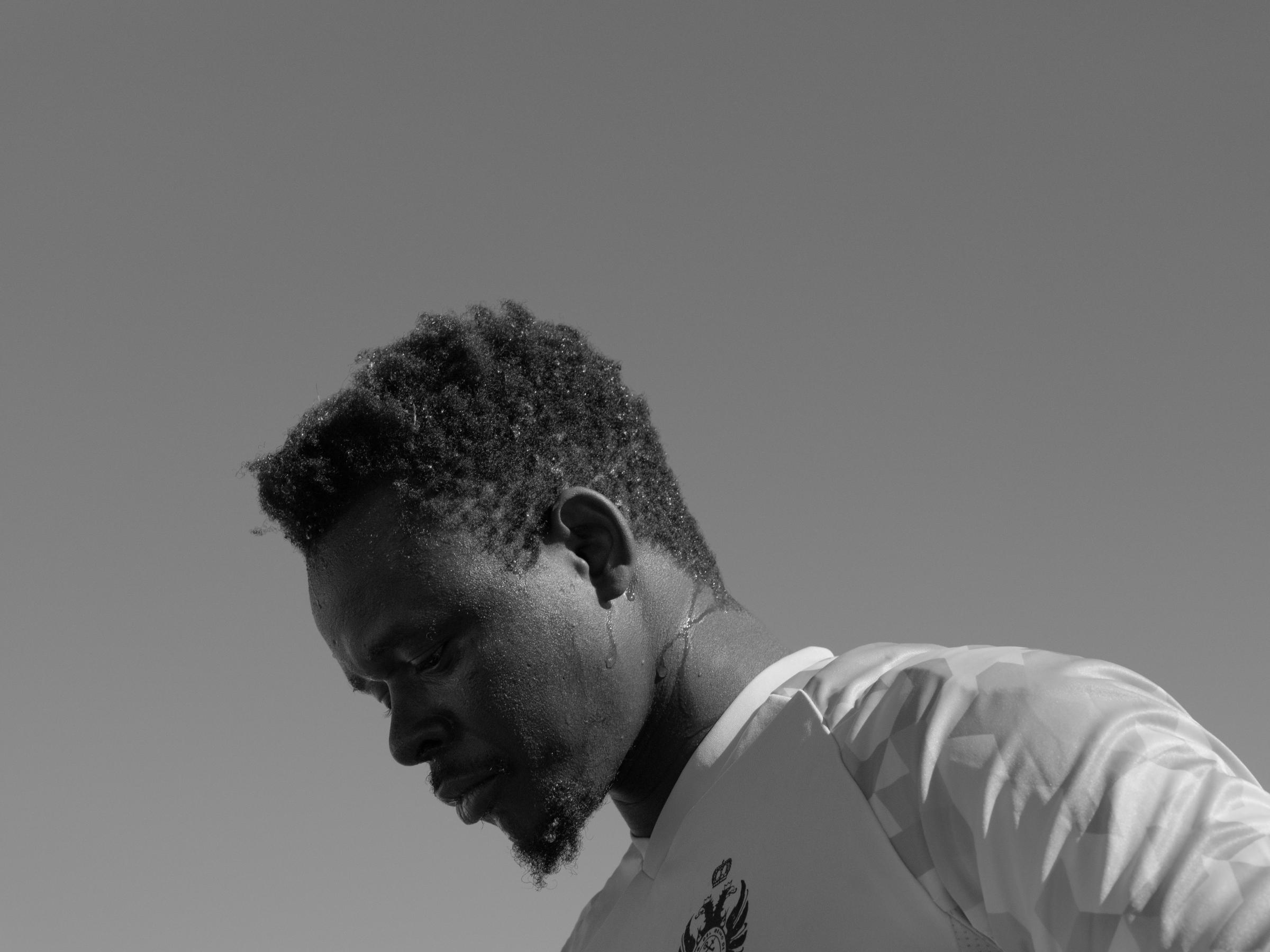
There are dozens of young men on Famara's team, originating predominantly from the southern parts of Senegal, working in Almería's agriculture sector, and uniting around a shared fervour for football. Ibrahima stands out as their stellar goalkeeper. Aside from saving goals for his countrymen, he is also the starting goalkeeper for C.D. Mojácar, another neighbouring club, which also plays in the Almería League.
Ibrahima arrived in Cuevas in 2018, following a stint in Italy. He speaks as many languages as an interpreter: Wolof, Mandinka, French, Italian and Spanish. He is twenty-seven years old and shares an apartment with other Senegalese migrants in Cuevas. Seven years ago, he made a perilous crossing of the Mediterranean from Tunisia to Sicily, traversing an expansive sea stretch of three hundred kilometres.
Carpenter foreman:
Paco Picante
Famara had the same problem as Ibrahima: he could not get to the stadium of Los Gallardos on his own when he was a federated player. "The board of directors took me to training sessions and matches." Famara expresses a warm sentiment for the chairman, Paco Picante. "a football man, a good person."
Famara digging a pool
"impressed by
his attitude"
Famara's life changed when he met Picante. "We were at a construction site in Mojácar," Picante recalls. "I was the carpenter foreman and saw Famara through a window, digging a hole for a swimming pool all by himself. I was very impressed by his attitude. We started talking about football, and a few days later, he was already training with us."
Former chairman
A.D. Los Gallardos
The clubs in the area are not interested in dealing with the migrants' situation. We Spaniards have a migration past; we should be more humanitarian. He was our first Black player. The very first of many.
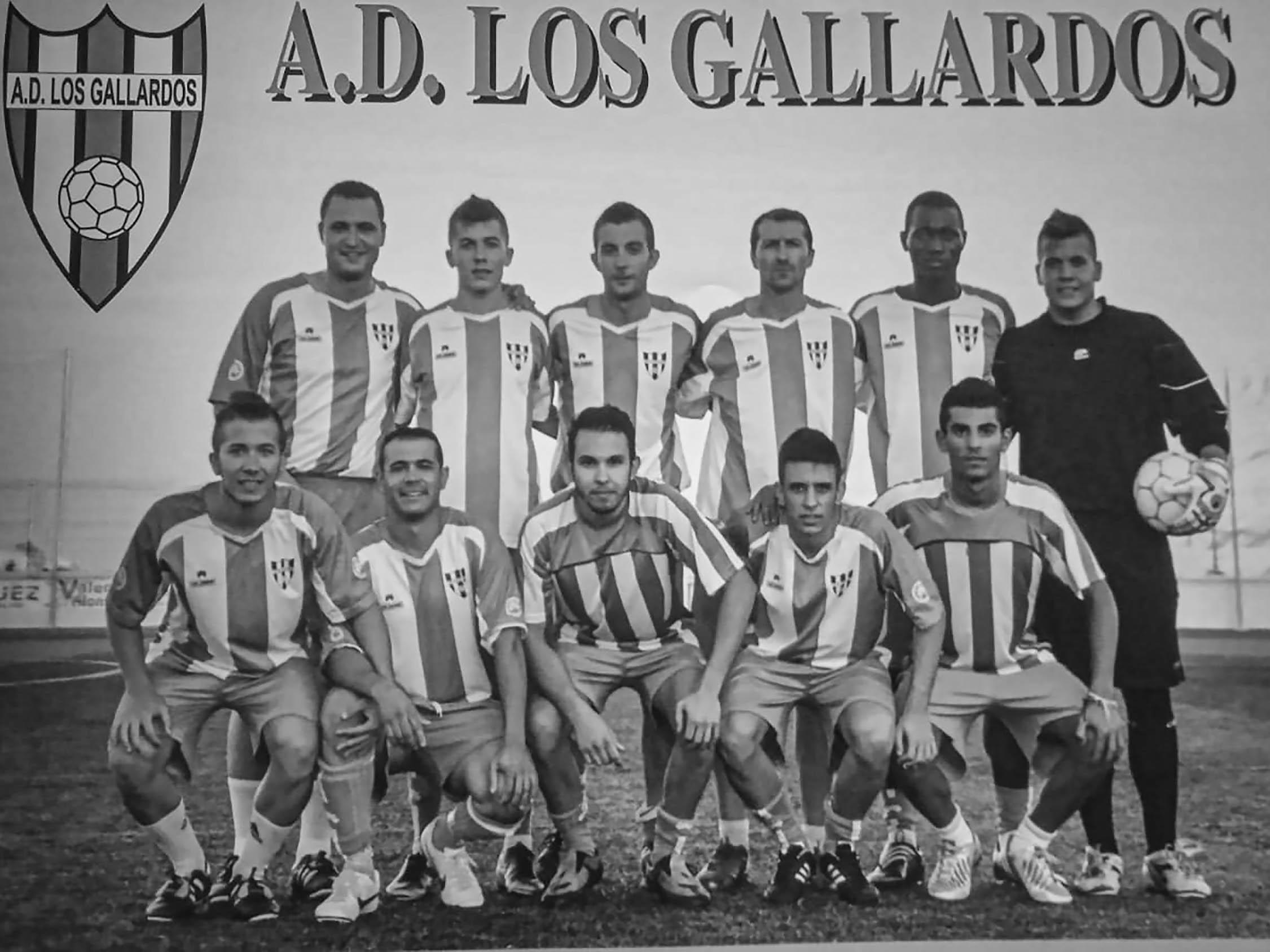
Migrant teams · informal
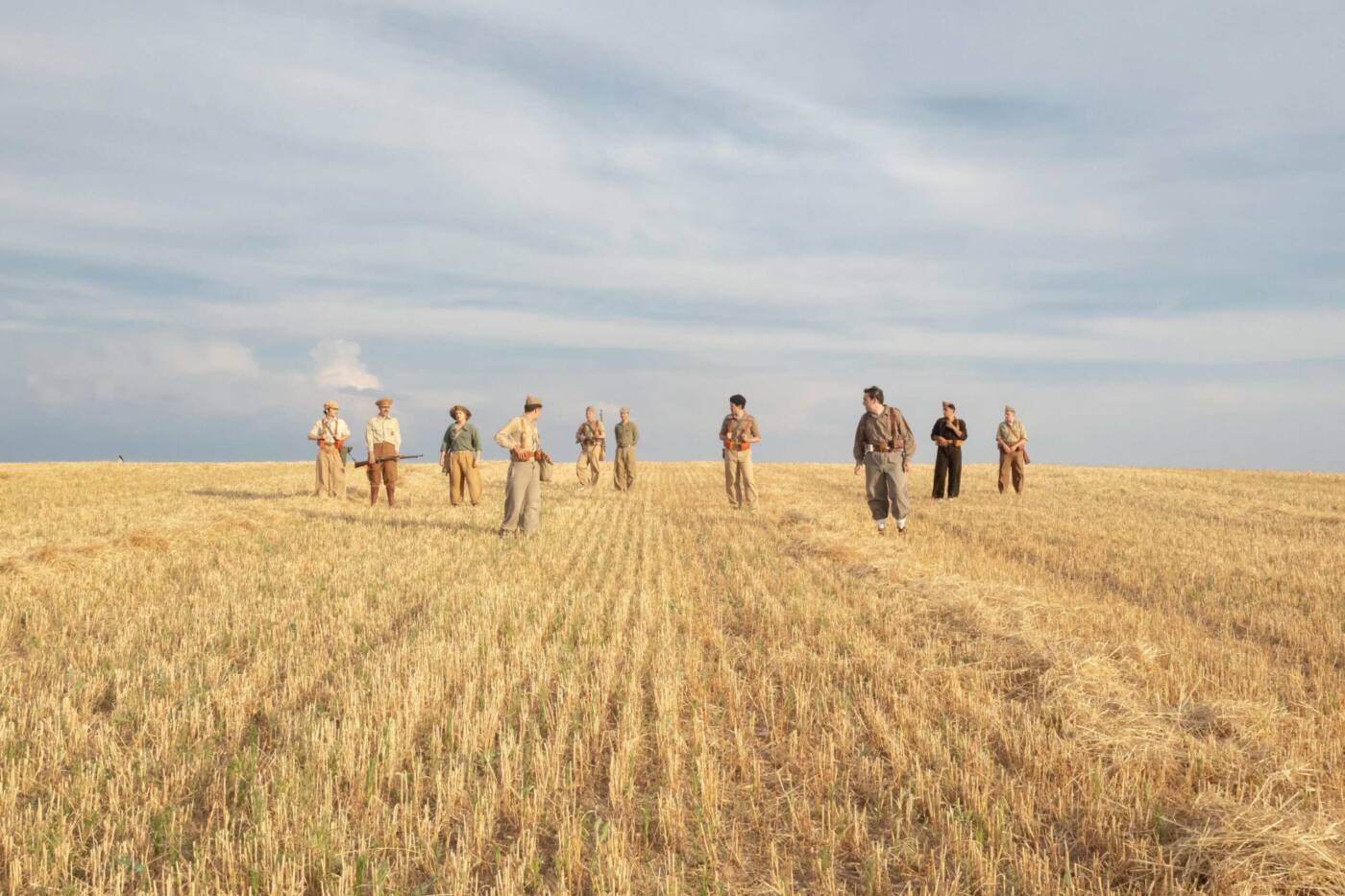
Famara's team is now in the midst of a tournament, competing against other unofficial teams in the region. "We are playing against other Africans, laborer squads… If my team wins, we'll throw a party, and if we don't win, so will we," says Famara, who has made several players laugh. The team trains by finishing off crosses in the imaginary area of the Almanzora, where sporting excellence is achieved in a different way.
children, dust.
Over the decades, living in the Southeast has become a lesser evil for thousands of migrants. Their lives leave stories of resilience like those of Famara and his team, who have turned the Almanzora into a place where the lives of many people make sense. The voices in Wolof, the children swarming around and the great dry riverbed, resounding with the shouts of several generations chasing a ball.
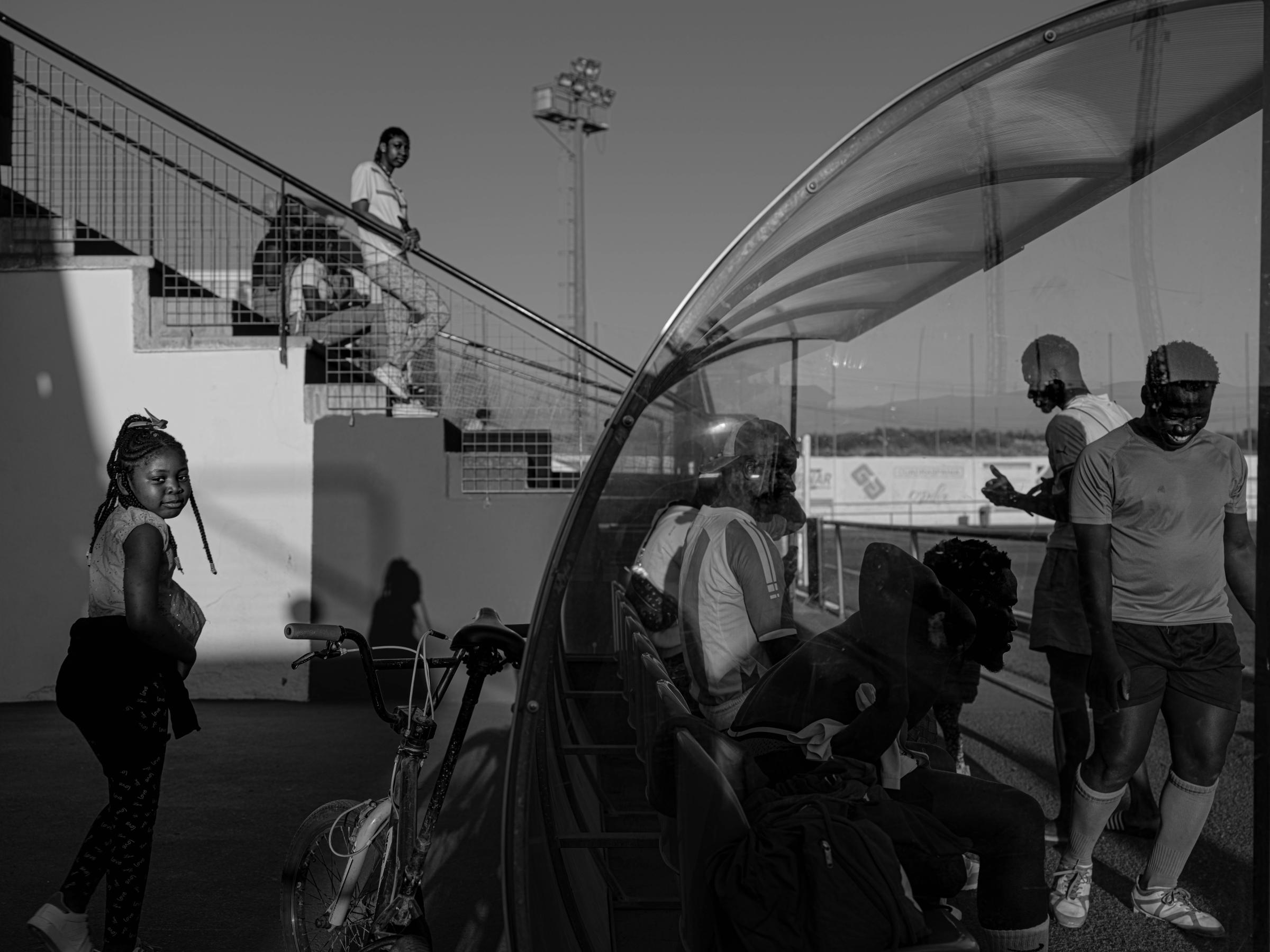
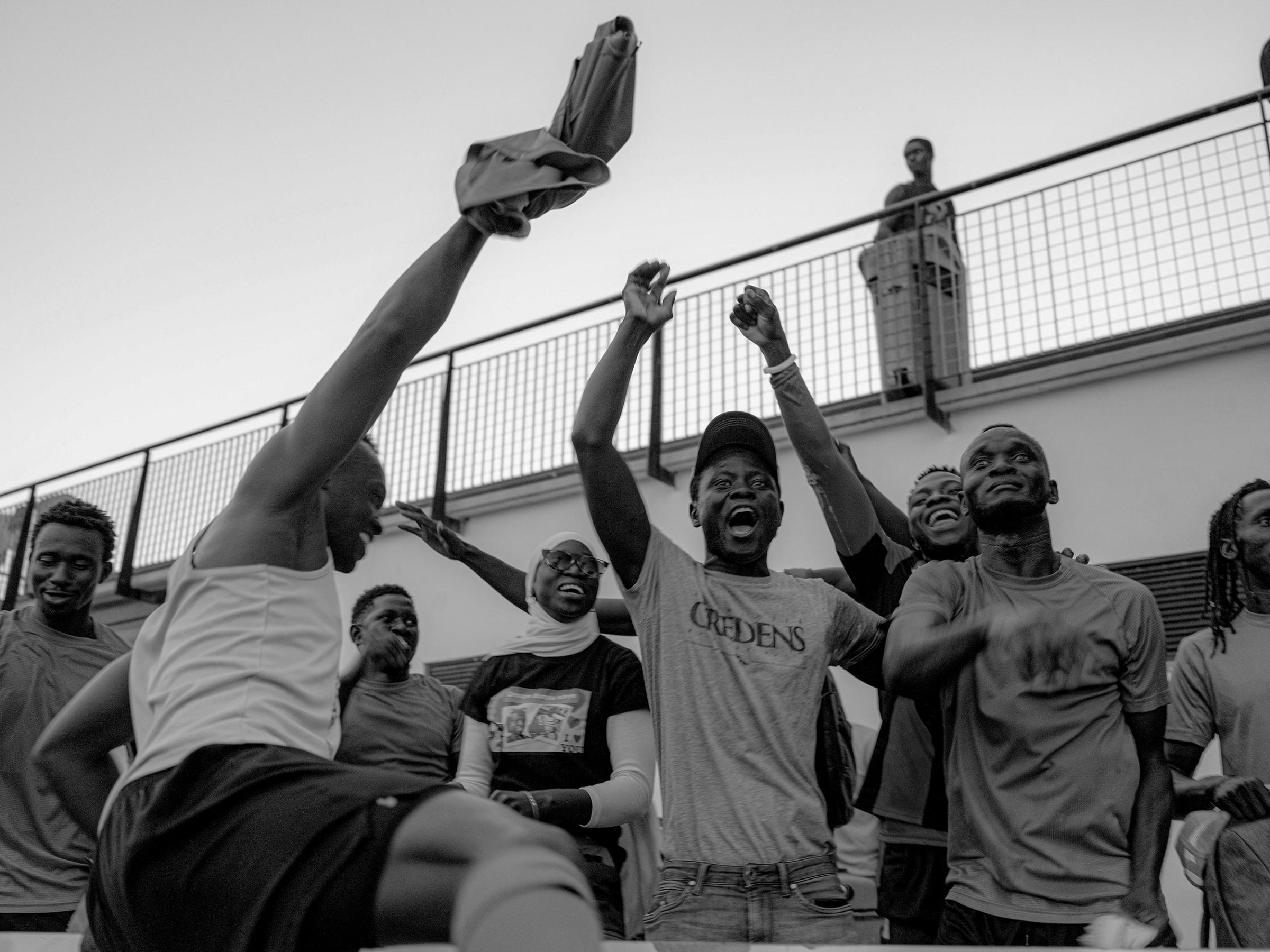
Resident
Cuevas del Almanzora
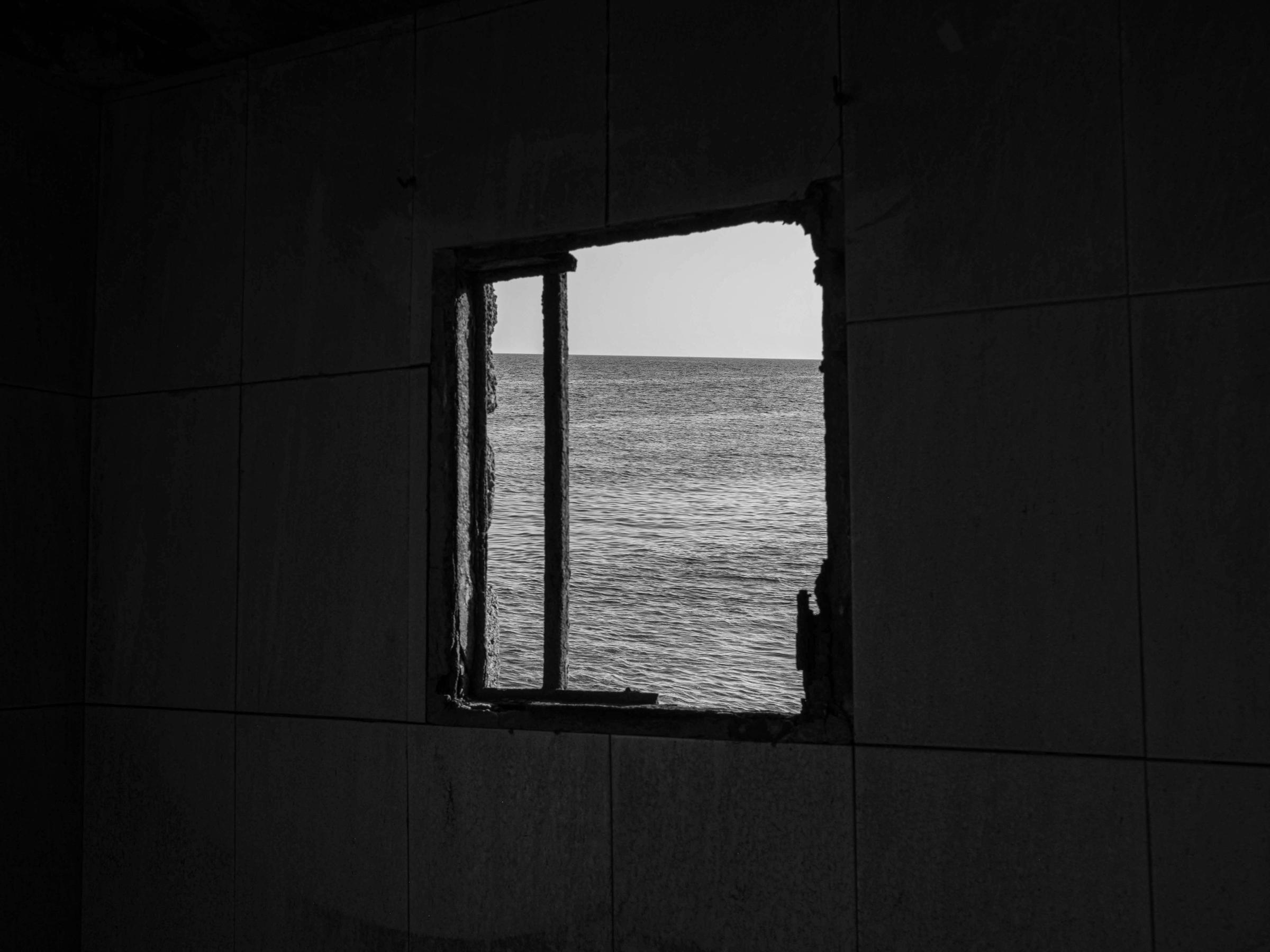
These goals were installed years ago, so instead of water there is football. The water never runs. Only they run.
01020304050607080910111213141516171819Jordi Jon Pardo (Cambrils, 1996) is a documentary photographer and visual journalist based in Barcelona, working on environmental stories and historical memory. Co-founder of MÓN, National Geographic Explorer.
Field reporting was conducted in Cuevas del Almanzora and Roquetas de Mar over multiple visits between 2022 and 2023. Names retained at the subjects' preference. Translations from Wolof and Spanish are the author's.
Reservoir data. Embalses.net (March 2026) · SAIH Confederaciones · MITECO
River geometry. OpenStreetMap relation 8466045 · ODbL
© 2026 Jordi Jon Pardo · jordijon.com · @jordijonpardo