How a department store raised its cathedrals on palaces, a wartime hotel, a fifteenth-century convent, a women's prison or an entire neighbourhood. And how a country agreed, without ever saying so, to forget.Cómo unos grandes almacenes levantaron sus catedrales sobre palacios, un hotel de guerra, un convento del siglo XV, una cárcel de mujeres o un barrio entero. Y cómo un país acordó, sin decirlo nunca, olvidar.Com uns grans magatzems van aixecar les seves catedrals sobre palaus, un hotel de guerra, un convent del segle XV, una presó de dones o un barri sencer. I com un país va acordar, sense dir-ho mai, oblidar.
There is a modernist window embedded in the façade of an El Corte Inglés. If you want to understand what this story is about, start there.Hay una ventana modernista incrustada en la fachada de un Corte Inglés. Si quieres entender de qué va esta historia, empieza por ahí.Hi ha una finestra modernista incrustada a la façana d'un Corte Inglés. Si vols entendre de què va aquesta història, comença per aquí.
It sits on Fontanella street, on Plaça Catalunya, the central plaza of Barcelona, and you get a good view of it from Carrer d'Estruc, an alley some tourists mistake for a urinal. If you don't look for it you won't see it, because nobody lifts their head walking in to buy socks. Three Gothic arches over columns, a carved balustrade, four stone muses playing instruments. Antoni Maria Gallissà designed them around 1906 for the music room of a bourgeois townhouse. Today they hang off a grey department-store wall like a mounted head on a hunter's living-room. That is exactly what they are: a trophy. Proof that something stood here, and that the something was killed.Está en la calle Fontanella, en la plaça Catalunya, y se ve bien desde el carrer d'Estruc, un callejón que algún turista confunde con un urinario. Si no la buscas no la ves, porque nadie levanta la cabeza cuando entra a comprar calcetines. Tres arcos góticos sobre columnas, una balaustrada labrada, cuatro musas de piedra tocando instrumentos. Antoni Maria Gallissà los diseñó hacia 1906 para la sala de música de una casa burguesa. Hoy cuelgan de la pared gris de unos grandes almacenes como una cabeza disecada en el salón de un cazador. Eso es exactamente lo que son: un trofeo. La prueba de que aquí hubo algo, y de que a ese algo lo mataron.És al carrer de Fontanella, a la plaça de Catalunya, i es veu bé des del carrer d'Estruc, un carreró que més d'un turista confon amb un urinari. Si no la busques no la veus, perquè ningú no aixeca el cap quan entra a comprar mitjons. Tres arcs gòtics sobre columnes, una balustrada treballada, quatre muses de pedra tocant instruments. Antoni Maria Gallissà els va dissenyar cap al 1906 per a la sala de música d'una casa burgesa. Avui pengen de la paret grisa d'uns grans magatzems com un cap dissecat al saló d'un caçador. Això és exactament el que són: un trofeu. La prova que aquí hi va haver alguna cosa, i que aquesta cosa la van matar.
Carrer d'Estruc, the alley behind El Corte Inglés, with the salvaged window of Casa Sicart above. MÓN.El carrer d'Estruc, el callejón trasero de El Corte Inglés, con la ventana rescatada de Casa Sicart arriba. MÓN.El carrer d'Estruc, el carreró del darrere d'El Corte Inglés, amb la finestra rescatada de la Casa Sicart a dalt. MÓN.
The gallery belonged to Casa Sicart, and Casa Sicart no longer exists. They tore it down to make the store bigger. When the building came down the gallery shattered, so someone had the idea (somewhere between guilt and cynicism, which in Spanish urban planning tend to go hand in hand) to cast a replica in reinforced artificial stone and nail it to the new wall. A keepsake of sorts, the kind of in memoriam commissioned by the same hand that ordered the demolition.La galería pertenecía a Casa Sicart, y Casa Sicart ya no existe. La derribaron para hacer más grande la tienda. Cuando el edificio cayó, la galería se hizo añicos, así que a alguien se le ocurrió (en ese punto entre la culpa y el cinismo que en el urbanismo español suelen ir de la mano) fundir una réplica en piedra artificial armada y clavarla en la pared nueva. Un recuerdo, más o menos, esa clase de in memoriam que encarga la misma mano que ordenó el derribo.La galeria era de la Casa Sicart, i la Casa Sicart ja no existeix. La van enderrocar per fer més gran la botiga. Quan l'edifici va caure, la galeria es va fer miques, i a algú se li va acudir (en aquell punt entre la culpa i el cinisme que en l'urbanisme espanyol solen anar de bracet) fondre'n una rèplica en pedra artificial armada i clavar-la a la paret nova. Un record, més o menys, aquella mena d'in memoriam que encarrega la mateixa mà que va ordenar l'enderroc.
The Casa Sicart block on Plaça Catalunya, and the store that consumed it. Aerial study, MÓN.La manzana de Casa Sicart en la plaça Catalunya, y la tienda que se la comió. Estudio aéreo, MÓN.L'illa de la Casa Sicart a la plaça de Catalunya, i la botiga que se la va menjar. Estudi aeri, MÓN.
This is about a company (the biggest, the best loved, the one holding a sentimental monopoly over several generations of Spanish Christmas shopping) that built some of its flagship temples on the country's demolished heritage: palaces, convents, a wartime hotel, a women's prison, a whole neighbourhood among them. And it is about a country where this happened, much of it under a dictatorship, and was then forgotten so completely that most people never knew it had happened at all.Esto va de una empresa (la más grande, la más querida, la que tiene un monopolio sentimental sobre varias generaciones de compras navideñas) que levantó algunos de sus templos insignia sobre el patrimonio demolido del país: palacios, conventos, un hotel de guerra, una cárcel de mujeres, un barrio entero. Y va de un país donde esto ocurrió, en buena parte bajo una dictadura, y luego se olvidó tan a fondo que la mayoría nunca supo que había ocurrido.Això va d'una empresa (la més gran, la més estimada, la que té un monopoli sentimental sobre diverses generacions de compres de Nadal) que va aixecar alguns dels seus temples insígnia sobre el patrimoni enderrocat del país: palaus, convents, un hotel de guerra, una presó de dones, un barri sencer. I va d'un país on això va passar, en bona part sota una dictadura, i després es va oblidar tan a fons que la majoria no va saber mai que havia passat.
Atención al clienteAtención al clienteAtenció al client
El Corte's methodEl método de El CorteEl mètode d'El Corte
It's worth placing the suspect, because every crime has one and this one wears an Emidio Tucci tie. El Corte Inglés grows out of a tailor's shop on Preciados street, founded in 1890, that one Ramón Areces, an Asturian from Grado seasoned at the El Encanto department store in Havana, buys in 1935 with his uncle's money and backing. The name came with the shop. A corte was the length of cloth needed for a suit, and the English cut was what Madrid then took for elegance; Areces kept the sign, and the firm has been cutting ever since, though not much of it cloth. From seven employees to devouring all of Spain, the kind of biography that in this country gets told with a tear in the eye, and in his case with a street and a secondary school that carry his name in the Asturian municipality where he was born.Conviene situar al sospechoso, porque todo crimen tiene uno y este lleva corbata de Emidio Tucci. El Corte Inglés nace de una sastrería de la calle Preciados, fundada en 1890, que un tal Ramón Areces, asturiano de Grado curtido en los almacenes El Encanto de La Habana, compra en 1935 con el dinero y el aval de su tío. El nombre venía con la tienda. Un corte era la tela justa para un traje, y el corte inglés era lo que Madrid tenía entonces por elegancia; Areces conservó el rótulo, y la empresa no ha dejado de cortar desde entonces, aunque poca tela. De siete empleados a devorar toda España, esa clase de biografía que en este país se cuenta con una lágrima en el ojo y, en su caso, con una calle y un instituto de secundaria que llevan su nombre en el concejo asturiano donde nació.Convé situar el sospitós, perquè tot crim en té un i aquest porta corbata d'Emidio Tucci. El Corte Inglés neix d'una sastreria del carrer de Preciados, fundada el 1890, que un tal Ramón Areces, asturià de Grado fogueat als magatzems El Encanto de l'Havana, compra el 1935 amb els diners i l'aval del seu oncle. El nom venia amb la botiga. Un corte, en castellà, era la roba justa per fer un vestit, i el tall anglès era el que Madrid tenia llavors per elegància; Areces va conservar el rètol, i l'empresa no ha parat de tallar des d'aleshores, tot i que poca roba. De set empleats a devorar tota Espanya, aquella mena de biografia que s'explica amb la llagrimeta a l'ull i, en el seu cas, amb un carrer i un institut de secundària que porten el seu nom al municipi asturià on va néixer.
But that is not the figure that matters. The figure that matters is the date. The company launches its great expansion in the 1960s, in the thick of Franco's desarrollismoDesarrollismoSpain's economic boom of the 1960s, when the Franco dictatorship prioritised rapid growth, with highways, high-rise blocks and mass tourism, often at the cost of historic city centres., just when Spain decided the past was a nuisance and that progress was measured in square metres of poured concrete. Put plainly, they let the wolf loose and, at the same time, threw open the gates of the pen.Pero no es esa la cifra que importa. La cifra que importa es la fecha. La empresa lanza su gran expansión en los años sesenta, en plena fiebre del desarrollismoDesarrollismoEl auge económico de la España de los años sesenta, cuando la dictadura franquista priorizó el crecimiento rápido, con autopistas, bloques de pisos y turismo de masas, a menudo a costa de los centros históricos. franquista, justo cuando España decidió que el pasado era un estorbo y que el progreso se medía en metros cuadrados de hormigón. Dicho en plata, soltaron al lobo y, a la vez, abrieron de par en par las puertas del corral.Però no és aquesta la xifra que importa. La xifra que importa és la data. L'empresa llança la seva gran expansió als anys seixanta, en plena febre del desenvolupismeDesenvolupismeL'esclat econòmic de l'Espanya dels anys seixanta, quan la dictadura franquista va prioritzar el creixement ràpid, amb autopistes, blocs de pisos i turisme de masses, sovint a costa dels centres històrics. franquista, just quan Espanya va decidir que el passat feia nosa i que el progrés es mesurava en metres quadrats de formigó. Per dir-ho clar i català, van deixar anar el llop i, alhora, van obrir de bat a bat la porta del corral.
The excavator comes in at seven in the morning, and the time it takes to bring down four centuries of wall is the time it takes the dust to swallow the street.La excavadora entra a las siete de la mañana, y lo que tarda en tirar cuatro siglos de muro es lo que tarda el polvo en tragarse la calle.L'excavadora entra a les set del matí, i el que triga a tirar a terra quatre segles de mur és el que triga la pols a empassar-se el carrer.
The Italians have a word for what happened then: sventramento, a gutting. Slicing open the historic heart of a city to force modernity inside it. In Spain we prefer not to name it, because what goes unnamed expires sooner, but we did it anyway, with the giddy enthusiasm and the faith in brick of those years. And El Corte Inglés, a selling machine with the heritage sensitivity of a steamroller, needed land in the centre of the big cities; and since the centre was already occupied, it bought it block by block and knocked down whatever stood on top. It just bites, spits out the rubble and moves on. And the cash register, three years later, makes the same noise but cleaner: click, click, click, on top of everything that made a city a city, and not a shop floor.Los italianos tienen una palabra para lo que pasó entonces: sventramento, un destripamiento. Abrir en canal el corazón histórico de una ciudad para meterle dentro la modernidad. En España preferimos no nombrarlo, porque lo que no se nombra caduca antes, pero lo hicimos igual, con el entusiasmo atolondrado y la fe en el ladrillo de aquellos años. Y El Corte Inglés, una máquina de vender con la sensibilidad patrimonial de una apisonadora, necesitaba suelo en el centro de las grandes ciudades; y como el centro ya estaba ocupado, lo compró manzana a manzana y derribó lo que hubiera encima. Muerde sin más, escupe el escombro y sigue. Y la caja registradora, tres años después, hace el mismo ruido pero más limpio: clic, clic, clic, encima de todo lo que hacía de una ciudad una ciudad, y no una planta de tienda.Els italians tenen una paraula per al que va passar aleshores: sventramento, un esbudellament. Obrir en canal el cor històric d'una ciutat per ficar-hi a dins la modernitat. A Espanya vam preferir no dir-ho pel seu nom, perquè el que no té nom caduca abans, però ho vam fer igualment, amb l'entusiasme esbojarrat i la fe en el totxo d'aquells anys. I El Corte Inglés, una màquina de vendre amb la sensibilitat patrimonial d'una piconadora, necessitava sòl al centre de les grans ciutats; i com que el centre ja estava ocupat, el va comprar illa a illa i va enderrocar el que hi hagués a sobre. Mossega i prou, escup la runa i continua. I la caixa registradora, tres anys després, fa el mateix soroll però més net: clic, clic, clic, damunt de tot allò que feia d'una ciutat una ciutat, i no una planta de botiga.
We have to be fair about one distinction, because without it this becomes a screed, and a screed collapses on its own. Not every one of these crimes was committed by the same hand. For half a century two Asturian giants fought over the Spanish wallet: Ramón Areces's El Corte Inglés and Pepín Fernández's Galerías Preciados, both family through the same uncle, César Rodríguez (Pepín's cousin, Areces's uncle), and all three trained at the same Havana store, El Encanto. Relatives, rivals, condemned to hate each other in business and love each other at funerals. Galerías fell (debts, the Rumasa holding, the 1983 state seizure, a Venezuelan owner, then a British one) and in 1995 El Corte Inglés swallowed it whole. It inherited the stores and, with them, some of their dead. So in certain cases the actual executioner was Pepín, and El Corte Inglés merely kept the house with the ghost inside.Hay que ser justos con una distinción, porque sin ella esto se convierte en una soflama, y una soflama se cae sola. No todos estos crímenes los cometió la misma mano. Durante medio siglo dos gigantes asturianos se disputaron la cartera de los españoles: El Corte Inglés de Ramón Areces y las Galerías Preciados de Pepín Fernández, parientes los dos a través del mismo tío, César Rodríguez (primo de Pepín, tío de Areces), y formados los tres en la misma tienda de La Habana, El Encanto. Parientes, rivales, condenados a odiarse en los negocios y a quererse en los entierros. Galerías cayó (deudas, el holding Rumasa, la expropiación del Estado en 1983, un dueño venezolano, luego uno británico) y en 1995 El Corte Inglés se la tragó entera. Heredó las tiendas y, con ellas, algunos de sus muertos. Así que en ciertos casos el verdugo de verdad fue Pepín, y El Corte Inglés solo se quedó la casa con el fantasma dentro.Cal ser justos amb una distinció, perquè sense ella això es converteix en una arenga, i una arenga cau tota sola. No tots aquests crims els va cometre la mateixa mà. Durant mig segle, dos gegants asturians es van disputar la cartera dels espanyols: El Corte Inglés de Ramón Areces i les Galerías Preciados de Pepín Fernández, emparentats tots dos a través de César Rodríguez (cosí de Pepín, oncle d'Areces), i formats tots tres a la mateixa botiga de l'Havana, El Encanto. Parents, rivals, condemnats a odiar-se en els negocis i a estimar-se als enterraments. Galerías va caure (deutes, el hòlding Rumasa, l'expropiació de l'Estat el 1983, un amo veneçolà, després un de britànic) i el 1995 El Corte Inglés se la va empassar sencera. En va heretar les botigues i, amb elles, alguns dels seus morts. Així que, en alguns casos, el botxí de debò va ser Pepín, i El Corte Inglés només es va quedar la casa amb el fantasma a dins.
01Madrid
Plaza del CallaoPlaza del CallaoPlaça del Callao
Perfumería y cosméticaPerfumería y cosméticaPerfumeria i cosmètica
The hotel where Hemingway drank under the shellsEl hotel donde Hemingway bebía bajo los obusesL'hotel on Hemingway bevia sota els obusos
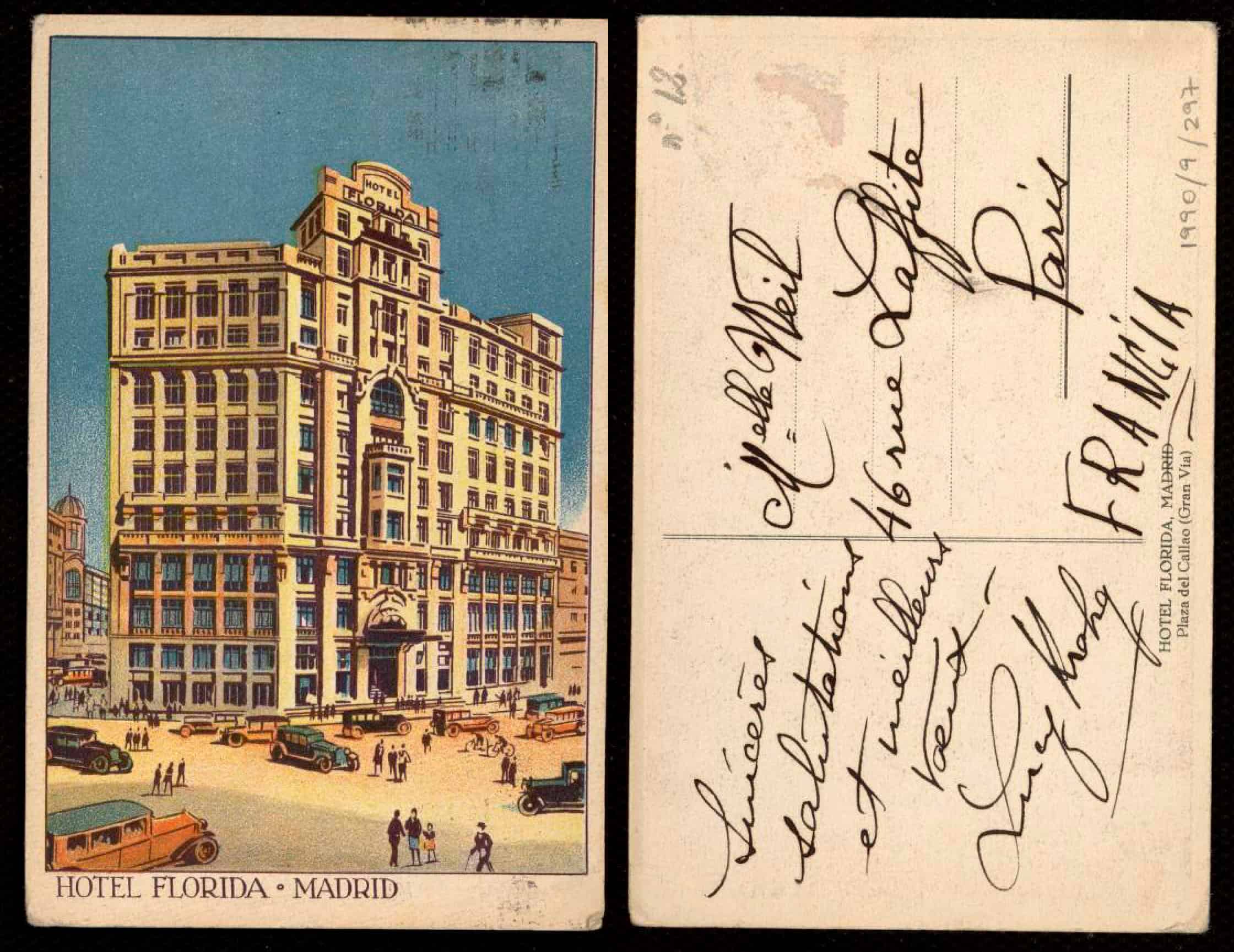
On Plaza del Callao, one of the central plazas of Madrid, the capital of Spain, where an El Corte Inglés now sells perfume with some actress's face on it, stood the Hotel Florida. Antonio Palacios built it between 1922 and 1924, the man who designed the Cibeles Palace, the Círculo de Bellas Artes and even the Madrid metro logo. Ten storeys, two hundred rooms with bath and telephone, the façade clad in white marble. An indecent amount of modernity for its day.En la plaza del Callao, donde hoy El Corte Inglés vende perfume con la cara de alguna actriz, estuvo el Hotel Florida. Lo construyó Antonio Palacios entre 1922 y 1924, el hombre que diseñó el Palacio de Cibeles, el Círculo de Bellas Artes y hasta el logotipo del metro de Madrid. Diez plantas, doscientas habitaciones con baño y teléfono, la fachada revestida de mármol blanco. Una cantidad indecente de modernidad para su época.A la plaça del Callao, on avui El Corte Inglés ven perfum amb la cara d'alguna actriu, hi havia l'Hotel Florida. El va construir Antonio Palacios entre el 1922 i el 1924, l'home que va dissenyar el Palau de Cibeles, el Círculo de Bellas Artes i fins i tot el logotip del metro de Madrid. Deu plantes, dues-centes habitacions amb bany i telèfon, la façana revestida de marbre blanc. Una quantitat indecent de modernitat per a l'època.
And then the war came and the Florida turned into one of the most storied addresses of the twentieth century and an emblem of the Republic. While shells fell on the Gran Vía (the avenue of the shells, they called it) the guests included Ernest Hemingway, Martha Gellhorn, John Dos Passos, Saint-Exupéry, André Malraux. And two young photographers in love who were inventing war photojournalism: Endre Ernő Friedmann and Gerda Taro, both creators of the Robert Capa persona. The rooms facing the street, the ones that caught the shrapnel, were the cheapest, which tells you something fairly exact about the era's sense of humour. One night in April 1937 two bombs hit the building and Hemingway, who had no rival when it came to grand gestures, declared he had great confidence in the Florida. The hotel survived the entire war.Y entonces llegó la guerra y el Florida se convirtió en uno de los domicilios más célebres del siglo XX y en un emblema de la República. Mientras los obuses caían sobre la Gran Vía (la avenida de los obuses, la llamaban) entre sus huéspedes estaban Ernest Hemingway, Martha Gellhorn, John Dos Passos, Saint-Exupéry, André Malraux. Y dos jóvenes fotógrafos enamorados que estaban inventando el fotoperiodismo de guerra: Endre Ernő Friedmann y Gerda Taro, ambos creadores del personaje de Robert Capa. Las habitaciones que daban a la calle, las que recibían la metralla, eran las más baratas, lo que dice algo bastante exacto sobre el sentido del humor de la época. Una noche de abril de 1937 dos bombas alcanzaron el edificio y Hemingway, que no tenía rival en cuanto a gestos grandilocuentes, declaró que tenía plena confianza en el Florida. El hotel sobrevivió a toda la guerra.I aleshores va arribar la guerra, i el Florida es va convertir en un dels domicilis més cèlebres del segle XX i en un emblema de la República. Mentre els obusos queien sobre la Gran Vía (l'avenida de los obuses, en deien) entre els hostes hi havia Ernest Hemingway, Martha Gellhorn, John Dos Passos, Saint-Exupéry, André Malraux. I dos fotògrafs joves i enamorats que estaven inventant el fotoperiodisme de guerra: Endre Ernő Friedmann i Gerda Taro, creadors tots dos del personatge de Robert Capa. Les habitacions que donaven al carrer, les que rebien la metralla, eren les més barates, cosa que retrata amb força exactitud el sentit de l'humor de l'època. Una nit d'abril de 1937 dues bombes van tocar l'edifici, i Hemingway, que no tenia rival en gestos grandiloqüents, va declarar que tenia plena confiança en el Florida. L'hotel va sobreviure a tota la guerra.
The Hotel Florida on Plaza del Callao, on a postcard from the 1930s. Museo de Historia de Madrid (Inv. 1990/9/297) / memoriademadrid.es, CC BY-NC 4.0.El Hotel Florida en la plaza del Callao, en una postal de los años treinta. Museo de Historia de Madrid (Inv. 1990/9/297) / memoriademadrid.es, CC BY-NC 4.0.L'Hotel Florida a la plaça del Callao, en una postal dels anys trenta. Museo de Historia de Madrid (Inv. 1990/9/297) / memoriademadrid.es, CC BY-NC 4.0.
It did not survive the peace.No sobrevivió a la paz.No va sobreviure a la pau.
In 1964, Galerías Preciados (here the executioner was Pepín, for the record) bought it and tore it down to build a department store. Nobody protested. It was the desarrollismo: a building by Antonio Palacios, loaded with the memory of the defence of Madrid, was worth less than a shop window. On that lot stands today the El Corte Inglés in Callao, which inherited it in 1995.En 1964, Galerías Preciados (aquí el verdugo fue Pepín, que conste) lo compró y lo derribó para construir unos grandes almacenes. Nadie protestó. Era el desarrollismo: un edificio de Antonio Palacios, cargado con la memoria de la defensa de Madrid, valía menos que un escaparate. En ese solar se levanta hoy El Corte Inglés de Callao, que lo heredó en 1995.El 1964, Galerías Preciados (aquí el botxí va ser Pepín, que consti) el va comprar i el va enderrocar per construir-hi uns grans magatzems. Ningú no va protestar. Era el desenvolupisme: un edifici d'Antonio Palacios, carregat amb la memòria de la defensa de Madrid, valia menys que un aparador. En aquell solar s'aixeca avui El Corte Inglés de Callao, que el va heretar el 1995.
Plaza del Callao, before and after: the footprint of the Hotel Florida under the present store. Aerial study, MÓN.La plaza del Callao, antes y después: la huella del Hotel Florida bajo la tienda actual. Estudio aéreo, MÓN.La plaça del Callao, abans i després: la petjada de l'Hotel Florida sota la botiga actual. Estudi aeri, MÓN.
In 2019, fifty-five years later, a plaque went up, at the initiative of the company that owns the wall, according to the city council's own record of it. It says the Hotel Florida stood there, 1924 to 1964, a meeting place for writers and correspondents. It does not say who tore it down, or why, or who paid for the words. That grammar, the loss named and the agent left out, is not particular to this corner. A few floors down, on a wall in Barcelona, this report will find the same construction, agreed in that case with the store's owners, and there the missing subject will not be a demolition crew but a dictatorship. The form is always correct. It is the subject that goes missing.En 2019, cincuenta y cinco años después, se colocó una placa, a iniciativa de la empresa dueña de la pared, según consta en el propio registro del Ayuntamiento. Dice que ahí estuvo el Hotel Florida, de 1924 a 1964, lugar de encuentro de escritores y corresponsales. No dice quién lo derribó, ni por qué, ni quién pagó las palabras. Esa gramática, la pérdida nombrada y el agente omitido, no es particular de esta esquina. Unas plantas más abajo, en una pared de Barcelona, este reportaje encontrará la misma construcción, pactada en aquel caso con los dueños de la tienda, y allí el sujeto ausente no será una cuadrilla de derribo sino una dictadura. La forma es siempre correcta. Lo que falta es el sujeto.El 2019, cinquanta-cinc anys després, s'hi va col·locar una placa, per iniciativa de l'empresa propietària de la paret, segons consta al registre del mateix Ajuntament. Diu que allà hi havia l'Hotel Florida, del 1924 al 1964, lloc de trobada d'escriptors i corresponsals. No diu qui el va enderrocar, ni per què, ni qui va pagar les paraules. Aquesta gramàtica, la pèrdua anomenada i l'agent omès, no és exclusiva d'aquesta cantonada. Unes plantes més avall, en una paret de Barcelona, aquest reportatge trobarà la mateixa construcció, pactada en aquell cas amb els amos de la botiga, i allà el subjecte absent no serà una brigada d'enderroc sinó una dictadura. La forma sempre és correcta. El que hi falta és el subjecte.
02Sevilla
Plaza del DuquePlaza del DuquePlaça del Duque
Crédito y financiaciónCrédito y financiaciónCrèdit i finançament
Five and a half million pesetas, paid for the palace they did not touchCinco millones y medio de pesetas, pagados por el palacio que no tocaronCinc milions i mig de pessetes, pagats pel palau que no van tocar
If one case sums it all up, it is in Seville, the largest city in southern Spain, and it fits inside a cheque. Until the 1960s, Plaza del Duque, in the historic centre, was a cluster of seigneurial palaces. The Marqués de Palomares's, raised on the old lot of the Dukes of Medina Sidonia. Miguel Sánchez-Dalp's neo-Mudéjar palace, a regionalist fantasy by the architect Simón Barris that the chroniclers held up as the very model of what the Sevillian style ought to be. And the Alfonso X school. El Corte Inglés bought them in 1966 and tore them down to open its department store on 8 March 1968. Earlier, the Teatro del Duque had fallen, and in 1963 the Cavaleri palace, of which only the Renaissance doorway survived (another mounted head, another Fontanella window avant la lettre, wedged today into an annex of the store).Si un caso lo resume todo, está en Sevilla, y cabe dentro de un cheque. Hasta los años sesenta, la plaza del Duque, en pleno centro histórico, era un racimo de palacios señoriales. El del marqués de Palomares, levantado sobre el viejo solar de los duques de Medina Sidonia. El palacio neomudéjar de Miguel Sánchez-Dalp, una fantasía regionalista del arquitecto Simón Barris que los cronistas ponían como modelo de lo que debía ser el estilo sevillano. Y el colegio Alfonso X. El Corte Inglés los compró en 1966 y los derribó para abrir sus grandes almacenes el 8 de marzo de 1968. Antes había caído el Teatro del Duque, y en 1963 el palacio Cavaleri, del que solo sobrevivió la portada renacentista (otra cabeza disecada, otra ventana de Fontanella avant la lettre, encajada hoy en un anexo de la tienda).Si hi ha un cas que ho resumeix tot, és a Sevilla, i cap dins d'un xec. Fins als anys seixanta, la plaça del Duque, en ple centre històric, era un pom de palaus senyorials. El del marquès de Palomares, aixecat sobre l'antic solar dels ducs de Medina Sidonia. El palau neomudèjar de Miguel Sánchez-Dalp, una fantasia regionalista de l'arquitecte Simón Barris que els cronistes posaven com a model del que havia de ser l'estil sevillà. I el col·legi Alfonso X. El Corte Inglés els va comprar el 1966 i els va enderrocar per obrir-hi els seus grans magatzems el 8 de març de 1968. Abans havia caigut el Teatro del Duque, i el 1963 el palau Cavaleri, del qual només va sobreviure la portada renaixentista (un altre cap dissecat, una altra finestra de Fontanella avant la lettre, encaixada avui en un annex de la botiga).
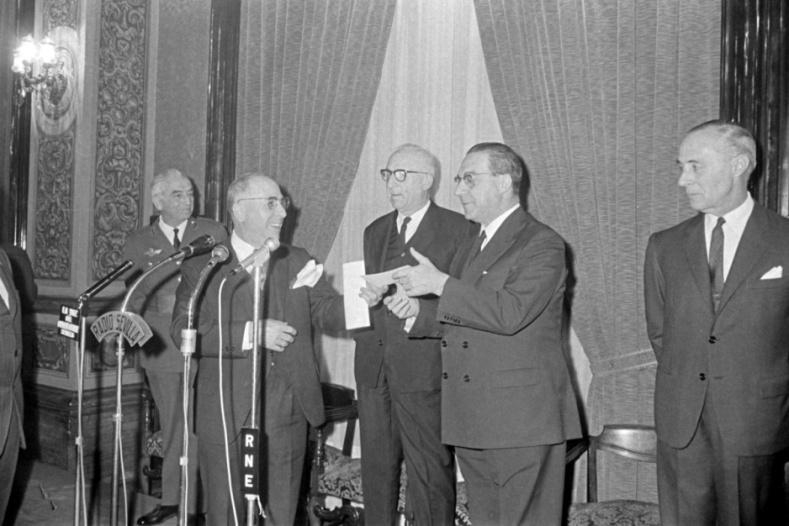
So far, the usual story. What turns it into something else is what came next, and we know it with a notary's precision thanks to the doctoral thesis of the architect Pedro Barrero Ortega, defended at the University of Seville in 2017 under Antonio Gámiz Gordo. Ramón Areces, the founder of El Corte Inglés, handed the cheque to the mayor of Seville, Félix Moreno de la Cova, in the lounge of the Hotel Alfonso XIII, the city's grandest. It was for five and a half million pesetas, practically the sum at which a different palace, the Casa de los Pinelo, had been valued when the city expropriated it in 1964; the file records 5,455,368 pesetas and three céntimos. Barrero's words for the payment are compensation for the demolition of the Sánchez-Dalp palace and the others around it, and for the municipal permission to build. The professor who supervised his thesis calls it moral compensation.Hasta aquí, la historia de siempre. Lo que la convierte en otra cosa es lo que vino después, y lo sabemos con precisión de notario gracias a la tesis doctoral del arquitecto Pedro Barrero Ortega, leída en la Universidad de Sevilla en 2017 bajo la dirección de Antonio Gámiz Gordo. Ramón Areces, el fundador de El Corte Inglés, entregó el cheque al alcalde de Sevilla, Félix Moreno de la Cova, en el salón del Hotel Alfonso XIII, el más señorial de la ciudad. Era de cinco millones y medio de pesetas, prácticamente la suma en que se había tasado otro palacio, la Casa de los Pinelo, cuando el Ayuntamiento lo expropió en 1964; el expediente recoge 5.455.368 pesetas con tres céntimos. Las palabras de Barrero para el pago son compensación por el derribo del palacio de Sánchez Dalp y otros de su entorno, y por la autorización municipal para construir. El profesor que dirigió su tesis lo llama compensación moral.Fins aquí, la història de sempre. El que la converteix en una altra cosa és el que va venir després, i ho sabem amb precisió de notari gràcies a la tesi doctoral de l'arquitecte Pedro Barrero Ortega, llegida a la Universitat de Sevilla el 2017 sota la direcció d'Antonio Gámiz Gordo. Ramón Areces, el fundador d'El Corte Inglés, va lliurar el xec a l'alcalde de Sevilla, Félix Moreno de la Cova, al saló de l'Hotel Alfonso XIII, el més senyorial de la ciutat. Era de cinc milions i mig de pessetes, pràcticament la suma en què s'havia taxat un altre palau, la Casa de los Pinelo, quan l'Ajuntament el va expropiar el 1964; l'expedient en recull 5.455.368 pessetes amb tres cèntims. Les paraules de Barrero per a aquest pagament són compensació per l'enderroc del palau de Sánchez Dalp i d'altres del seu entorn, i per l'autorització municipal per construir. El professor que va dirigir la tesi en diu compensació moral.
The handover, 31 March 1967: Ramón Areces gives the cheque to mayor Félix Moreno de la Cova at the Hotel Alfonso XIII, before the microphones of RNE. Gelán. Archivo Municipal de Sevilla.La entrega, 31 de marzo de 1967: Ramón Areces da el cheque al alcalde Félix Moreno de la Cova en el Hotel Alfonso XIII, ante los micrófonos de RNE. Gelán. Archivo Municipal de Sevilla.El lliurament, 31 de març de 1967: Ramón Areces dona el xec a l'alcalde Félix Moreno de la Cova a l'Hotel Alfonso XIII, davant dels micròfons de RNE. Gelán. Archivo Municipal de Sevilla.
Entidad bancaria no constaSucursal no consta
Serie · Nº no constaPtas.5.500.00000
Páguese por este cheque aEl Excmo. Ayuntamiento de Sevilla
Pesetascinco millones y medio
Reconstrucción no es facsímil · MÓN
The cheque, reconstructed from the account in Pedro Barrero Ortega's doctoral thesis (University of Seville, 2017) and from the photograph of the handover. Only documented details appear; the bank, the branch and the number are not on record and are marked as such. Visual reconstruction by MÓN. Not a facsimile of the original document.El cheque, reconstruido a partir del relato de la tesis doctoral de Pedro Barrero Ortega (Universidad de Sevilla, 2017) y de la fotografía de la entrega. Solo figuran los datos documentados; la entidad, la sucursal y el número no constan y así se indica. Reconstrucción visual de MÓN. No es un facsímil del documento original.El xec, reconstruït a partir del relat de la tesi doctoral de Pedro Barrero Ortega (Universitat de Sevilla, 2017) i de la fotografia del lliurament. Només hi figuren les dades documentades; l'entitat, la sucursal i el número no consten i així s'indica. Reconstrucció visual de MÓN. No és un facsímil del document original.
Read the concept again. The cheque did not pay for the three palaces that came down; nothing could. It paid for the one it did not touch, the Pinelo. A crumbling Renaissance palace, restored with that money, today the seat of two royal academies. The arithmetic is honest to the point of cruelty. One palace is saved because three were killed. Sevillian culture collected the ransom on one hostage with the money from the kidnapping of the others.Lee otra vez el concepto. El cheque no pagó los tres palacios que cayeron; nada podía pagarlos. Pagó el que no tocó, el Pinelo. Un palacio renacentista que se caía a pedazos, restaurado con ese dinero, hoy sede de dos reales academias. La aritmética es honesta hasta la crueldad. Se salva un palacio porque se mataron tres. La cultura sevillana cobró el rescate de un rehén con el dinero del secuestro de los otros.Torna a llegir el concepte. El xec no va pagar els tres palaus que van caure; res no els podia pagar. Va pagar el que no va tocar, el Pinelo. Un palau renaixentista que queia a trossos, restaurat amb aquells diners, avui seu de dues reials acadèmies. L'aritmètica és honesta fins a la crueltat. Se salva un palau perquè se n'han matat tres. La cultura sevillana va cobrar el rescat d'un ostatge amb els diners del segrest dels altres.
And everyone went home happy. The city got its restored palace, the company got its store and its charitable headline, and the three demolished buildings vanished from the record the way a body vanishes in a well-solved crime. When a company pays a city, in a hotel lounge and in front of a photographer, almost exactly the sum at which another palace had been valued for expropriation, it is hard to read the cheque as anything but the price of a decision already taken. It is the one document of the operation that survives with a figure on it.Y todos a casa contentos. La ciudad se quedó su palacio restaurado, la empresa su tienda y su titular caritativo, y los tres edificios derribados desaparecieron del expediente como desaparece un cuerpo en un crimen bien resuelto. Cuando una empresa paga a una ciudad, en el salón de un hotel y delante de un fotógrafo, casi exactamente la suma en que se había tasado otro palacio para expropiarlo, es difícil leer el cheque como otra cosa que el precio de una decisión ya tomada. Es el único documento de la operación que sobrevive con una cifra encima.I tothom content cap a casa. La ciutat es va quedar el seu palau restaurat, l'empresa la seva botiga i el seu titular caritatiu, i els tres edificis enderrocats van desaparèixer de l'expedient com desapareix un cos en un crim ben resolt. Quan una empresa paga a una ciutat, al saló d'un hotel i davant d'un fotògraf, gairebé exactament la suma en què s'havia taxat un altre palau per expropiar-lo, costa llegir el xec com una altra cosa que el preu d'una decisió ja presa. És l'únic document de l'operació que sobreviu amb una xifra a sobre.
Buying women at a discountMujeres a precio de rebajasDones a preu de rebaixes
And then there is the Diagonal, the great avenue that cuts across Barcelona. This is no longer about art, nor about the abstract sorrow left by a pretty building that is gone. This is about women and children, and about a building whose value lay not in what it looked like but in what was done inside it, and there is no more thorough machine of forgetting than a department store that sells everything, open even on Sundays.Y luego está la Diagonal, la gran avenida que cruza Barcelona. Esto ya no va de arte, ni de la pena abstracta que deja un edificio bonito que ya no está. Esto va de mujeres y de niños, y de un edificio cuyo valor no estaba en su aspecto sino en lo que se hizo dentro, y no hay máquina de olvido más concienzuda que unos grandes almacenes que lo venden todo, abiertos incluso en domingo.I després hi ha la Diagonal, la gran avinguda que travessa Barcelona. Això ja no va d'art, ni de la pena abstracta que deixa un edifici bonic que ja no hi és. Això va de dones i de criatures, i d'un edifici que valia pel que s'hi va fer a dins, i no hi ha màquina d'oblit més conscienciosa que uns grans magatzems que ho venen tot, oberts fins i tot en diumenge.
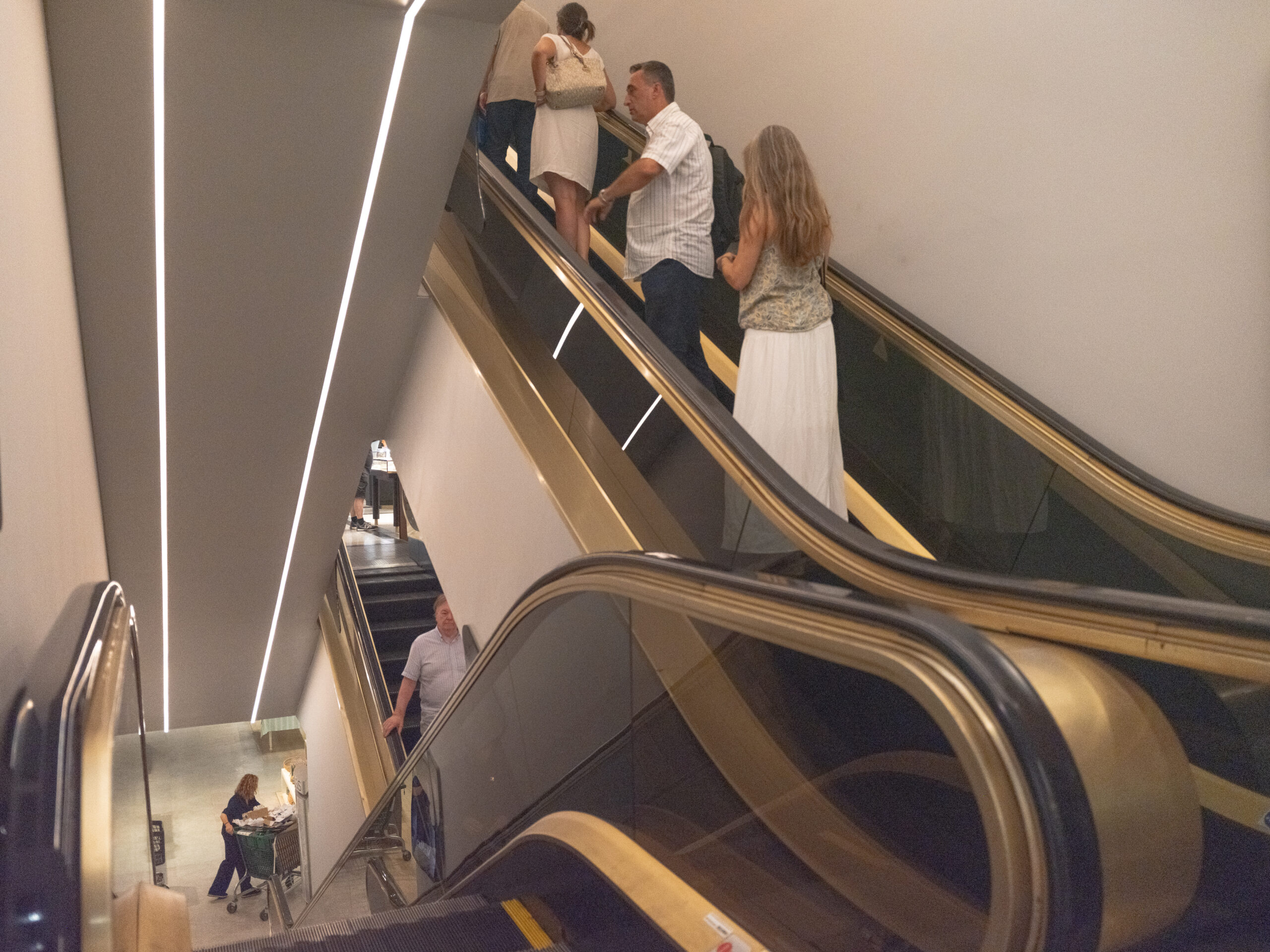
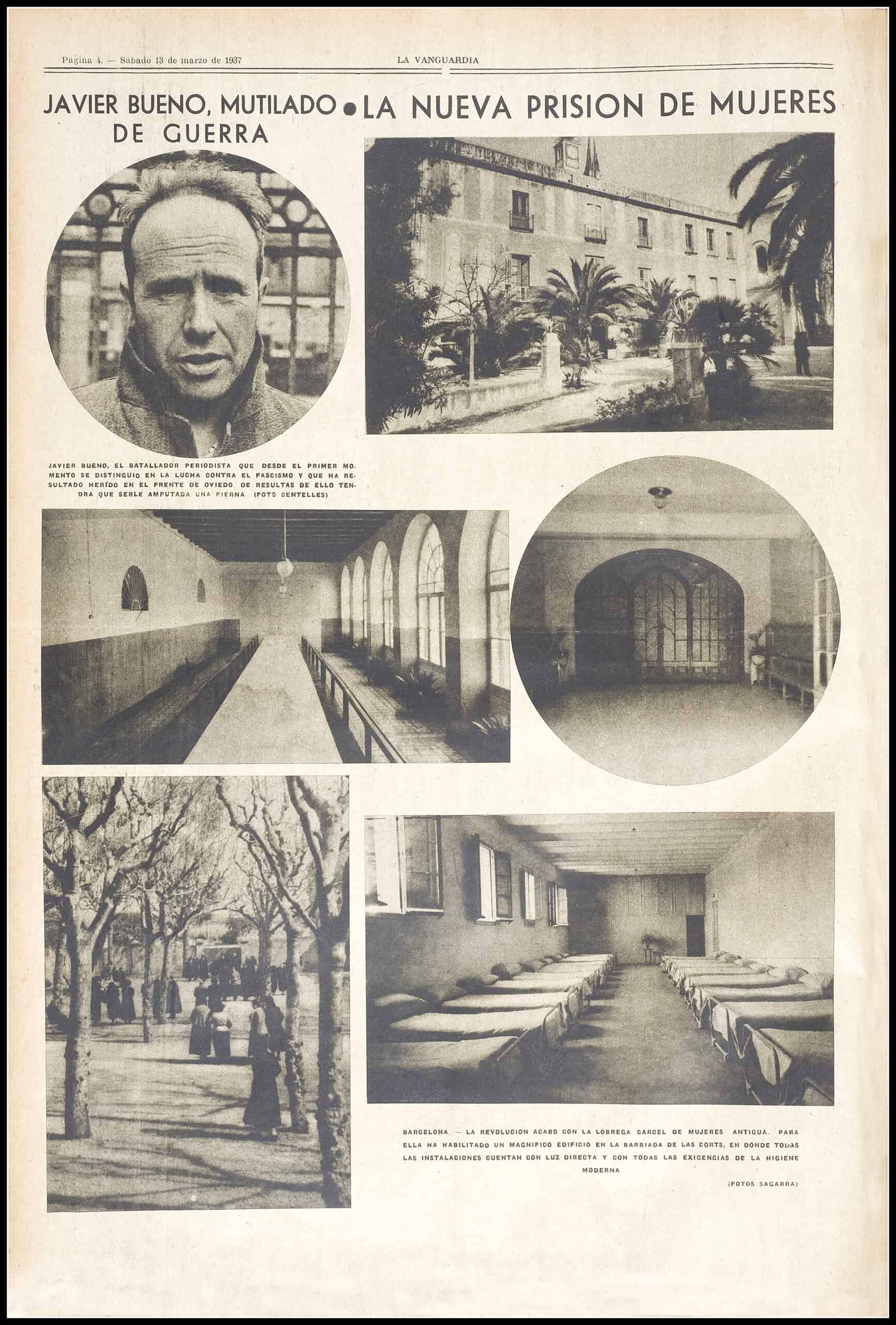
The El Corte Inglés on the Diagonal, beside Plaça Reina Maria Cristina, opened on 16 March 1974. Beneath it (literally beneath the fitting rooms and the escalators) had stood Franco's women's prison in Barcelona. The site had been a medieval farmhouse and then, from 1886, an asylum run by nuns, the Asil del Bon Consell; in October 1936 the Republican Generalitat turned it into a women's correctional, and in January 1939, when Franco's troops marched in, it became what it would be for sixteen years, a warehouse for the punished, with nuns among those who ran it.El Corte Inglés de la Diagonal, junto a la plaça Reina Maria Cristina, abrió el 16 de marzo de 1974. Debajo (literalmente debajo de los probadores y de las escaleras mecánicas) había estado la cárcel de mujeres del franquismo en Barcelona. El solar había sido una masía medieval y luego, desde 1886, un asilo regido por monjas, el Asil del Bon Consell; en octubre de 1936 la Generalitat republicana lo convirtió en correccional de mujeres, y en enero de 1939, cuando entraron las tropas de Franco, se convirtió en lo que sería durante dieciséis años, un almacén de castigadas, con monjas entre quienes lo regían.El Corte Inglés de la Diagonal, al costat de la plaça de la Reina Maria Cristina, va obrir el 16 de març de 1974. A sota (literalment a sota dels provadors i de les escales mecàniques) hi havia hagut la presó de dones del franquisme a Barcelona. El solar havia estat una masia medieval i després, des del 1886, un asil regit per monges, l'Asil del Bon Consell; l'octubre de 1936 la Generalitat republicana el va convertir en correccional de dones, i el gener de 1939, quan van entrar les tropes de Franco, es va convertir en el que seria durant setze anys, un magatzem de castigades, amb monges entre els qui el regien.
Inside El Corte Inglés on the Diagonal, August 2026. The store opened in 1974 on the site of the prison. MÓN.Dentro de El Corte Inglés de la Diagonal, agosto de 2026. La tienda abrió en 1974 sobre el solar de la cárcel. MÓN.Dins d'El Corte Inglés de la Diagonal, agost de 2026. La botiga va obrir el 1974 sobre el solar de la presó. MÓN.The women's prison on the Diagonal, and the store raised over it in 1974. Aerial study, MÓN.La cárcel de mujeres de la Diagonal, y la tienda levantada encima en 1974. Estudio aéreo, MÓN.La presó de dones de la Diagonal, i la botiga que s'hi va aixecar a sobre el 1974. Estudi aeri, MÓN.
The numbers were established by the historian Fernando Hernández Holgado from the register of admissions and releases held in Catalonia's National Archive.Las cifras las estableció el historiador Fernando Hernández Holgado a partir del registro de altas y bajas que se conserva en el Arxiu Nacional de Catalunya.Les xifres les va establir l'historiador Fernando Hernández Holgado a partir del registre d'altes i baixes que es conserva a l'Arxiu Nacional de Catalunya.
Barcelona · Diagonal · August 1939Barcelona · Diagonal · agosto de 1939Barcelona · Diagonal · agost de 1939
1.806
women, and 43 children, in a building meant for about 200.mujeres, y 43 niños, en un edificio pensado para unas 200.dones, i 43 criatures, en un edifici pensat per a unes 200.
Read that sentence as many times as you need. One thousand eight hundred and six women and forty-three children in a place for two hundred.Lee esa frase las veces que necesites. Mil ochocientas seis mujeres y cuarenta y tres niños en un sitio para doscientas.Llegeix aquesta frase tantes vegades com calgui. Mil vuit-centes sis dones i quaranta-tres criatures en un lloc per a dues-centes.
*LES CORTS 1939*
REF. LES CORTS / CAPACITY 200 / SOLD 1974REF. LES CORTS / CAPACIDAD 200 / VENDIDO 1974REF. LES CORTS / CAPACITAT 200 / VENUT 1974
La Vanguardia, 13 March 1937, announcing the new General Correctional for Women in Barcelona. Archive.La Vanguardia, 13 de marzo de 1937, anunciando el nuevo Correccional General de Mujeres de Barcelona. Archivo.La Vanguardia, 13 de març de 1937, anunciant el nou Correccional General de Dones de Barcelona. Arxiu.
And here is the figure that truly admits no euphemism. In 1939 and 1940, eleven prisoners from Les Corts were taken out and shot on the sands of the Camp de la Bota. The first was Carme Claramunt, executed in 1939. In her farewell letter she wrote that they were killing an innocent woman. She was right, but in 1939 that saved nobody.Y aquí está la cifra que de verdad no admite eufemismo. En 1939 y 1940, once presas de Les Corts fueron sacadas y fusiladas en la arena del Camp de la Bota. La primera fue Carme Claramunt, fusilada en 1939. En su carta de despedida escribió que estaban matando a una inocente. Tenía razón, pero en 1939 eso no salvaba a nadie.I aquí hi ha la xifra que de debò no admet eufemismes. El 1939 i el 1940, onze preses de les Corts van ser tretes de la presó i afusellades a la sorra del Camp de la Bota. La primera va ser Carme Claramunt, afusellada el 1939. A la carta de comiat va escriure que estaven matant una innocent. Tenia raó, però el 1939 això no salvava ningú.
Inmates of the Les Corts women's prison, in an archive photograph that dissolves into the mannequins of the store built over the site. Moving image by MÓN, from the original photograph. Photograph courtesy of Anna M. Batalla, first published by Metrópoli Abierta.Presas de la cárcel de mujeres de Les Corts, en una fotografía de archivo que se disuelve en los maniquíes de la tienda construida sobre el solar. Imagen en movimiento de MÓN a partir de la fotografía original. Fotografía por cortesía de Anna M. Batalla, publicada por primera vez en Metrópoli Abierta.Preses de la presó de dones de les Corts, en una fotografia d'arxiu que es dissol en els maniquins de la botiga construïda sobre el solar. Imatge en moviment de MÓN a partir de la fotografia original. Fotografia per cortesia d'Anna M. Batalla, publicada per primera vegada a Metrópoli Abierta.
The prison closed in 1955. The lot ended up, through a real-estate deal, in the hands of El Corte Inglés, which raised its store in 1974 with nothing to indicate that this rectangle of Barcelona had been a hell with a woman's name. And here comes the most revealing detail of the whole report.La cárcel cerró en 1955. El solar acabó, mediante una operación inmobiliaria, en manos de El Corte Inglés, que levantó su tienda en 1974 sin nada que indicara que este rectángulo de Barcelona había sido un infierno con nombre de mujer. Y aquí viene el detalle más revelador de todo el reportaje.La presó va tancar el 1955. El solar va acabar, per mitjà d'una operació immobiliària, a mans d'El Corte Inglés, que hi va aixecar la botiga el 1974 sense res que indiqués que aquest rectangle de Barcelona havia estat un infern amb nom de dona. I aquí arriba el detall més revelador de tot el reportatge.
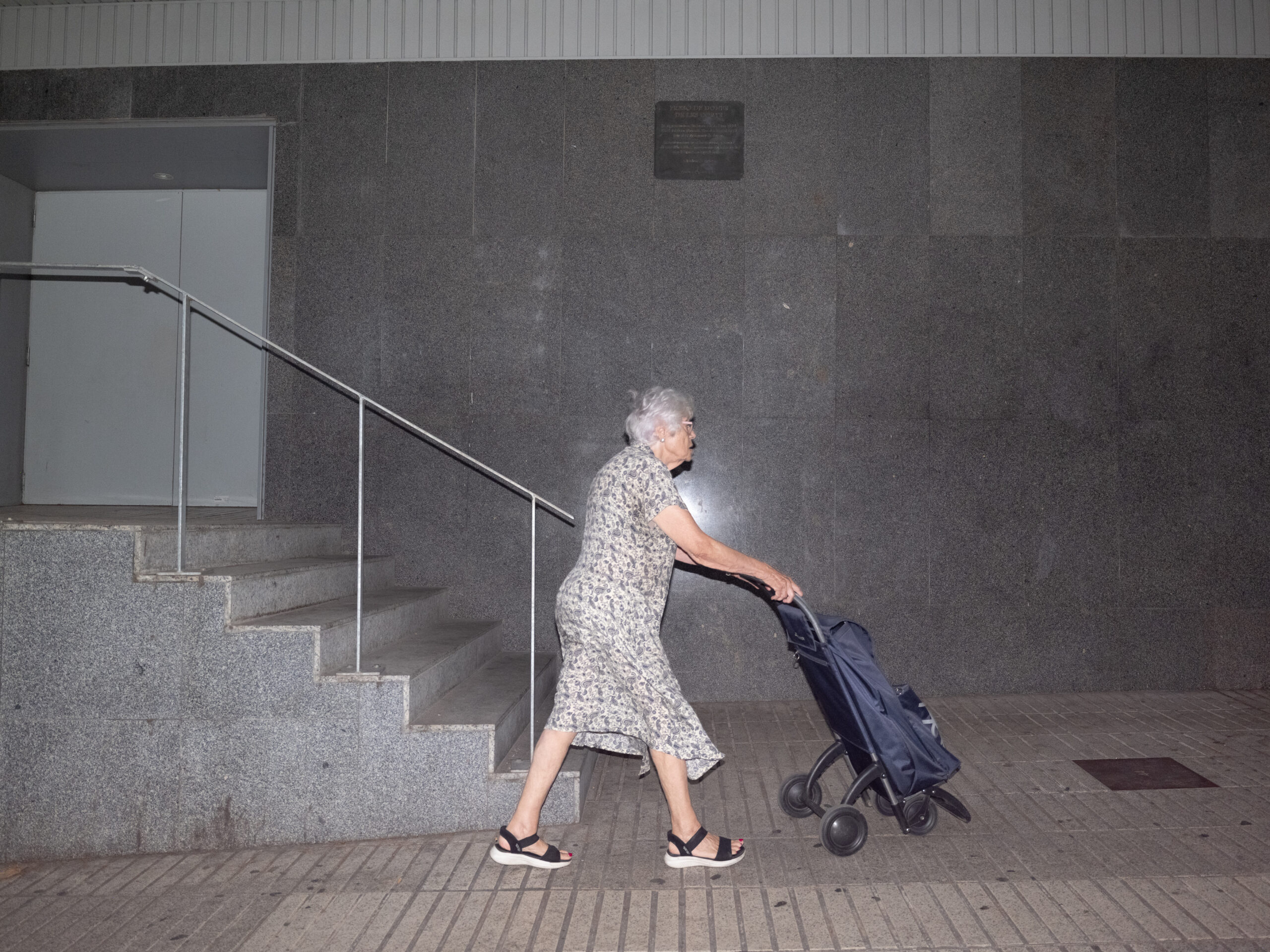
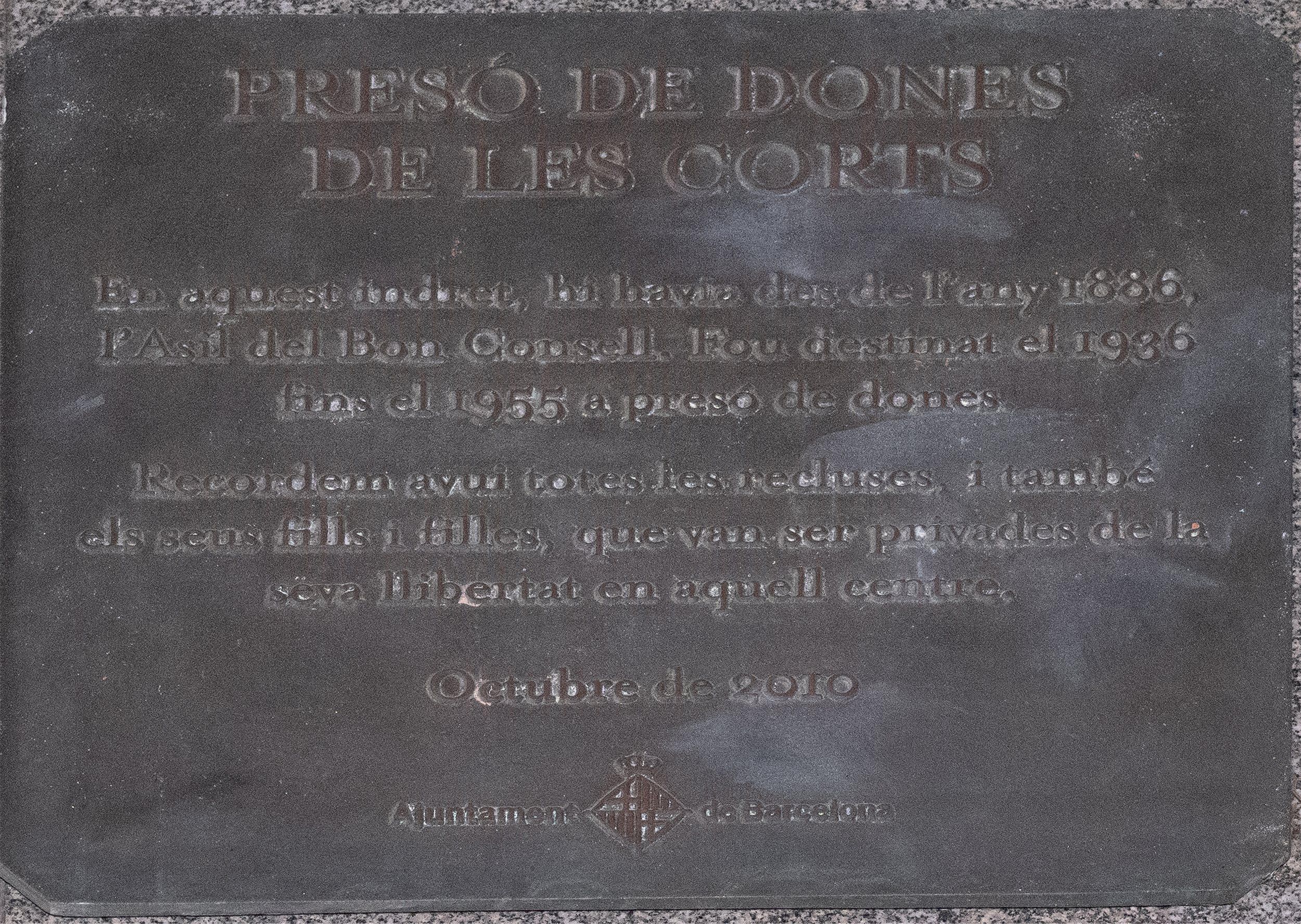
The plaque exists. The city council fixed it to a side wall of the store in October 2010, after years of pressure from historians and from the Grup de Dones de Les Corts, and its text was agreed with the owners. Fernando Hernández Holgado, who has documented the prison for two decades, wrote that the owners intervened in the wording of a text that made no mention of the Franco dictatorship, allegedly so as not to hurt sensibilities. Anna Maria Batalla, daughter of one of the inmates, remembers the same negotiation. What was cast in bronze says that there was an asylum here from 1886, that from 1936 to 1955 the place was used as a women's prison, and that we remember today all the inmates and their sons and daughters, who were deprived of their freedom in that centre. Deprived by whom, for what, under which regime, it does not say. The verb has no subject. That is the grammar of the whole operation, and here it is engraved.La placa existe. El Ayuntamiento la fijó en un muro lateral de la tienda en octubre de 2010, tras años de presión de historiadores y del Grup de Dones de Les Corts, y su texto se pactó con los propietarios. Fernando Hernández Holgado, que lleva dos décadas documentando la cárcel, escribió que los propietarios intervinieron en la redacción de un texto que no mencionaba la dictadura franquista, presuntamente para no herir susceptibilidades. Anna Maria Batalla, hija de una de las presas, recuerda la misma negociación. Lo que se fundió en bronce dice que aquí hubo un asilo desde 1886, que de 1936 a 1955 el lugar se destinó a cárcel de mujeres, y que recordamos hoy a todas las reclusas y a sus hijos e hijas, que fueron privadas de su libertad en aquel centro. Privadas por quién, por qué, bajo qué régimen, no lo dice. El verbo no tiene sujeto. Esa es la gramática de toda la operación, y aquí está grabada.La placa existeix. L'Ajuntament la va fixar en un mur lateral de la botiga l'octubre de 2010, després d'anys de pressió d'historiadors i del Grup de Dones de les Corts, i el text es va pactar amb els propietaris. Fernando Hernández Holgado, que fa dues dècades que documenta la presó, va escriure que els propietaris van intervenir en la redacció d'un text que no esmentava la dictadura franquista, presumptament per no ferir susceptibilitats. Anna Maria Batalla, filla d'una de les preses, recorda la mateixa negociació. El que es va fondre en bronze diu que en aquell indret hi havia, des del 1886, l'Asil del Bon Consell, que del 1936 al 1955 va ser destinat a presó de dones, i que «recordem avui totes les recluses, i també els seus fills i filles, que van ser privades de la seva llibertat en aquell centre». Privades per qui, per què, sota quin règim, no ho diu. El verb no té subjecte. Aquesta és la gramàtica de tota l'operació, i aquí la tenim gravada.
It is also placed where nobody can read it. The plaque hangs about three metres up, above a service door and a short flight of steps, well above any eye line, and the bronze has darkened until the letters are close to the colour of the wall. Not even a basketball player could read it. From the pavement, a title and a date. A plaque that cannot be read bothers nobody, and it still lets the store say that the memory is honoured.Además está puesta donde nadie puede leerla. La placa cuelga a unos tres metros, sobre una puerta de servicio y un tramo corto de escalera, muy por encima de la línea de los ojos, y el bronce se ha oscurecido hasta dejar las letras casi del color del muro. Ni un jugador de baloncesto podría leerla. Desde la acera, un título y una fecha. Una placa que no se puede leer no molesta a nadie, y aun así permite a la tienda decir que la memoria está honrada.A més, està posada on ningú no la pot llegir. La placa penja a uns tres metres, sobre una porta de servei i un tram curt d'escala, molt per sobre de la línia dels ulls, i el bronze s'ha enfosquit fins a deixar les lletres gairebé del color del mur. Ni un jugador de bàsquet la podria llegir. Des de la vorera, un títol i una data. Una placa que no es pot llegir no molesta ningú, i tot i així permet a la botiga dir que la memòria està honrada.
Top shelfEstante superiorPrestatge de daltEye level · nothing on displayAltura de los ojos · nada en el escaparateAlçada dels ulls · res a l'aparadorShopping · in stockLa compra · hay existenciasLa compra · hi ha existències
Placed October 2010 · Ajuntament de BarcelonaColocada en octubre de 2010 · Ayuntamiento de BarcelonaCol·locada l'octubre de 2010 · Ajuntament de BarcelonaWording agreed with the storeTexto pactado con la tiendaText pactat amb la botigaFranco dictatorship · not in stockDictadura franquista · sin existenciasDictadura franquista · sense existències
As cast in bronze · CatalanTal como está fundida en bronce · en catalánTal com està fosa en bronze
PRESÓ DE DONES DE LES CORTS
En aquest indret, hi havia des de l'any 1886, l'Asil del Bon Consell. Fou destinat el 1936 fins el 1955 a presó de dones
Recordem avui totes les recluses, i també els seus fills i filles, que van ser privades de la seva llibertat en aquell centre.
Octubre de 2010 Ajuntament de Barcelona
TranslationTraducciónTraducció
WOMEN'S PRISON OF LES CORTSCÁRCEL DE MUJERES DE LES CORTSCÁRCEL DE MUJERES DE LES CORTS
On this site there stood, from 1886, the Bon Consell asylum. From 1936 to 1955 it was used as a women's prison.En este lugar estuvo, desde 1886, el Asilo del Buen Consejo. De 1936 a 1955 se destinó a cárcel de mujeres.En este lugar estuvo, desde 1886, el Asilo del Buen Consejo. De 1936 a 1955 se destinó a cárcel de mujeres.
We remember today all the inmates, and also their sons and daughters, who were deprived of their freedom in that centre.Recordamos hoy a todas las reclusas, y también a sus hijos e hijas, que fueron privadas de su libertad en aquel centro.Recordamos hoy a todas las reclusas, y también a sus hijos e hijas, que fueron privadas de su libertad en aquel centro.
October 2010 Barcelona City CouncilOctubre de 2010 Ayuntamiento de BarcelonaOctubre de 2010 Ayuntamiento de Barcelona
Beneath the plaque, Avinguda Diagonal, August 2026, and the plaque itself, photographed from the pavement and corrected for perspective. MÓN.Bajo la placa, avinguda Diagonal, agosto de 2026, y la propia placa, fotografiada desde la acera y corregida de perspectiva. MÓN.Sota la placa, avinguda Diagonal, agost de 2026, i la mateixa placa, fotografiada des de la vorera i corregida de perspectiva. MÓN.
A monument to the victims, worded so as not to discomfort whoever sells lingerie over their grave.Un monumento a las víctimas, redactado para no incomodar a quien vende lencería sobre su tumba.Un monument a les víctimes, redactat per no incomodar qui ven llenceria sobre la seva tomba.
It took until December 2019 for a decent memorial (by the architect Jordi Henrich, the artist Núria Ricart and Hernández Holgado himself, pushed by the citizen platform Futur Monument) on the corner of Joan Güell and Europa. Notice the pattern, because it repeats all over Spain. The memory is never supplied by the company nor by the administration on its own initiative. It is wrenched out, over years, by the children and grandchildren and a handful of stubborn historians. The memorial, as those who built it put it, is the process. Which is to say, the fight.Hubo que esperar a diciembre de 2019 para un memorial decente (del arquitecto Jordi Henrich, la artista Núria Ricart y el propio Hernández Holgado, empujados por la plataforma ciudadana Futur Monument) en la esquina de Joan Güell con Europa. Fíjate en el patrón, porque se repite en toda España. La memoria no la pone nunca la empresa ni la administración por iniciativa propia. Se la arrancan, durante años, los hijos, los nietos y un puñado de historiadores tercos. El memorial, como dicen quienes lo levantaron, es el proceso. Es decir, la pelea.Va caldre esperar fins al desembre de 2019 per tenir un memorial digne (de l'arquitecte Jordi Henrich, l'artista Núria Ricart i el mateix Hernández Holgado, empesos per la plataforma ciutadana Futur Monument) a la cantonada de Joan Güell amb Europa. Fixa't en el patró, perquè es repeteix a tot Espanya. La memòria no la posa mai l'empresa ni l'administració per iniciativa pròpia. Els l'arrenquen, durant anys, els fills, els néts i un grapat d'historiadors tossuts. El memorial, com diuen els qui el van aixecar, és el procés. És a dir, la baralla.
03Barcelona
Plaça CatalunyaPlaça CatalunyaPlaça de Catalunya
AntigüedadesAntigüedadesAntiguitats
The mounted head of Plaça CatalunyaLa cabeza disecada de la plaça CatalunyaEl cap dissecat de la plaça de Catalunya
Back to the beginning, to the window on Fontanella street, because now we know how to read it.Volvamos al principio, a la ventana de la calle Fontanella, porque ahora sabemos leerla.Tornem al principi, a la finestra del carrer de Fontanella, perquè ara ja la sabem llegir.
The El Corte Inglés on Plaça Catalunya opened in 1962 and grew at the expense of its block. The great 1990s expansion (whose authorship, and there is something close to farce here, was signed by none other than Oriol Bohigas, the architect-ideologue of Olympic Barcelona, with his MBM studio) required tearing down Casa Sicart, the Count of Sicart's modernist townhouse with Gallissà's gallery. The work finished in 1993 and was widely attacked for its grey bulk and for having devoured buildings of value at the most central point of the city.El Corte Inglés de la plaça Catalunya abrió en 1962 y creció a costa de su manzana. La gran ampliación de los años noventa (cuya autoría, y aquí hay algo cercano a la farsa, firmó nada menos que Oriol Bohigas, el arquitecto-ideólogo de la Barcelona olímpica, con su estudio MBM) exigió derribar Casa Sicart, la casa modernista del conde de Sicart con la galería de Gallissà. La obra terminó en 1993 y fue muy atacada por su mole gris y por haber devorado edificios de valor en el punto más céntrico de la ciudad.El Corte Inglés de la plaça de Catalunya va obrir el 1962 i va créixer a costa de la seva illa. La gran ampliació dels anys noranta (l'autoria de la qual, i aquí hi ha alguna cosa propera a la farsa, va signar ni més ni menys que Oriol Bohigas, l'arquitecte i ideòleg de la Barcelona olímpica, amb el seu estudi MBM) va exigir enderrocar la Casa Sicart, la casa modernista del comte de Sicart amb la galeria de Gallissà. L'obra es va acabar el 1993 i va ser molt criticada per la seva mola grisa i per haver devorat edificis de valor al punt més cèntric de la ciutat.
The exact date of Casa Sicart's demolition varies by source (1987, 1990, 1991), and that imprecision is, in itself, fairly eloquent, because we don't even bother to write down accurately when we kill things.La fecha exacta del derribo de Casa Sicart varía según la fuente (1987, 1990, 1991), y esa imprecisión es, en sí misma, bastante elocuente, porque ni siquiera nos molestamos en anotar con exactitud cuándo matamos las cosas.La data exacta de l'enderroc de la Casa Sicart varia segons la font (1987, 1990, 1991), i aquesta imprecisió ja és prou eloqüent, perquè ni tan sols ens molestem a anotar amb exactitud quan matem les coses.
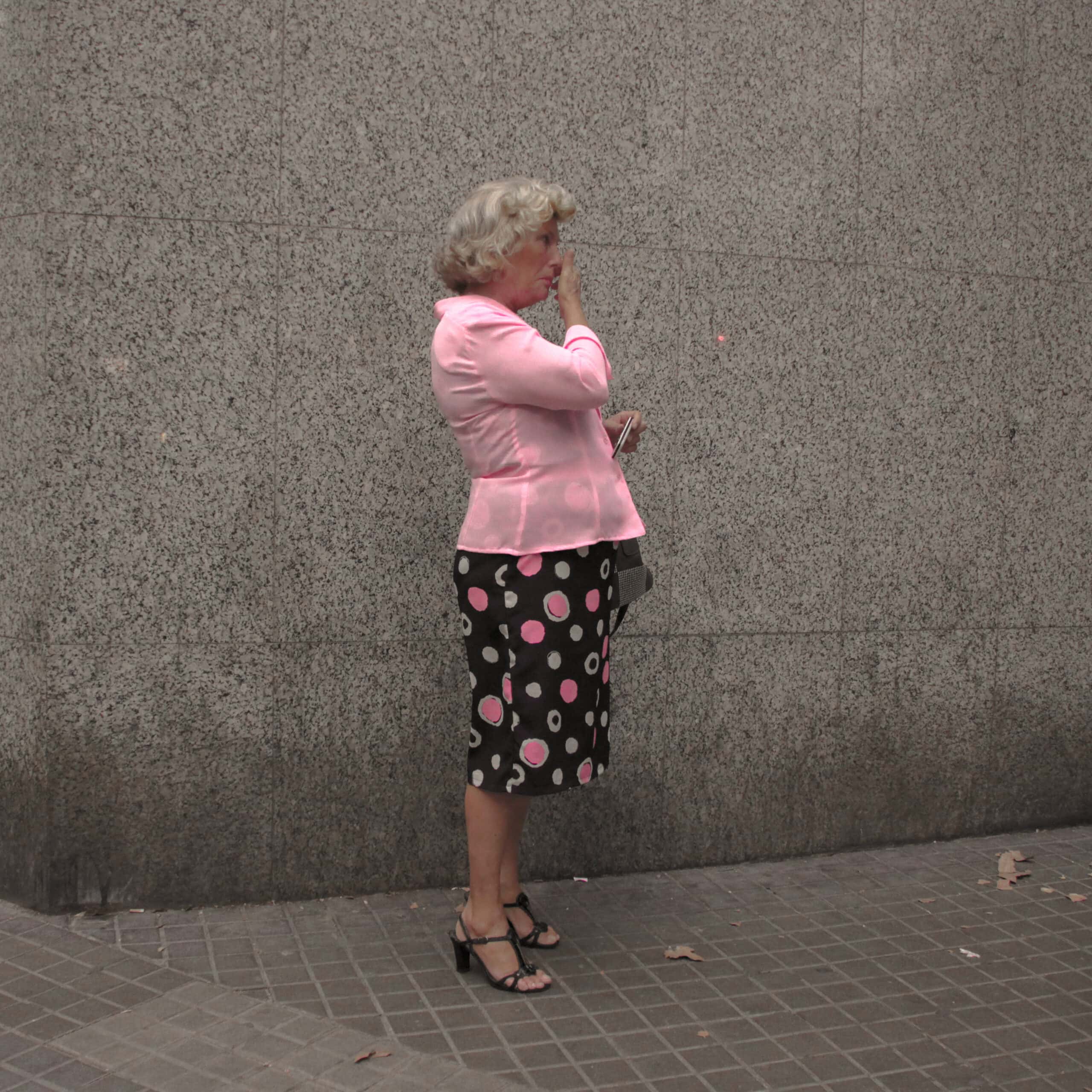
What remained is that gallery rebuilt from casts, nailed to the wall as a concession to conscience. The difference between restoring and embalming is the same as between caring for someone and stuffing them, and we Spaniards, where heritage is concerned, are a nation of taxidermists. We hang the pretty window on the store wall and tell ourselves we honoured history. That we honoured its display case.Lo que quedó es esa galería rehecha a partir de moldes, clavada en la pared como concesión a la conciencia. La diferencia entre restaurar y embalsamar es la misma que entre cuidar a alguien y disecarlo, y los españoles, en materia de patrimonio, somos una nación de taxidermistas. Colgamos la ventana bonita en la pared de la tienda y nos decimos que honramos la historia. Que honramos su vitrina.El que va quedar és aquesta galeria refeta a partir de motlles, clavada a la paret com una concessió a la consciència. La diferència entre restaurar i embalsamar és la mateixa que hi ha entre tenir cura d'algú i dissecar-lo, i en matèria de patrimoni som un país de taxidermistes. Pengem la finestra bonica a la paret de la botiga i ens diem que honorem la història. Que honorem la seva vitrina.
A woman in front of El Corte Inglés, Plaça Catalunya, 2016. MÓN.Una mujer frente a El Corte Inglés, plaça Catalunya, 2016. MÓN.Una dona davant d'El Corte Inglés, plaça de Catalunya, 2016. MÓN.
04Madrid
Calle Princesa · ArgüellesCalle Princesa · ArgüellesCarrer de la Princesa · Argüelles
Hogar y descansoHogar y descansoLlar i descans
The neighbourhood of the future they killed to sell sofasEl barrio del futuro que mataron para vender sofásEl barri del futur que van matar per vendre sofàs
Ask any urban planner today what the neighbourhood of the future looks like, and they will describe Pozas without knowing it. Low traffic, clean air, children playing in the street, a school and every shop within a few minutes' walk, neighbours who know each other. Madrid had built exactly that in 1863, on a cheap triangular lot by the old San Bernardino gate, and then it knocked it down to put up a department store and a hotel.Pregúntale hoy a cualquier urbanista cómo es el barrio del futuro y te describirá Pozas sin saberlo. Poco tráfico, aire limpio, niños jugando en la calle, una escuela y todas las tiendas a pocos minutos a pie, vecinos que se conocen. Madrid había construido exactamente eso en 1863, en un solar triangular y barato junto a la vieja puerta de San Bernardino, y luego lo derribó para poner unos grandes almacenes y un hotel.Pregunta avui a qualsevol urbanista com és el barri del futur i et descriurà Pozas sense saber-ho. Poc trànsit, aire net, criatures jugant al carrer, una escola i totes les botigues a pocs minuts a peu, veïns que es coneixen. Madrid havia construït exactament això el 1863, en un solar triangular i barat al costat de la vella porta de San Bernardino, i després el va enderrocar per posar-hi uns grans magatzems i un hotel.
The builder was named Ángel de Pozas y Cabarga, and he wanted, in his own words, to dignify Madrid's working class. He bought the plot precisely because its sharp triangular shape made it cheap and awkward, and on it the architect Cirilo Ulibarri laid out five blocks and three inner streets, Hermosa, Solares and the Valdecilla passage, around a small plaza. Buildings of four storeys with private bathrooms and sanitary standards unthinkable for nineteenth-century workers. Inside the triangle, nineteen residential blocks and a twentieth in the centre that held, at various times, a cultural centre, a button factory and whatever else was needed.El promotor se llamaba Ángel de Pozas y Cabarga, y quería, con sus propias palabras, dignificar a la clase obrera madrileña. Compró el terreno precisamente porque su forma de triángulo afilado lo hacía barato e incómodo, y sobre él el arquitecto Cirilo Ulibarri trazó cinco manzanas y tres calles interiores, Hermosa, Solares y el pasaje de Valdecilla, en torno a una plazuela. Edificios de cuatro plantas con baño propio y unas condiciones sanitarias impensables para un obrero del siglo XIX. Dentro del triángulo, diecinueve bloques de viviendas y un vigésimo en el centro que fue, según la época, centro cultural, fábrica de botones y lo que hiciera falta.El promotor es deia Ángel de Pozas y Cabarga, i volia, amb paraules seves, dignificar la classe obrera madrilenya. Va comprar el terreny precisament perquè la forma de triangle esmolat el feia barat i incòmode, i l'arquitecte Cirilo Ulibarri hi va traçar cinc illes i tres carrers interiors, Hermosa, Solares i el passatge de Valdecilla, al voltant d'una placeta. Edificis de quatre plantes amb bany propi i unes condicions sanitàries impensables per a un obrer del segle XIX. Dins del triangle, dinou blocs d'habitatges i un vintè al centre que va ser, segons l'època, centre cultural, fàbrica de botons i el que calgués.
The Pozas quarter and the store raised over it on Calle Princesa. Aerial study, MÓN.El barrio de Pozas y la tienda levantada encima en la calle Princesa. Estudio aéreo, MÓN.El barri de Pozas i la botiga aixecada a sobre, al carrer de la Princesa. Estudi aeri, MÓN.
It worked. There was a market, a post office, a Civil Guard post, a school, taverns, craft workshops, even a school of arts and crafts. Madrid's first tram, in 1871, chose to link the Salamanca district and Pozas through the Puerta del Sol. Galdós and Baroja walked its streets. More than fifty films were shot there. By the 1875 census it had 1,588 inhabitants, a figure it more or less held until the end.Funcionó. Hubo mercado, oficina de correos, cuartel de la Guardia Civil, escuela, tabernas, talleres de artesanos, hasta una escuela de artes y oficios. El primer tranvía de Madrid, en 1871, eligió unir el barrio de Salamanca con Pozas pasando por la Puerta del Sol. Galdós y Baroja pasearon por sus calles. Allí se rodaron más de cincuenta películas. El censo de 1875 le contaba 1.588 habitantes, una cifra que mantuvo más o menos hasta el final.Va funcionar. Hi va haver mercat, oficina de correus, caserna de la Guàrdia Civil, escola, tavernes, tallers d'artesans, fins i tot una escola d'arts i oficis. El primer tramvia de Madrid, el 1871, va triar unir el barri de Salamanca amb Pozas passant per la Puerta del Sol. Galdós i Baroja van passejar pels seus carrers. S'hi van rodar més de cinquanta pel·lícules. El cens del 1875 hi comptava 1.588 habitants, una xifra que va mantenir més o menys fins al final.
In 1955, at the height of Pozas's fame, the archaeologist Lauro Olmo Enciso was born on Hermosa street. His father was the playwright Lauro Olmo, author of La camisa; his mother, the writer Pilar Enciso. He was the last generation raised in those streets. The children, he remembers, almost lived in the street, because there were no cars and there was always a neighbour keeping an eye out; when you fell ill, someone would notice and send up a bowl of broth.En 1955, en plena fama de Pozas, el arqueólogo Lauro Olmo Enciso nació en la calle Hermosa. Su padre era el dramaturgo Lauro Olmo, autor de La camisa; su madre, la escritora Pilar Enciso. Fue la última generación criada en aquellas calles. Los niños, recuerda, casi vivían en la calle, porque no había coches y siempre había un vecino pendiente; cuando caías enfermo, alguien se enteraba y subía un tazón de caldo.El 1955, en plena fama de Pozas, l'arqueòleg Lauro Olmo Enciso va néixer al carrer Hermosa. El seu pare era el dramaturg Lauro Olmo, autor de La camisa; la seva mare, l'escriptora Pilar Enciso. Va ser l'última generació criada en aquells carrers. Les criatures, recorda, gairebé vivien al carrer, perquè no hi havia cotxes i sempre hi havia un veí pendent; quan queies malalt, algú se n'assabentava i pujava un bol de brou.
The broth stopped one morning in 1968, when the police arrived and began evicting people. First the old, with an eviction order, five thousand pesetas in compensation, and a flat in a development that did not even belong to Madrid. The city council, with Arias Navarro at its head, had decided to demolish the whole neighbourhood, citing technical reports of imminent ruin that never appeared. The official College of Architects of Madrid sent its own surveyors and concluded there was no ruin of any kind, only some neglected facade rendering that could be fixed.El caldo se acabó una mañana de 1968, cuando llegó la policía y empezó a desalojar. Primero a los viejos, con una orden de desahucio, cinco mil pesetas de indemnización y un piso en una urbanización que ni siquiera pertenecía a Madrid. El Ayuntamiento, con Arias Navarro al frente, había decidido derribar el barrio entero alegando informes técnicos de ruina inminente que nunca aparecieron. El Colegio Oficial de Arquitectos de Madrid envió a sus propios peritos y concluyó que no había ruina de ninguna clase, solo algunos revocos de fachada descuidados que se podían arreglar.El brou es va acabar un matí de 1968, quan va arribar la policia i va començar a desallotjar. Primer els vells, amb una ordre de desnonament, cinc mil pessetes d'indemnització i un pis en una urbanització que ni tan sols era de Madrid. L'Ajuntament, amb Arias Navarro al capdavant, havia decidit enderrocar tot el barri al·legant informes tècnics de ruïna imminent que no van aparèixer mai. El Col·legi Oficial d'Arquitectes de Madrid hi va enviar els seus propis perits i va concloure que no hi havia cap mena de ruïna, només alguns arrebossats de façana descuidats que es podien arreglar.
The excavator did not stop. In the thick of the desarrollismo, with the city overflowing and workers from the provinces crammed into shanty towns, Pozas was simply too good a lot for towers and shopping floors. The buildings fell one by one over four years, and every few days a fire broke out in the empty plots, which the neighbours read as pressure and the developer blamed on the local children. By 1971, only the Olmo family's block was left standing, at the height of what is now the El Corte Inglés furrier's department, one family holding out for a year in the middle of the rubble.La excavadora no se detuvo. En pleno desarrollismo, con la ciudad desbordada y obreros de provincias hacinados en chabolas, Pozas era sencillamente un solar demasiado bueno para torres y plantas comerciales. Los edificios cayeron uno a uno durante cuatro años, y cada pocos días se declaraba un incendio en los solares vacíos, que los vecinos leían como presión y el promotor atribuía a los niños del barrio. En 1971 solo quedaba en pie el bloque de la familia Olmo, a la altura de lo que hoy es la sección de peletería de El Corte Inglés, una familia resistiendo un año en medio del escombro.L'excavadora no es va aturar. En ple desenvolupisme, amb la ciutat desbordada i obrers de províncies amuntegats en barraques, Pozas era simplement un solar massa bo per a torres i plantes comercials. Els edificis van caure un per un durant quatre anys, i cada pocs dies es declarava un incendi als solars buits, que els veïns llegien com una pressió i el promotor atribuïa a la mainada del barri. El 1971 només quedava dret el bloc de la família Olmo, a l'altura del que avui és la secció de pelleteria d'El Corte Inglés, una família resistint un any enmig de la runa.
Madrid · Pozas · 1863 / 1972
19 + 1
residential blocks, a model working-class quarter, erased for a store and a hotel.bloques de viviendas, un barrio obrero modelo, borrado por una tienda y un hotel.blocs d'habitatges, un barri obrer model, esborrat per una botiga i un hotel.
A neighbourhood that solved, in the nineteenth century, the problems urban planners are still trying to solve today. Bulldozed in the twentieth.Un barrio que resolvió, en el siglo XIX, los problemas que los urbanistas siguen intentando resolver hoy. Arrasado en el XX.Un barri que va resoldre, al segle XIX, els problemes que els urbanistes encara intenten resoldre avui. Arrasat al XX.
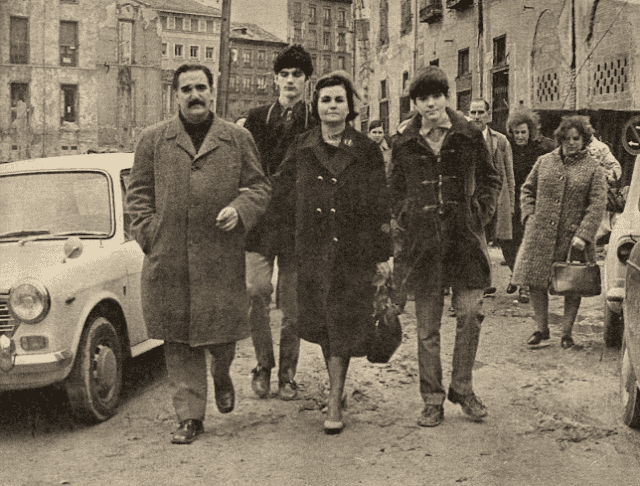
The playwright took it as a personal war. He buried the council in lawsuits and used his fame to fill front pages. On 11 February 1972, at nine in the morning, the excavator parked in front of the Olmo home. Every national outlet was there, and so were the BBC and Le Monde, which had sent correspondents to Madrid for the story. The chronicles say that the father, in desperation, ran out for paint and decorated his door in the colours of the Spanish flag, invoking a law that forbade defacing the national emblem. It did not work either. After four years, the family walked out past half past ten. A neighbourhood died that morning, and the photograph was on the front pages the next day.El dramaturgo se lo tomó como una guerra personal. Enterró al Ayuntamiento en pleitos y usó su fama para llenar portadas. El 11 de febrero de 1972, a las nueve de la mañana, la excavadora aparcó delante de la casa de los Olmo. Estaban todos los medios nacionales, y también la BBC y Le Monde, que habían enviado corresponsales a Madrid para cubrirlo. Cuentan las crónicas que el padre, desesperado, salió a por pintura y decoró la puerta con los colores de la bandera de España, invocando una ley que prohibía dañar el emblema nacional. Tampoco funcionó. Después de cuatro años, la familia salió pasadas las diez y media. Aquella mañana murió un barrio, y la fotografía estaba en las portadas al día siguiente.El dramaturg s'ho va prendre com una guerra personal. Va colgar l'Ajuntament de plets i va fer servir la seva fama per omplir portades. L'11 de febrer de 1972, a les nou del matí, l'excavadora va aparcar davant de la casa dels Olmo. Hi havia tots els mitjans espanyols, i també la BBC i Le Monde, que havien enviat corresponsals a Madrid per cobrir-ho. Expliquen les cròniques que el pare, desesperat, va sortir a buscar pintura i va decorar la porta amb els colors de la bandera d'Espanya, invocant una llei que prohibia malmetre l'emblema nacional. Tampoc no va funcionar. Després de quatre anys, la família va sortir passats dos quarts d'onze. Aquell matí va morir un barri, i la fotografia era a les portades l'endemà.
The eviction of the Olmo family from the last house standing on Hermosa street, 11 February 1972. Press archive.El desalojo de la familia Olmo de la última casa en pie de la calle Hermosa, 11 de febrero de 1972. Archivo de prensa.El desallotjament de la família Olmo de l'última casa dreta del carrer Hermosa, 11 de febrer de 1972. Arxiu de premsa.
They offered the father a flat in Madrid and another in La Manga to leave. For him alone, not the neighbours. He had asked for everyone.Al padre le ofrecieron un piso en Madrid y otro en La Manga por marcharse. Solo para él, no para los vecinos. Él había pedido para todos.Al pare li van oferir un pis a Madrid i un altre a La Manga perquè marxés. Només per a ell, no per als veïns. Ell n'havia demanat per a tothom.
Here is the part that should be carved over the entrance. Almost a decade later, when there was already an El Corte Inglés and a four-star hotel on top of his home, the Supreme Court ruled in Lauro Olmo's favour and declared the construction of the store illegal. The word is not ours; it is the court's, as the family and El Confidencial recorded it. The compensation barely covered the family's legal costs, and the right of return was, of course, denied, because by then the lot was a very successful retail floor. The sentence arrived, as sentences in this story tend to, once there was nothing left to give back.Aquí está la parte que debería ir grabada sobre la entrada. Casi una década después, cuando ya había un Corte Inglés y un hotel de cuatro estrellas encima de su casa, el Tribunal Supremo dio la razón a Lauro Olmo y declaró ilegal la construcción de la tienda. La palabra no es nuestra; es del tribunal, tal como la recogieron la familia y El Confidencial. La indemnización apenas cubrió las costas de la familia, y el derecho a volver se denegó, claro, porque para entonces el solar era una planta comercial de mucho éxito. La sentencia llegó, como suelen llegar las sentencias en esta historia, cuando ya no quedaba nada que devolver.Aquí hi ha la part que caldria gravar damunt de l'entrada. Gairebé una dècada després, quan ja hi havia un Corte Inglés i un hotel de quatre estrelles a sobre de casa seva, el Tribunal Suprem va donar la raó a Lauro Olmo i va declarar il·legal la construcció de la botiga. La paraula no és nostra; és del tribunal, tal com la van recollir la família i El Confidencial. La indemnització amb prou feines va cobrir les costes de la família, i el dret a tornar es va denegar, és clar, perquè en aquell moment el solar ja era una planta comercial de molt d'èxit. La sentència va arribar, com solen arribar les sentències en aquesta història, quan ja no quedava res per retornar.
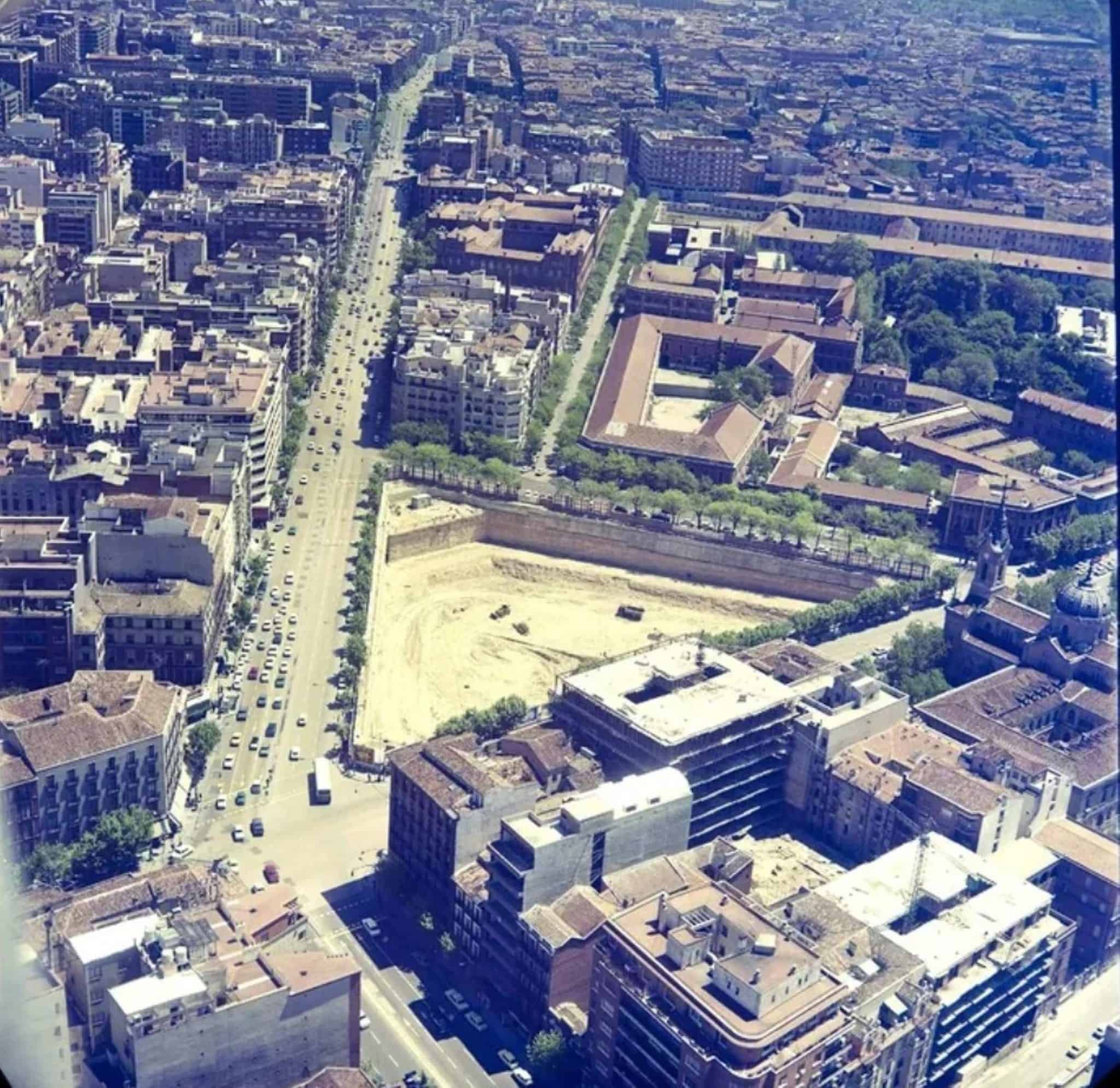
The triangular site of Pozas in 1973, already cleared, between Alberto Aguilera, Princesa and Serrano Jover. The El Corte Inglés and the hotel would rise here. Photograph: Mariano Bagüés / Aeropost.El solar triangular de Pozas en 1973, ya vaciado, entre Alberto Aguilera, Princesa y Serrano Jover. Aquí se levantarían El Corte Inglés y el hotel. Fotografía: Mariano Bagüés / Aeropost.El solar triangular de Pozas el 1973, ja buidat, entre Alberto Aguilera, Princesa i Serrano Jover. Aquí s'aixecarien El Corte Inglés i l'hotel. Fotografia: Mariano Bagüés / Aeropost.
05+ Spain+ España+ Espanya
València, and the rest of the countryValència y el resto del paísValència i la resta del país
Liquidación totalLiquidación totalLiquidació total
What you buy when you buy a city blockLo que compras cuando compras una manzanaEl que compres quan compres una illa de cases
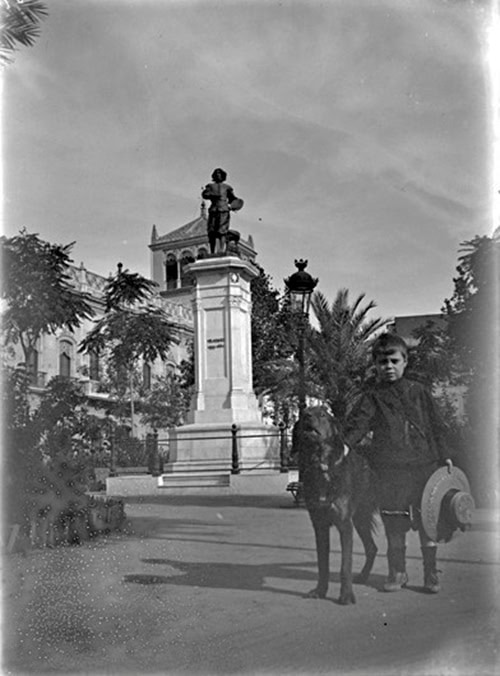
By now the pattern is exhausting, and that is the point. The same excavator reached Bilbao, where the Gran Vía store went up over the Sagrado Corazón school, and Córdoba, where the branch on the Ronda de los Tejares stands on the site of the old bullring, in use from 1846, a loss some will mourn and others will toast, and which the excavator found equally irrelevant, and then a dozen other cities whose names would only pad the inventory. It did not even stop at the dictatorship. In Santander, the change of urban plan that brought the El Corte Inglés of Nueva Montaña, opened in 1999, doomed an old steelworkers' quarter, and in 2005 its parish church was pulled down despite the residents' protests. But there is one Valencian case worth stopping on, because it spans the whole operation with a cynicism so complete it could be taught.A estas alturas el patrón cansa, y de eso se trata. La misma excavadora llegó a Bilbao, donde la tienda de la Gran Vía se levantó sobre el colegio del Sagrado Corazón, y a Córdoba, donde la de la Ronda de los Tejares ocupa el solar de la vieja plaza de toros, en uso desde 1846, una pérdida que unos llorarán y otros brindarán, y que a la excavadora le dio igual, y luego a una docena de ciudades cuyos nombres solo abultarían el inventario. Ni siquiera se detuvo en la dictadura. En Santander, el cambio de plan urbanístico que trajo El Corte Inglés de Nueva Montaña, abierto en 1999, condenó un viejo barrio de obreros siderúrgicos, y en 2005 su iglesia parroquial se derribó pese a las protestas de los vecinos. Pero hay un caso valenciano en el que vale la pena detenerse, porque abarca toda la operación con un cinismo tan completo que podría enseñarse.A aquestes alçades el patró cansa, i d'això es tracta. La mateixa excavadora va arribar a Bilbao, on la botiga de la Gran Vía es va aixecar sobre el col·legi del Sagrado Corazón, i a Còrdova, on la de la Ronda de los Tejares ocupa el solar de la vella plaça de toros, en ús des del 1846, una pèrdua que uns ploraran i d'altres brindaran, i que a l'excavadora li va ser igual, i després a una dotzena de ciutats els noms de les quals només engruixirien l'inventari. Ni tan sols es va aturar amb el final de la dictadura. A Santander, el canvi de pla urbanístic que va portar El Corte Inglés de Nueva Montaña, obert el 1999, va condemnar un vell barri d'obrers siderúrgics, i el 2005 se'n va enderrocar l'església parroquial malgrat les protestes dels veïns. Però hi ha un cas valencià en què val la pena aturar-se, perquè abasta tota l'operació amb un cinisme tan complet que es podria ensenyar.
In 1968 the Dominican nuns sold the whole block on Pintor Sorolla street, in the centre of València, on Spain's eastern coast, to El Corte Inglés: the convent of Santa Catalina de Siena, founded in 1491 on what had been the city's Jewish cemetery. Nuns again, like in Barcelona. For centuries the Church had held the most central and valuable land in Spanish cities, and much of it was sold off once it was worth selling. The store tore down nearly all of it. Nearly. The church, built of dressed stone, they took apart stone by stone and shipped out to Orriols, a neighbourhood on the city's edge, where they raised it again on another lot like someone putting together a Lego set, its vaults on new brick walls; the cloister, brick and rammed earth, would not travel and came down with everything else. You could say they deported it. A convent that had stood for almost five centuries, cleared to make room for a shop floor.En 1968 las monjas dominicas vendieron a El Corte Inglés la manzana entera de la calle Pintor Sorolla, en el centro de València: el convento de Santa Catalina de Siena, fundado en 1491 sobre lo que había sido el cementerio judío de la ciudad. Monjas otra vez, como en Barcelona. Durante siglos la Iglesia tuvo el suelo más céntrico y valioso de las ciudades españolas, y buena parte se vendió en cuanto valió la pena venderlo. La tienda lo derribó casi todo. Casi. La iglesia, de sillería, la desmontaron piedra a piedra y la enviaron a Orriols, un barrio de las afueras, donde la volvieron a levantar en otro solar como quien monta un Lego, con sus bóvedas sobre muros nuevos de ladrillo; el claustro, de ladrillo y tapial, no podía viajar y cayó con todo lo demás. Se podría decir que la deportaron. Un convento que llevaba casi cinco siglos en pie, despejado para hacer sitio a una planta de tienda.El 1968 les monges dominiques van vendre a El Corte Inglés tota l'illa del carrer del Pintor Sorolla, al centre de València: el convent de Santa Caterina de Siena, fundat el 1491 sobre el que havia estat el cementiri jueu de la ciutat. Monges una altra vegada, com a Barcelona. Durant segles l'Església va tenir el sòl més cèntric i valuós de les ciutats espanyoles, i bona part es va vendre tan bon punt va valer la pena vendre'l. La botiga ho va enderrocar gairebé tot. Gairebé. L'església, de carreus, la van desmuntar pedra a pedra i la van enviar a Orriols, un barri dels afores, on la van tornar a aixecar en un altre solar com qui munta un Lego, amb les voltes sobre murs nous de maó; el claustre, de maó i tàpia, no podia viatjar i va caure amb tota la resta. Es podria dir que la van deportar. Un convent que feia gairebé cinc segles que era dempeus, escombrat per fer lloc a una planta de botiga.
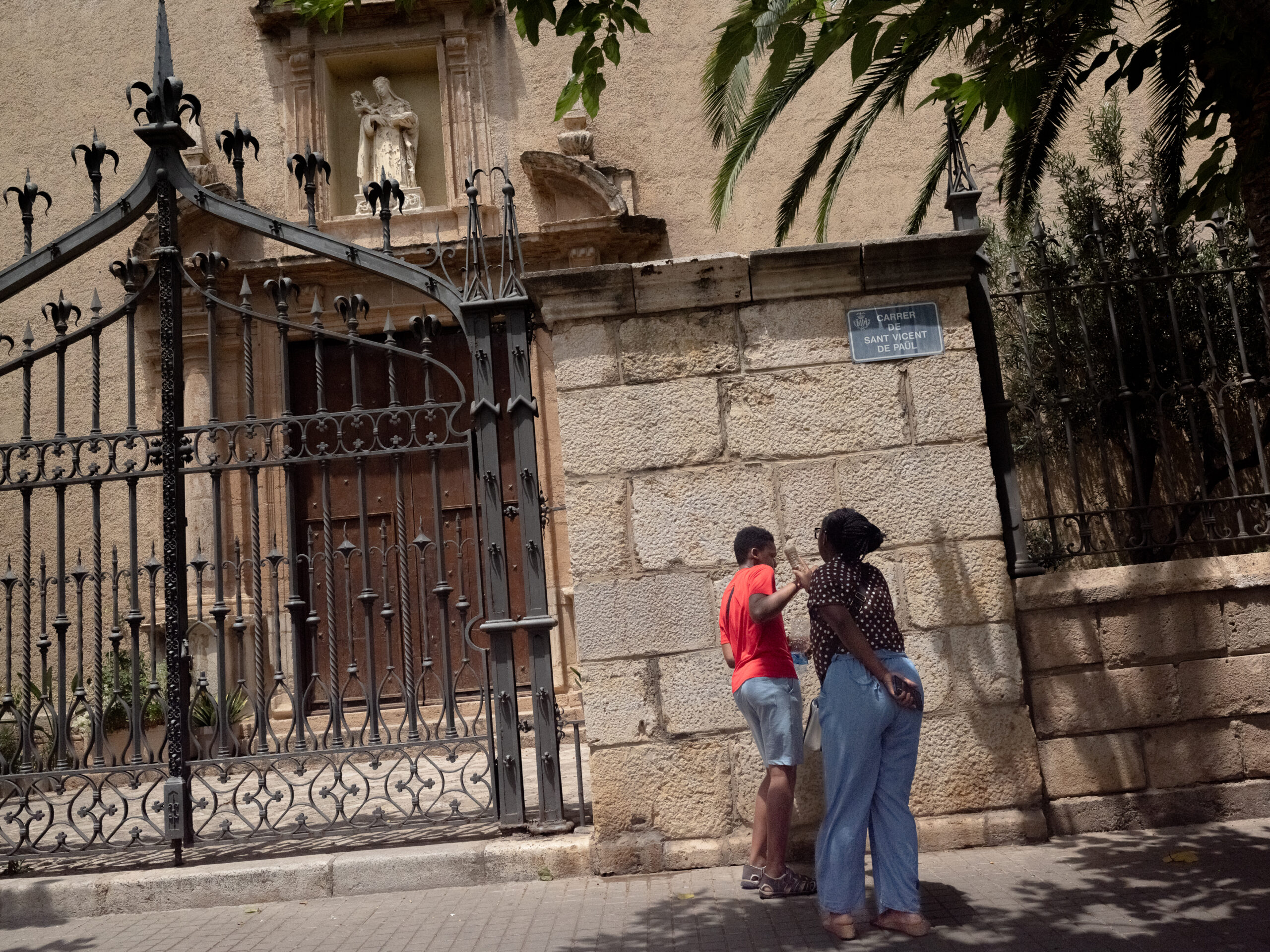
A mother scolds her son outside the church of the Santa Catalina de Siena convent, dismantled in 1970 and rebuilt here, in Orriols. The vaults are the original ones; the walls around them were raised again in brick. The church had one door when it left the city centre. It has two now. Orriols, 2026. MÓN.Una madre riñe a su hijo delante de la iglesia del convento de Santa Catalina de Siena, desmontada en 1970 y reconstruida aquí, en Orriols. Las bóvedas son las originales; los muros que las rodean se volvieron a levantar en ladrillo. La iglesia tenía una puerta cuando salió del centro. Ahora tiene dos. Orriols, 2026. MÓN.Una mare renya el seu fill davant de l'església del convent de Santa Caterina de Siena, desmuntada el 1970 i reconstruïda aquí, a Orriols. Les voltes són les originals; els murs que les envolten es van tornar a aixecar amb maó. L'església tenia una porta quan va sortir del centre. Ara en té dues. Orriols, 2026. MÓN.The block on Pintor Sorolla street, as it would look today had the convent of Santa Catalina de Siena (1491) not been demolished. Visual reconstruction by MÓN over present-day aerial imagery. MÓN.La manzana de la calle Pintor Sorolla tal como se vería hoy si el convento de Santa Catalina de Siena (1491) no se hubiera derribado. Reconstrucción visual de MÓN sobre imagen aérea actual. MÓN.L'illa del carrer del Pintor Sorolla tal com es veuria avui si el convent de Santa Caterina de Siena (1491) no s'hagués enderrocat. Reconstrucció visual de MÓN sobre imatge aèria actual. MÓN.
A tourist leaflet for El Corte Inglés, València. Archive.Un folleto turístico de El Corte Inglés, València. Archivo.Un fulletó turístic d'El Corte Inglés, València. Arxiu.
They ripped it out of four centuries of its own ground so the lot downtown would be free of obstructions, and could carry, on top, the set design of a Spain that already imagined itself different, the tourists' Spain first and its ladies and gentlemen's after. It is the same logic as the Seville cheque taken to its physical extreme. Heritage gets relocated wherever it won't bother business. And one should not hide behind the era, which is the usual alibi, the 'everyone did it' of the one who never pays. Because someone signed. Someone paid. Someone opened the till the next morning over the still-warm lot.La arrancaron de cuatro siglos de su propio suelo para que el solar del centro quedara libre de estorbos, y pudiera cargar encima el decorado de una España que ya se imaginaba distinta, primero la España de los turistas y después la de sus señoras y señores. Es la misma lógica del cheque de Sevilla llevada a su extremo físico. El patrimonio se reubica donde no moleste al negocio. Y no hay que escudarse en la época, que es la coartada de siempre, el «todo el mundo lo hacía» del que nunca paga. Porque alguien firmó. Alguien pagó. Alguien abrió la caja a la mañana siguiente sobre el solar todavía caliente.La van arrencar de quatre segles del seu propi sòl perquè el solar del centre quedés lliure d'obstacles, i pogués carregar a sobre el decorat d'una Espanya que ja s'imaginava diferent, primer l'Espanya dels turistes i després la de les seves senyores i senyors. És la mateixa lògica del xec de Sevilla portada al seu extrem físic. El patrimoni es reubica allà on no molesti el negoci. I no cal escudar-se en l'època, que és la coartada de sempre, el «tothom ho feia» del qui no paga mai. Perquè algú va signar. Algú va pagar. Algú va obrir la caixa l'endemà al matí sobre el solar encara calent.
What binds Hemingway's hotel, the Seville palaces, the prison of the eighteen hundred women, a whole Madrid neighbourhood worn down house by house, the fifteenth-century convent razed and its church reassembled on the outskirts and the embalmed Barcelona window is not the architecture, which differed in every place. It is a result, repeated city after city. The memory of a place did not appear on any balance sheet, did not trade, did not get in the way of a cash register. No document shows that anyone decided it should be so. None was needed. A hotel is replaced. A palace is offset with a cheque. A women's prison is covered over with a plaque engraved so as not to offend. An entire neighbourhood is pulled down around the last family that refuses to leave. And a modernist house is reduced to a three-dimensional graffiti nailed to the scene of the crime.Lo que une el hotel de Hemingway, los palacios de Sevilla, la cárcel de las mil ochocientas mujeres, un barrio entero de Madrid desgastado casa a casa, el convento del siglo XV arrasado y su iglesia rearmada en las afueras y la ventana embalsamada de Barcelona no es la arquitectura, que era distinta en cada sitio. Es un resultado, repetido ciudad tras ciudad. La memoria de un lugar no figuró en ningún balance, no cotizó, no se interpuso en el camino de una caja registradora. Ningún documento muestra que alguien decidiera que fuera así. No hacía falta. Un hotel se sustituye. Un palacio se compensa con un cheque. Una cárcel de mujeres se tapa con una placa grabada para no ofender. Un barrio entero se derriba alrededor de la última familia que se niega a irse. Y una casa modernista se reduce a un grafiti tridimensional clavado en el lugar del crimen.El que uneix l'hotel de Hemingway, els palaus de Sevilla, la presó de les mil vuit-centes dones, tot un barri de Madrid desgastat casa per casa, el convent del segle XV arrasat amb l'església rearmada als afores i la finestra embalsamada de Barcelona no és l'arquitectura, que era diferent a cada lloc. És un resultat, repetit ciutat rere ciutat. La memòria d'un lloc no va figurar en cap balanç, no va cotitzar, no es va interposar en el camí de cap caixa registradora. Cap document no mostra que ningú decidís que fos així. No calia. Un hotel se substitueix. Un palau es compensa amb un xec. Una presó de dones es tapa amb una placa gravada per no ofendre. Un barri sencer s'enderroca al voltant de l'última família que es nega a marxar. I una casa modernista es redueix a un grafit tridimensional clavat al lloc del crim.
And yet. It would be dishonest, and a lie besides, to pretend that El Corte Inglés is only this. Because almost all of us who walk in have a memory there that doesn't weigh, that simply is. Your mother buying the school uniform in September, the men dressed as the Three Kings, the perfumed welcome of the ground floor, the seven o'clock meeting under the clock with a lover, the rooftop café where your grandmother always ordered the same thing.Y sin embargo. Sería deshonesto, y además mentira, fingir que El Corte Inglés es solo esto. Porque casi todos los que entramos tenemos allí un recuerdo que no pesa, que simplemente es. Tu madre comprando el uniforme del colegio en septiembre, los hombres vestidos de Reyes Magos, la bienvenida perfumada de la planta baja, la cita de las siete bajo el reloj con un amante, la cafetería de la azotea donde tu abuela pedía siempre lo mismo.I tanmateix. Seria deshonest, i a més mentida, fer veure que El Corte Inglés és només això. Perquè gairebé tots els qui hi entrem hi tenim un record que no pesa, que simplement hi és. La teva mare comprant l'uniforme de l'escola al setembre, els homes vestits de Reis Mags, la benvinguda perfumada de la planta baixa, la cita de les set sota el rellotge amb un amant, la cafeteria del terrat on la teva àvia sempre demanava el mateix.
There lies the finest trap of the whole story, the one no architect signs, the one where the same building raised over a site of repression, and over the silence that followed it, is the one that keeps the presents of your childhood. You can't entirely hate the place where you were happy at eight years old. It is the oldest asset in the trade. That is why the good memory, the private one, the one with the logo on the bags, has ended up mounted exactly on top of the bad one, the public one, the buried one; and that is why it costs so much to look up, because doing so means first tearing down the pretty memory to see the ghosts underneath.Ahí está la trampa más fina de toda la historia, la que ningún arquitecto firma, aquella en la que el mismo edificio levantado sobre un lugar de represión, y sobre el silencio que lo siguió, es el que guarda los regalos de tu infancia. No se puede odiar del todo el sitio donde fuiste feliz a los ocho años. Es el activo más antiguo del oficio. Por eso el recuerdo bueno, el privado, el de las bolsas con el logotipo, ha acabado montado exactamente encima del malo, el público, el enterrado; y por eso cuesta tanto levantar la cabeza, porque hacerlo significa derribar primero el recuerdo bonito para ver los fantasmas de debajo.Aquí hi ha el parany més fi de tota la història, el que no signa cap arquitecte, aquell en què el mateix edifici aixecat sobre un lloc de repressió, i sobre el silenci que el va seguir, és el que guarda els regals de la teva infantesa. No es pot odiar del tot el lloc on vas ser feliç als vuit anys. És l'actiu més antic de l'ofici. Per això el record bo, el privat, el de les bosses amb el logotip, ha acabat muntat exactament a sobre del dolent, el públic, l'enterrat; i per això costa tant aixecar el cap, perquè fer-ho vol dir enderrocar primer el record bonic per veure els fantasmes de sota.
El Corte Inglés
CENTRO · ESPAÑA · 1863 / 2026 OPERACIÓN: MEMORIACENTRO · ESPAÑA · 1863 / 2026 OPERACIÓN: MEMORIACENTRE · ESPANYA · 1863 / 2026 OPERACIÓ: MEMÒRIA
Hotel Florida, Madrid (Galerías Preciados, 1964)DEMOLISHEDDEMOLIDOENDERROCAT
Plaza del Duque, Sevilla · 3 palacesPlaza del Duque, Sevilla · 3 palaciosPlaça del Duque, Sevilla · 3 palausDEMOLISHEDDEMOLIDOSENDERROCATS
compensation paid, Casa de los Pinelo compensación pagada, Casa de los Pinelo compensació pagada, Casa de los Pinelo5.500.000 pts
Site of the women's prison, Diagonal, BarcelonaSolar de la cárcel de mujeres, Diagonal, BarcelonaSolar de la presó de dones, Diagonal, Barcelona1.806 + 43
Casa Sicart, Plaça CatalunyaCasa Sicart, plaça CatalunyaCasa Sicart, plaça de CatalunyaDEMOLISHEDDEMOLIDAENDERROCADA
Pozas, Madrid · 19 + 1 blocks (city council, 1969)Pozas, Madrid · 19 + 1 bloques (Ayuntamiento, 1969)Pozas, Madrid · 19 + 1 blocs (Ajuntament, 1969)DEMOLISHEDDEMOLIDOENDERROCAT
construction ruled illegal (Supreme Court) construcción declarada ilegal (Tribunal Supremo) construcció declarada il·legal (Tribunal Suprem)too latetardetard
Convent of Santa Catalina (1491), ValènciaConvento de Santa Catalina (1491), ValènciaConvent de Santa Caterina (1491), ValènciaDEMOLISHEDDEMOLIDOENDERROCAT
church moved to Orriols iglesia trasladada a Orriols església traslladada a Orriolsstone by stonepiedra a piedrapedra a pedra
N O · R E F U N DS I N · D E V O L U C I Ó NS E N S E · D E V O L U C I Ó
VAT INCLUDED · OBLIVION NOT INCLUDED THANK YOU FOR YOUR VISIT CHANGES AND RETURNS NOT ACCEPTED ON HISTORYIVA INCLUIDO · OLVIDO NO INCLUIDO GRACIAS POR SU VISITA NO SE ADMITEN CAMBIOS NI DEVOLUCIONES SOBRE LA HISTORIAIVA INCLÒS · OBLIT NO INCLÒS GRÀCIES PER LA SEVA VISITA NO S'ADMETEN CANVIS NI DEVOLUCIONS SOBRE LA HISTÒRIA
Next time you walk into one of these buildings (and you will, we all do, because the operation worked) do one thing: lift your head. Find the Fontanella window. Remember that under some waxed floor there were forty-three children packed together, and that a cheque signed in a luxury hotel was enough to wipe three monuments off the map.La próxima vez que entres en uno de estos edificios (y entrarás, todos lo hacemos, porque la operación funcionó) haz una cosa: levanta la cabeza. Busca la ventana de Fontanella. Acuérdate de que bajo algún suelo encerado hubo cuarenta y tres niños hacinados, y de que un cheque firmado en un hotel de lujo bastó para borrar tres monumentos del mapa.La propera vegada que entris en un d'aquests edificis (i hi entraràs, tots ho fem, perquè l'operació va funcionar) fes una cosa: aixeca el cap. Busca la finestra de Fontanella. Recorda que sota algun terra encerat hi va haver quaranta-tres criatures amuntegades, i que un xec signat en un hotel de luxe va bastar per esborrar tres monuments del mapa.
The walls can no longer tell it. So we have to investigate it ourselves, and that is what we are doing, with all this rage (literal and photographic) because politeness, in this story, was always on the side of the one who signed the cheque.Las paredes ya no pueden contarlo. Así que tenemos que investigarlo nosotros, y eso es lo que estamos haciendo, con toda esta rabia (literal y fotográfica) porque la educación, en esta historia, estuvo siempre del lado del que firmaba el cheque.Les parets ja no ho poden explicar. Així que ho hem d'investigar nosaltres, i això és el que estem fent, amb tota aquesta ràbia (literal i fotogràfica), perquè la bona educació, en aquesta història, sempre va estar del costat del qui signava el xec.
Decades of El Corte Inglés: catalogues, advertising and seasonal covers, the imagery the company keeps. Archive · MÓN.Décadas de El Corte Inglés: catálogos, publicidad y portadas de temporada, las imágenes que la empresa conserva. Archivo · MÓN.Dècades d'El Corte Inglés: catàlegs, publicitat i portades de temporada, les imatges que l'empresa conserva. Arxiu · MÓN.
MÓN
Reportage and photographs
A visual investigation
Memory & erasure in SpainMÓN Reportaje y fotografías Una investigación visual Memoria y borrado en EspañaMÓN Reportatge i fotografies Una investigació visual Memòria i esborrament a Espanya






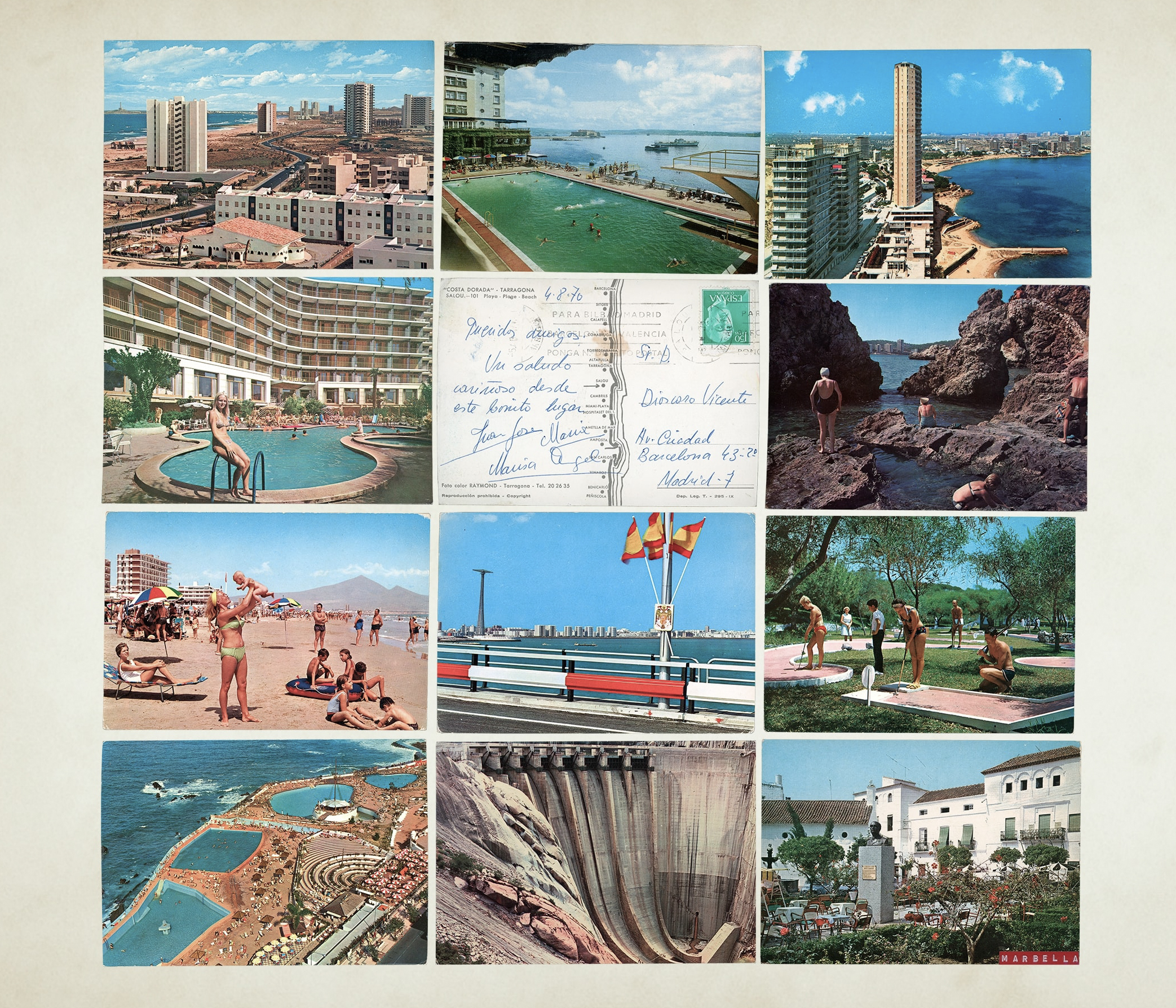 DesarrollismoSpain's economic boom of the 1960s, when the Franco dictatorship prioritised rapid growth, with highways, high-rise blocks and mass tourism, often at the cost of historic city centres., just when Spain decided the past was a nuisance and that progress was measured in square metres of poured concrete. Put plainly, they let the wolf loose and, at the same time, threw open the gates of the pen.